

Wondering how much does a Toyota Camry weigh? The answer depends on your trim, engine, and options. Most models sit between 3,300 and 3,600 pounds. This guide breaks down every generation, explains curb weight versus gross weight, and shows why mass matters for safety, fuel economy, and daily driving.
How much does a Toyota Camry weigh? If you have asked this question, you are not alone. Many drivers want a clear answer before they buy, sell, or simply understand their car better. The short answer is that most modern Camrys fall in a tight range. The longer answer depends on trim, engine, hybrid systems, and optional equipment. In this guide, we will walk through every important detail in plain language.
We will look at curb weight, gross weight, and the difference between them. We will also compare trims, generations, and powertrains. You will learn why mass matters for fuel economy, braking, and handling. By the end, you will know exactly where to find your own car weight and how to use that number with confidence.
Key Takeaways
- Base curb weight: Most current Toyota Camry models weigh between 3,300 and 3,600 pounds.
- Trim matters: Hybrid, V6, and luxury trims add mass through batteries, bigger engines, and extra features.
- Curb weight vs gross weight: Curb weight excludes passengers and cargo, while gross weight includes everything.
- Safety and efficiency: Lower mass often improves fuel economy, while balanced weight boosts handling and crash protection.
- Generation changes: Newer Camrys use high-strength steel and aluminum to stay light without losing strength.
- Check your VIN: The exact weight for your car appears on the door jamb sticker and in the owner manual.
- Practical impact: Knowing your car weight helps with tire selection, towing limits, and brake wear planning.
📑 Table of Contents
- How Much Does a Toyota Camry Weigh Across Recent Model Years
- Toyota Camry Weight by Trim and Powertrain
- Toyota Camry Weight by Generation and Body Style
- Why Car Weight Matters for Safety, Fuel Economy, and Performance
- How to Find the Exact Weight of Your Toyota Camry
- Final Thoughts on Toyota Camry Weight
How Much Does a Toyota Camry Weigh Across Recent Model Years
The current generation Camry is built for a balance of comfort, efficiency, and strength. Most buyers will find a curb weight between 3,300 and 3,600 pounds. That range covers the common gasoline trims and the hybrid versions. The exact number shifts with wheels, sound insulation, safety gear, and engine choice.
A base LE model usually sits at the lighter end. A V6 trim or a fully loaded XSE often lands at the heavier end. Hybrid models add a battery pack and electric motors, so they can weigh a bit more than a comparable gas model. Still, the hybrid system also helps offset mass with efficient power delivery.
Here is a simple way to think about it. A smaller four-cylinder Camry tends to be lighter. A more powerful V6 tends to be heavier. Added features like larger wheels, premium audio, and extra sound deadening also add weight. Even a sunroof or a bigger battery can move the number by a few pounds.
What Changes the Number From One Trim to the Next
Several parts change the final weight. The engine is the biggest factor. A 2.5-liter four-cylinder is lighter than a 3.5-liter V6. The hybrid battery adds mass, but it sits low in the chassis, which can help balance the car. Larger wheels and thicker tires also add rotational mass, which affects how the car feels on the road.
Interior features matter too. Extra sound insulation makes the cabin quieter, but it adds weight. Leather seats, heated steering wheels, and big infotainment screens add small amounts that add up. Safety gear like extra airbags and reinforced brackets also contribute. None of these changes are huge on their own, but together they move the scale.
Curb Weight Versus Gross Vehicle Weight
People often confuse curb weight with gross weight. Curb weight is the car with all standard equipment and fluids, but without passengers or cargo. Gross vehicle weight rating is the maximum the car can safely carry, including you, your passengers, fuel, and cargo. That number is much higher than curb weight.
For a Camry, the gross rating is typically well above 4,000 pounds. That leaves plenty of room for daily use. You do not need to worry about normal commuting or family trips. The rating matters more if you carry heavy loads, mount roof boxes, or plan long trips with lots of luggage.
Quick Tip
Check the door jamb sticker for your exact gross rating. It lists the original tire size, pressure, and the maximum load the car can carry safely.
Toyota Camry Weight by Trim and Powertrain
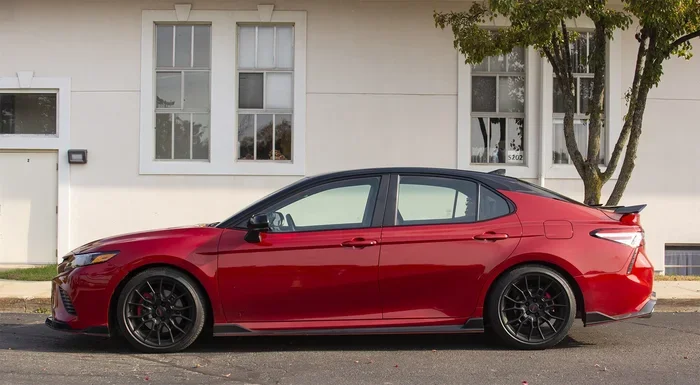
Trim level is the easiest way to guess the weight of a Camry. The LE and SE trims usually share a similar four-cylinder setup, so their weights are close. The XLE adds comfort features that nudge the number up. The XSE adds sporty styling and larger wheels, which can also increase mass.
Visual guide about Toyota Camry sedan side
Image source: cdn.cheersandgears.com
Hybrid trims sit in a similar range, though the battery adds a modest amount of weight. The trade-off is strong city efficiency and smooth low-speed driving. If you compare a hybrid LE to a gas LE, the hybrid may weigh slightly more. The difference is usually small enough that most drivers will not notice in daily use.
A V6 trim, when available, will weigh more than a four-cylinder. The bigger engine needs more structure and stronger supporting parts. That extra mass can change how the car feels during hard braking or quick cornering. It can also affect fuel economy on long highway trips.
Comparison Table: Approximate Curb Weights by Trim Type
| Trim / Powertrain | Approx. Curb Weight | Notes |
|---|---|---|
| LE / SE (4-cylinder) | 3,300 to 3,400 lbs | Lighter wheels, efficient setup |
| XLE (4-cylinder) | 3,400 to 3,500 lbs | More comfort features, softer tuning |
| XSE (4-cylinder) | 3,400 to 3,500 lbs | Sport wheels, slight weight increase |
| Hybrid LE / SE | 3,400 to 3,500 lbs | Battery adds mass, efficiency offsets it |
| V6 (where offered) | 3,500 to 3,600 lbs | Larger engine, stronger components |
These numbers are approximate. Your exact car may differ based on options, market, and model year. Always confirm with your own door jamb label or the manufacturer spec for your VIN.
Common Mistake
Do not assume a hybrid is always heavier than a gas model. Some hybrid trims use lighter wheels or less sound insulation, which can bring the total closer to a gas trim. Compare the exact build, not just the badge.
Toyota Camry Weight by Generation and Body Style
Camry weight has changed over time. Older generations used more steel, while newer models use high-strength steel and selective aluminum parts. That shift helps keep the car strong without adding unnecessary mass. Safety standards have also risen, so modern cars carry more structural reinforcement than older ones.
Body style matters too. The Camry is a sedan, so the weight is centered and balanced. There is no wagon or hatchback version in the current lineup, so the shape stays consistent. That consistency helps the car feel stable and predictable. A lower center of gravity improves cornering and reduces body roll.
If you compare a recent Camry to an older one, you may find the new car is not much heavier despite more features. Engineers work hard to manage mass. They place heavy parts low and close to the center. That strategy keeps the car nimble even with modern safety gear and comfort items.
Why Generation Changes Matter for Mass
Each generation brings small changes. New engines may be lighter or more compact. Transmissions may shift to more efficient designs. Interior materials may change to save weight without sacrificing comfort. These choices add up over time.
Safety improvements can add mass, but they also protect people better. Reinforced pillars, extra crumple zones, and more airbags all help in a crash. The goal is not to make the car as light as possible. The goal is to make it as safe and efficient as possible while staying fun to drive.
Why Car Weight Matters for Safety, Fuel Economy, and Performance
Mass affects many parts of daily driving. A lighter car usually uses less energy to move, so it can return better fuel economy. That is one reason engineers trim weight where they can. But a lighter car is not always better in every situation. Balance matters just as much as total weight.
Braking is a good example. More mass means more energy to stop. That is why bigger cars need strong brakes and good tire grip. A Camry is designed with this in mind, so it stops confidently in normal use. If you add heavy cargo or tow a trailer, you should expect longer stopping distances.
Handling also depends on weight distribution. A car that carries mass low and near the center feels steady. That is part of why the Camry feels calm and controlled on curves. Tires play a big role too. Proper inflation and the right tire size help the car manage its mass with confidence.
Fuel Economy and Real-World Driving
Fuel economy numbers are tested in labs, but real life is different. Hills, weather, traffic, and cargo all change the result. A lighter car often handles stop-and-go traffic a bit better because it needs less energy to get moving again. On the highway, aerodynamics matter more, but mass still plays a role during acceleration and climbing.
Hybrid models use electric power at low speeds, which helps in city driving. That can make the extra battery weight less noticeable in daily use. If you drive mostly in town, a hybrid can feel very efficient even with the added mass. If you drive mostly on open roads, a four-cylinder gas model may feel simple and smooth.
Expert Insight
Think of weight as one part of the whole picture. Tires, suspension tuning, and power delivery matter too. A well-balanced Camry can feel lighter than the scale suggests because the parts work together smoothly.
How to Find the Exact Weight of Your Toyota Camry
If you need the precise number for your car, there are easy ways to find it. The door jamb sticker lists important specs, including tire pressure and load info. Your owner manual also includes weight details and gross ratings. For the most exact curb weight, a scale at a weigh station or a professional shop can give you a real measurement.
You can also check the manufacturer spec for your exact model year and VIN. Online resources sometimes show approximate numbers, but they may not match your options. If you have added accessories like a roof rack, big audio system, or aftermarket wheels, your car may differ from the base spec.
When you look up the number, make sure you know which weight you are reading. Curb weight is the common number people want. Gross weight is the limit you should not exceed. Keep both in mind when you pack for a trip or buy new tires.
Practical Examples and Quick Tips
Here are a few simple ways to use this information. If you are buying tires, match them to your car weight and load rating. If you are planning a road trip, spread heavy items low and near the center. If you are comparing trims, remember that a small weight difference rarely changes daily comfort much.
- Use the door jamb label to confirm load limits before a long trip.
- Keep heavy cargo low and centered for better balance.
- Check tire pressure often, especially when carrying extra passengers or luggage.
- Compare trims by features first, then by weight, so you pick the right fit.
- If you modify your car, recheck load ratings and tire specs after changes.
Key Takeaways
Most Camrys sit between 3,300 and 3,600 pounds. Trim, engine, and options change the number. Curb weight and gross weight are different, and both matter. Tires, cargo, and driving style affect how the car feels. When in doubt, check your door jamb label or weigh the car directly.
Final Thoughts on Toyota Camry Weight
So, how much does a Toyota Camry weigh? For most drivers, the answer lands in a familiar range. The exact number depends on your trim, engine, and options, but the car is built to feel balanced and easy to live with. That balance is part of why the Camry remains a practical choice for commuting, family trips, and daily errands.
Understanding your car weight helps you make better choices. You can pick the right tires, pack smarter, and understand why the car feels the way it does. You can also see why engineers work so hard to manage mass without giving up safety or comfort. The best part is that you do not need to memorize every number. You just need to know where to look and what the numbers mean.
If you are shopping for a Camry, focus on the trim that fits your life. If you already own one, take a minute to check your door jamb label and tire info. A little knowledge goes a long way. And now, when someone asks how much does a Toyota Camry weigh, you can give a clear, confident answer.
Frequently Asked Questions
How much does a Toyota Camry weigh in pounds?
Most modern Toyota Camry models weigh between 3,300 and 3,600 pounds, depending on trim, engine, and options. Hybrid and V6 versions may sit at the higher end of that range. Your exact car weight can vary slightly based on wheels, sound insulation, and added features.
Does the Camry hybrid weigh more than the gas version?
Often yes, but only by a modest amount. The hybrid battery and electric motors add mass, while some hybrid trims may use different wheels or insulation that affect the total. In daily driving, the difference is usually small, and the hybrid system can help offset it with strong city efficiency.
What is the difference between curb weight and gross weight?
Curb weight is the car with standard equipment and fluids, but without passengers or cargo. Gross vehicle weight rating is the maximum the car can safely carry, including people, fuel, and cargo. For a Camry, the gross rating is much higher than curb weight, leaving plenty of room for normal use.
Where can I find the exact weight of my Camry?
You can check the door jamb sticker, the owner manual, or the manufacturer spec for your VIN. For the most accurate number, a professional scale at a shop or weigh station will measure your actual car. If you have added accessories, your real weight may differ from the base specification.
Does a heavier Camry feel slower or less safe?
Not necessarily. A heavier car can still feel balanced and confident if the weight is placed well and the brakes and tires are matched to the load. Safety depends on many factors, including structure, airbags, tires, and driving habits. A well-designed Camry manages its mass to feel stable and predictable.
Will adding cargo or passengers change braking and fuel economy?
Yes, extra mass increases the energy needed to accelerate and stop, so braking distance can grow and fuel economy can drop. The effect is usually small for normal family trips, but it becomes more noticeable with heavy luggage or frequent full loads. Spreading weight low and centered helps the car stay balanced and comfortable.