
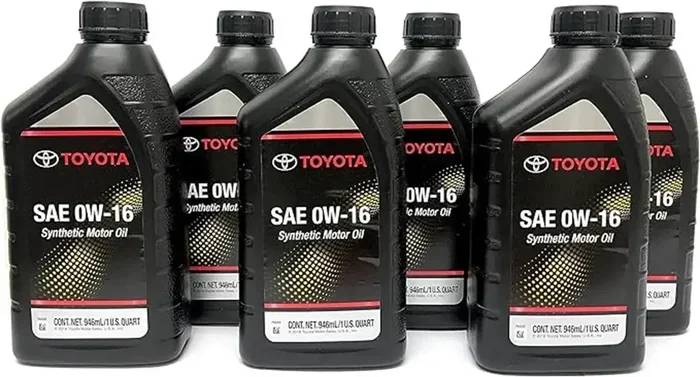
Toyota recommends using genuine Toyota motor oil or high-quality synthetic oils that meet API SP and ILSAC GF-6 standards. Most Toyota vehicles run best on 0W-20 or 5W-30 viscosity grades, depending on the model and climate. Using the right oil brand protects your engine, improves fuel economy, and keeps your warranty intact.
Key Takeaways
- Genuine Toyota motor oil is the safest choice: It is specifically formulated to meet Toyota engine tolerances and warranty requirements.
- Look for API SP and ILSAC GF-6 certifications: These modern standards protect against timing chain wear and low-speed pre-ignition.
- 0W-20 is the most common viscosity: Many newer Toyota models require this thin, fuel-efficient oil for optimal performance.
- Synthetic blends work well in moderate climates: They offer a balance between cost and high-temperature protection.
- Full synthetic oil extends engine life: It resists breakdown better and handles extreme heat or cold with ease.
- Always check your owner manual: Viscosity and oil capacity vary by engine, driving habits, and local weather conditions.
- Change oil every 5,000 to 10,000 miles: Synthetic oils allow longer intervals, but severe driving may require more frequent changes.
📑 Table of Contents
- What Brand Oil Does Toyota Use for Peak Performance?
- Understanding Toyota Oil Recommendations
- Why Genuine Toyota Motor Oil Stands Out
- Viscosity Grades Explained Simply
- Full Synthetic vs Synthetic Blend vs Conventional
- Top Oil Brands That Meet Toyota Standards
- How to Choose the Right Oil for Your Toyota
- Oil Change Intervals and Best Practices
- Common Mistakes to Avoid
- Expert Insights and Final Thoughts
- Conclusion
What Brand Oil Does Toyota Use for Peak Performance?
When you pop the hood of your Toyota, one question often comes to mind: what brand oil does Toyota use? You want your engine to run smoothly, last longer, and stay protected under the hood. The good news is that Toyota has clear guidelines, and you do not need to guess. In this guide, we will break down the official recommendations, explain viscosity grades in plain English, and help you pick the right oil without overspending. You will also learn why genuine Toyota motor oil often makes the most sense for daily drivers, and when a trusted aftermarket brand might work just as well.
Understanding Toyota Oil Recommendations

Visual guide about Toyota engine oil brand
Image source: d2y8zz1tu4v9hy.cloudfront.net
Toyota does not force you to buy one specific bottle. Instead, the company sets clear performance standards. These standards focus on viscosity, additive packages, and certification marks. When you see API SP and ILSAC GF-6 on a bottle, you know the oil meets modern engine needs. These certifications matter because today’s engines run hotter, use tighter tolerances, and often include turbochargers or hybrid systems.
Toyota’s official stance is simple: use an oil that meets the viscosity grade listed in your owner manual and carries the latest API and ILSAC ratings. Many owners prefer genuine Toyota motor oil because it is blended to match Toyota’s exact specifications. It also simplifies warranty questions. If you ever need service, the dealership will use the same formula, which keeps everything consistent.
Here is what Toyota generally looks for in a quality motor oil:
- Correct viscosity grade: Usually 0W-20 or 5W-30 for most modern Toyotas.
- API SP certification: Protects against timing chain wear and low-speed pre-ignition.
- ILSAC GF-6 compliance: Supports fuel economy and engine cleanliness.
- Stable viscosity at temperature: The oil should not thin out too much when hot or thicken too much when cold.
- Good oxidation resistance: This helps the oil last longer between changes.
If you want a quick comparison, here is how common oil types stack up for everyday Toyota ownership.
| Oil Type | Best For | Pros | Cons |
|---|---|---|---|
| Genuine Toyota Motor Oil | Warranty peace of mind, dealer service consistency | Matches Toyota specs exactly, easy to find at dealers | Often priced higher at non-dealer shops |
| Full Synthetic (Major Brands) | Extreme climates, high mileage, turbo engines | Excellent heat protection, longer drain intervals | Higher upfront cost |
| Synthetic Blend | Moderate climates, budget-conscious owners | Good balance of protection and price | Not ideal for severe driving conditions |
| Conventional Oil | Older engines, mild climates, low-stress driving | Lower cost, widely available | Breaks down faster, shorter change intervals |
Why Genuine Toyota Motor Oil Stands Out
Many drivers ask whether genuine Toyota motor oil is worth it. The short answer is yes, especially if you want a hassle-free experience. Toyota works with major oil producers to blend formulas that meet its engineering standards. This means the oil is tested for flow, cleanliness, and wear protection in conditions that mimic real Toyota engines.
One big advantage is consistency. When you use the same type of oil at home and at the service center, you reduce the chance of mixing incompatible additive packages. That matters because some oils use different detergent or anti-wear formulas. Sticking with one trusted brand keeps your engine cleaner over time.
Another benefit is warranty confidence. If your vehicle is under warranty, using an oil that meets Toyota’s specifications is what matters most. Genuine Toyota motor oil clearly meets those specs. It also makes record-keeping simple. You can note the exact product in your maintenance log, which helps if you ever need to prove proper care.
Quick tip: If you live in a place with very hot summers or very cold winters, ask your dealer whether a specific viscosity or synthetic formula is better for your region. Climate can change what works best, even within the same model.
Viscosity Grades Explained Simply
Viscosity is just a fancy word for thickness. You will see numbers like 0W-20 or 5W-30 on every bottle. The first number tells you how the oil flows when cold. The lower the number, the easier it flows during a cold start. The second number tells you how the oil behaves when hot. A higher second number means the oil stays thicker at high temperatures.
Most newer Toyotas use 0W-20. This thin oil helps the engine turn over easily in winter and supports better fuel economy. Some models, especially older ones or certain trucks, may use 5W-30. Always check your owner manual, because using the wrong grade can affect performance and wear.
Here is a simple way to think about it:
- 0W-20: Great for fuel efficiency and cold starts. Common in Camry, Corolla, RAV4, and many hybrid models.
- 5W-30: Slightly thicker when hot. Often used in older engines or specific SUV and truck applications.
- 5W-20 or 0W-16: Used in some newer or smaller engines where manufacturers want maximum efficiency.
If you live in a very hot area, you might wonder if a thicker oil is better. In most cases, stick with the manual. Modern engines are designed for specific flow rates. Going thicker than recommended can reduce fuel economy and make cold starts harder. Going thinner than recommended can reduce protection at high heat. The best choice is the grade Toyota specifies for your engine.
Full Synthetic vs Synthetic Blend vs Conventional
Not all oils are built the same. The base oil matters just as much as the viscosity. Here is how the three main types compare for Toyota owners.
Full synthetic oil is engineered molecule by molecule to resist breakdown. It handles high heat better, flows more consistently, and usually lasts longer between changes. If you drive in stop-and-go traffic, tow occasionally, or live in a hot climate, full synthetic is a smart choice. Many Toyota owners use it for peace of mind and longer drain intervals.
Synthetic blend oil mixes conventional and synthetic base oils. It offers better protection than conventional oil without the higher price of full synthetic. This is a good middle ground for moderate climates and normal driving. If you do not push your car hard, a blend can be a sensible budget option.
Conventional oil is the traditional choice. It works well for older engines with wider clearances and for drivers who keep up with frequent changes. If your Toyota has higher mileage and uses conventional oil without issues, you may continue with it. Just keep change intervals shorter, because conventional oil breaks down faster.
A practical rule of thumb:
- Choose full synthetic for newer engines, turbo models, hot climates, and longer intervals.
- Choose synthetic blend for balanced cost and protection in normal driving.
- Choose conventional for older engines, mild climates, and shorter change schedules.
Top Oil Brands That Meet Toyota Standards
You do not have to limit yourself to one brand. Several well-known manufacturers produce oils that meet or exceed Toyota’s requirements. When shopping, look for the API SP mark and the correct viscosity. Here are some trusted options many Toyota owners use.
- Genuine Toyota Motor Oil: Formulated to Toyota specifications, easy to verify, and widely used at dealerships.
- Mobil 1: A popular full synthetic choice known for strong heat resistance and long drain performance.
- Pennzoil Platinum or Ultra Platinum: Often made from natural gas base oil, with strong cleanliness and wear protection.
- Valvoline Advanced Full Synthetic: A dependable option that meets modern API and ILSAC standards.
- Castrol Edge: Known for strong film strength, which can help protect critical engine parts under load.
- Amazon Basics or store-brand synthetics: Can work well if they carry API SP and the right viscosity, but double-check the label.
When comparing brands, do not focus only on price. Check the certification marks first. Then look at the viscosity. Finally, consider your driving habits. A slightly more expensive full synthetic can save money over time by protecting your engine better and allowing longer intervals. If you want to compare costs, you can also check how much an oil change costs at a Toyota dealership to see whether dealer pricing fits your budget.
How to Choose the Right Oil for Your Toyota
Choosing oil does not need to be complicated. Start with your owner manual. It lists the recommended viscosity and capacity. If you no longer have the manual, you can usually find the info on the manufacturer’s website or on a reliable VIN lookup tool. Once you know the grade, pick the base oil type that matches your climate and driving style.
Next, think about where you drive. Cold winters favor a lower first number for easier starts. Hot summers favor an oil that stays stable at high temperature. If you tow, carry heavy loads, or drive in heavy traffic, lean toward full synthetic. If your commute is gentle and your climate is mild, a synthetic blend may be enough.
Also consider your engine’s age and mileage. Higher-mileage engines sometimes benefit from oils designed with seal conditioners. These formulas can help reduce minor consumption and keep seals flexible. If your Toyota has more than 75,000 miles, a high-mileage synthetic or blend can be a good fit.
Quick checklist before you buy:
- Confirm the viscosity grade from your manual.
- Verify API SP and ILSAC GF-6 on the label.
- Choose full synthetic, blend, or conventional based on climate and usage.
- Check the oil capacity so you buy enough for a full change.
- Make sure the bottle is fresh and stored properly.
If you drive a hybrid, the same rules apply, but you may see 0W-20 more often. Hybrids switch between electric and gas power, which means the engine starts and stops frequently. A thin, high-quality oil helps reduce friction during those frequent starts. For more on hybrid systems, you can read how the Toyota hybrid works to understand why oil choice still matters in electrified models.
Oil Change Intervals and Best Practices
How often should you change your oil? The answer depends on the oil type, your driving habits, and the model. Many newer Toyotas with full synthetic oil can go longer between changes, often around 5,000 to 10,000 miles. Conventional oil usually needs more frequent service. Severe driving, such as short trips, towing, or extreme heat, can shorten that interval.
A good habit is to check your dipstick regularly. Look for the oil level and color. Fresh oil is usually amber. As it ages, it turns darker. That is normal, but if the oil looks gritty or smells burnt, it may be time for a change sooner. Also watch for an oil life monitor message on your dashboard if your Toyota has one.
Best practices for longer engine life:
- Change oil on schedule: Do not stretch intervals too far, especially if you drive in severe conditions.
- Replace the filter every time: A fresh filter keeps contaminants out of your engine.
- Use the right capacity: Overfilling can cause foaming, while underfilling reduces protection.
- Check for leaks after service: A quick visual check can save you from low-oil problems later.
- Keep records: Note the date, mileage, oil brand, and viscosity for future reference.
If you want to stay on top of maintenance, it helps to understand how modern oil life monitoring works. Your Toyota may calculate remaining oil life based on engine temperature, run time, and driving conditions. That system is useful, but it works best when you also check the oil level between changes. For more on Toyota ownership and value, you might also explore whether Toyota holds its value over time, since proper maintenance plays a big role in resale appeal.
Common Mistakes to Avoid
Even experienced car owners make a few oil mistakes. Avoiding them is easy once you know what to look for.
- Using the wrong viscosity: This is the most common error. Always match the manual, not a guess.
- Ignoring certification marks: An oil without API SP or ILSAC GF-6 may not meet modern engine needs.
- Overfilling the engine: Too much oil can cause pressure issues and foaming.
- Mixing different oil types often: Occasional mixing is usually fine, but consistent use of one quality oil is better.
- Skipping the filter change: A clean filter matters just as much as fresh oil.
- Assuming thicker is always better: Thicker oil can hurt fuel economy and cold starts if the engine is designed for a thinner grade.
- Forgetting to check the level: Even with regular changes, leaks or consumption can lower oil level between services.
Expert Insights and Final Thoughts
Engine builders and service technicians agree on one thing: consistent oil quality matters more than brand loyalty. If an oil meets Toyota’s viscosity and certification requirements, it will generally do the job well. That said, many technicians still recommend genuine Toyota motor oil for owners who want the simplest path. It removes guesswork, matches dealer service standards, and keeps warranty records clean.
If you prefer aftermarket options, choose a reputable full synthetic with the right grade. Look for strong detergent and anti-wear packages, and avoid no-name bottles with unclear labeling. The extra few dollars for a trusted brand often pays off in engine cleanliness and longer life.
A final tip: your driving style matters as much as the oil itself. Gentle warm-ups in cold weather, moderate towing, and regular level checks all help your engine last longer. Oil is the lifeblood of your engine, but good habits keep it healthy too.
Conclusion
So, what brand oil does Toyota use? The answer is simple: Toyota recommends oils that meet its viscosity and certification standards, and many owners choose genuine Toyota motor oil for peace of mind. You can also use trusted major brands as long as they carry API SP and ILSAC GF-6 and match your manual’s viscosity grade. Stick with 0W-20 or 5W-30 as specified, pick the right base oil for your climate, and change it on a sensible schedule. Do that, and your Toyota engine will stay protected, efficient, and ready for the road ahead.
Frequently Asked Questions
What brand oil does Toyota use at the dealership?
Toyota dealerships typically use genuine Toyota motor oil, which is formulated to meet Toyota’s exact specifications. It carries the correct viscosity and modern API and ILSAC certifications for your engine.
Can I use synthetic oil in my Toyota?
Yes, most Toyota engines work very well with synthetic oil, and many newer models even prefer it. Just make sure the synthetic oil matches the viscosity grade in your owner manual and meets API SP standards.
What viscosity oil does Toyota recommend most often?
Toyota most often recommends 0W-20 for many newer models, though some engines use 5W-30 or another grade. Always check your owner manual because the right viscosity depends on the engine and climate.
How often should I change the oil in my Toyota?
Many Toyota owners change oil every 5,000 to 10,000 miles when using full synthetic, while conventional oil usually needs shorter intervals. Severe driving conditions like towing, extreme heat, or frequent short trips may require more frequent changes.
Is genuine Toyota motor oil better than other brands?
Genuine Toyota motor oil is not necessarily better in every case, but it is designed to match Toyota’s specifications and makes warranty and service records simpler. Reputable aftermarket synthetic oils that meet the same certifications can also perform very well.
What happens if I use the wrong oil viscosity?
Using the wrong viscosity can affect cold starts, fuel economy, and engine protection, especially if the oil is too thick or too thin for your engine design. It is best to follow the manual’s recommendation to keep your engine running smoothly.