Disclosure: This article contains affiliate links. We may earn a commission at no extra cost to you if you purchase through our links.
The Hook: The Cleanup Problem
You just cooked a batch of sticky, glazed chicken wings. They taste fantastic, but looking at the bottom of the basket, you realize you now have to scrub baked-on grease for twenty minutes. It is the most frustrating part of using this otherwise efficient kitchen appliance.
To avoid the mess, you naturally wonder, can you put aluminum foil in an air fryer to catch the grease? The short answer is yes, you can. However, doing it incorrectly can ruin your food, permanently damage the appliance, or worse—start a kitchen fire.
So, what exactly are the rules for doing this without causing a disaster? This safety guide will show you the exact protocols you must follow and point you toward alternatives that might work even better.
Quick Verdict
- Best for: Easy cleanup when cooking greasy foods like bacon, wings, or burgers.
- Not ideal for: Acidic foods (like tomatoes or citrus), baking, or highly circulating recipes.
- Main strength: Instantly accessible and highly effective at catching grease and preventing stuck-on messes.
- Overall assessment: While convenient, using foil requires strict adherence to safety guidelines. For frequent users, investing in dedicated silicone or parchment liners is a safer, more sustainable choice.
What Is It & How Does It Work?
An air fryer is essentially a compact convection oven. It cooks food quickly by using a high-powered fan to rapidly circulate intensely hot air around the basket. This constant airflow creates the crispy texture you expect from deep frying, without the oil.
If the hot air needs to circulate underneath the food to cook it properly, won’t adding a solid sheet of metal disrupt that process? Yes, it absolutely will. If you cover the entire bottom of the basket or block the specifically designed air vents, your food will end up soggy on the bottom and undercooked.
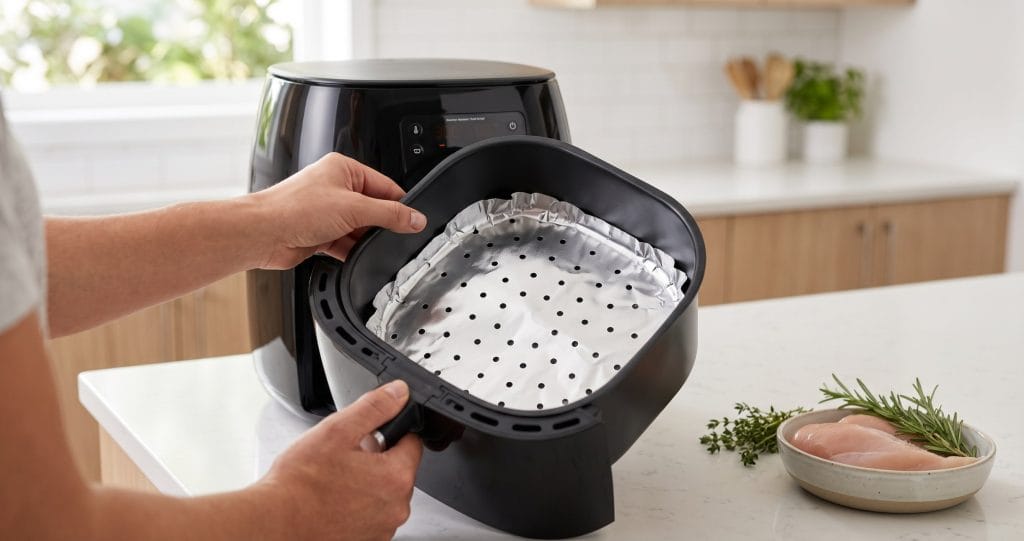
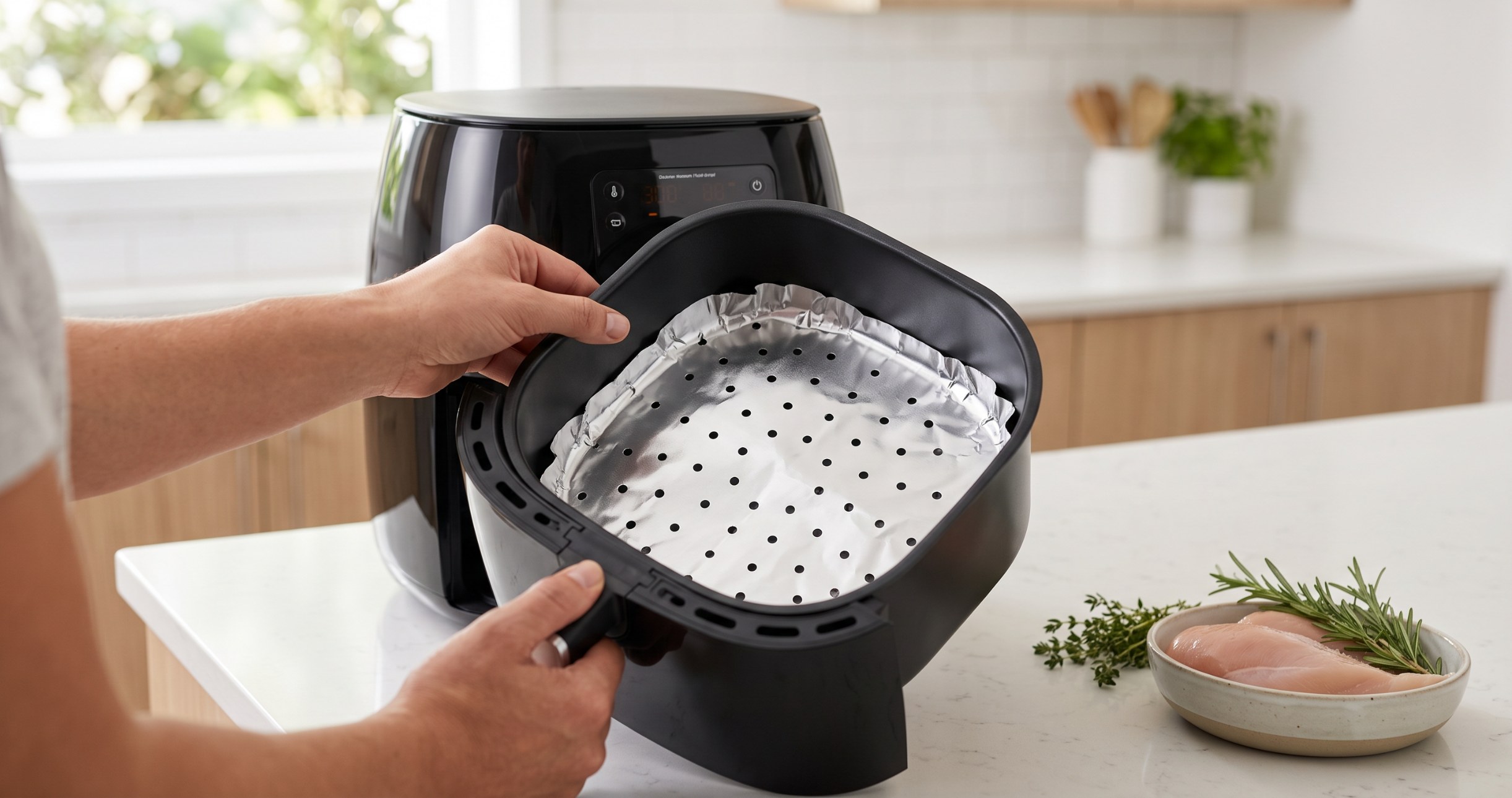
To solve this, you must only line the bottom of the inner basket where the food rests, leaving the edges completely free so air can flow around the sides. You must never place foil at the very bottom of the appliance (beneath the heating element), as this can cause the machine to overheat.
Deep-Dive: How to Use Foil Safely
Putting metal into a rapid-heating appliance sounds risky. To mitigate that risk, you need to understand exactly how the appliance reacts to foreign materials.
Weight Distribution is Critical
The fan inside your appliance is incredibly strong. If you place a loose piece of foil inside without securing it, that fan will pick the foil up and blow it directly into the exposed heating element at the top. This is a severe fire hazard.
How do you prevent this? You must weigh the foil down immediately. Never put foil in the machine during the preheating phase. Only add it when you are ready to place heavy food items directly on top of it, ensuring the foil is firmly pinned down.
The Acidic Food Reaction
Foil is reactive. When highly acidic foods come into contact with aluminum under intense heat, a chemical reaction occurs. The acid breaks down the metal, causing tiny dark specks of aluminum to leach directly into your meal.
If you are cooking tomatoes, citrus-marinated chicken, vinegar-based sauces, or tart fruits, you must skip the foil entirely. For these ingredients, you need a non-reactive barrier.
Pros and Cons
Pros:
- Drastically reduces cleanup time by catching grease and crumbs.
- Readily available in almost every kitchen pantry.
- Easily moldable to fit any basket shape or size.
Cons:
- Creates a severe fire hazard if left unweighted and sucked into the heating element.
- Blocks critical airflow if not cut properly, leading to uneven cooking.
- Reacts negatively with acidic foods, ruining the flavor and safety of the meal.
Alternatives: The Best Air Fryer Liners
If cutting and weighing down foil sounds like too much work, you are probably looking for safer, pre-made alternatives. Fortunately, the market is full of options specifically designed to handle convection heat without blocking airflow.
The most popular alternatives are perforated parchment paper and reusable silicone liners. Perforated parchment paper comes pre-cut with holes, allowing air to circulate perfectly while still catching most of the mess. Silicone liners are thicker, completely reusable, and dishwasher safe, making them the most eco-friendly option.
If you want to completely eliminate the risks associated with foil, exploring the best air fryer liners made of silicone is your most practical next step.
Frequently Asked Questions
Can you put aluminum foil in an air fryer basket?
Yes, you can place it inside the inner basket where the food sits. However, you must never place it underneath the basket or directly on the heating elements.
How do you learn how to use aluminum foil in an air fryer safely?
The primary rules are to never preheat the machine with empty foil inside, always ensure food is heavy enough to weigh the foil down, and avoid covering the air circulation vents at the edges of the basket.
Will foil catch on fire in an air fryer?
Unlike a microwave, the foil itself will not spark. However, it will catch fire if the internal fan blows a loose piece of foil into the exposed heating coil.
Is parchment paper better than foil?
For most recipes, yes. Perforated parchment paper allows for better air circulation and does not react with acidic foods. However, parchment paper can also catch fire if it touches the heating element, so it must also be weighed down by food.
What foods should never touch foil?
Avoid placing tomatoes, lemons, limes, vinegar-based marinades, and highly salted foods directly on aluminum foil, as they can cause the metal to break down and transfer into your food.
Final Verdict & Call to Action
Using aluminum foil in an air fryer is an acceptable shortcut for easy cleanup, provided you follow the safety guidelines. As long as you keep the air vents clear, weigh the foil down with heavy food, and avoid acidic ingredients, it is a perfectly safe practice.
However, if you use your appliance daily, cutting foil becomes tedious and wasteful. Transitioning to dedicated, reusable liners is a much smarter long-term strategy for your kitchen.
Ready to upgrade your cooking setup and ditch the cleanup entirely?
Check Current Pricing on Premium Air Fryer Accessories Here
More Appliance Guides on All Reviews World
- Air Fryer vs. Convection Oven: Which Should You Buy?
- 10 Kitchen Gadgets That Actually Save You Time
- Deep Cleaning Hacks for Stubborn Kitchen Appliances
External Resources
- USDA Official Guidelines: Aluminum Foil and Food Safety
- Culinary Institute of America: Convection Cooking Basics