
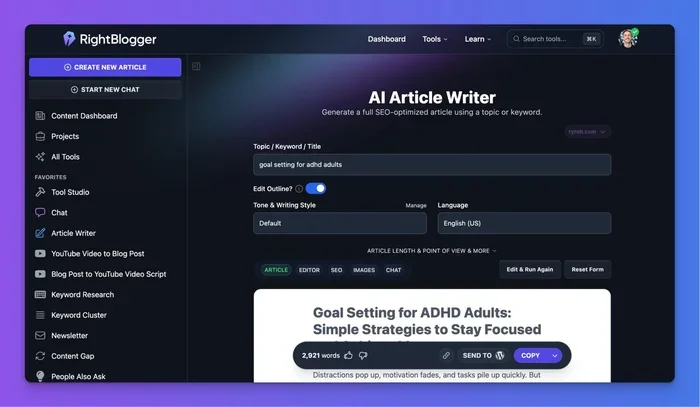
Writing high-quality blog posts takes time, but the best AI tools for bloggers can cut your workload in half. These smart platforms help with research, drafting, editing, and SEO optimization. You can focus on your unique voice while the software handles repetitive tasks. In this guide, we will walk you through the top platforms that actually deliver results. You will learn how to pick the right tool for your niche and budget.
Key Takeaways
- Save hours every week: AI writing assistants handle brainstorming, outlining, and first drafts so you can focus on strategy.
- Boost SEO naturally: Many platforms suggest keywords, meta descriptions, and heading structures that rank well.
- Match your brand voice: The right tool lets you train the AI on your tone, style, and audience preferences.
- Edit faster: Grammar and readability checkers catch mistakes before you hit publish.
- Repurpose content easily: Turn one blog post into social posts, newsletters, and short videos with minimal effort.
- Start small and test: Free trials let you compare features before committing to a paid plan.
- Keep human oversight: AI works best as a helper, not a replacement for your expertise and editing.
📑 Table of Contents
Why the Best AI Tools for Bloggers Matter Today
Blogging has changed a lot in recent years. Readers expect fresh posts, clear answers, and helpful visuals. You also need to publish consistently to stay visible in search results. That is a lot of work for one person. This is where smart software steps in.
The best AI tools for bloggers act like a reliable writing partner. They help you beat writer block, organize your ideas, and polish your drafts. You still control the final message. The software just removes the heavy lifting. Think of it as a digital assistant that never gets tired.
Many creators feel overwhelmed by the number of options. Some tools focus on long-form writing. Others handle SEO, images, or social sharing. The key is to pick tools that match your workflow. When you choose wisely, you write faster and publish with confidence.
How AI Changes the Blogging Workflow
Writing used to start with a blank page and a lot of guesswork. Now you can start with a clear outline, a rough draft, or even a full paragraph. AI can suggest angles you might not have considered. It can also summarize research, rewrite clunky sentences, and check tone.
This does not mean you hand over your creativity. You still guide the topic, the message, and the audience. The real win is speed. You spend less time staring at the cursor and more time refining your ideas. That balance is what makes modern blogging sustainable.
A good workflow looks simple. You brainstorm with AI, outline the structure, draft the content, and then edit for clarity. Each step gets shorter when you use the right platform. Over time, that saves real hours every week.
Who Benefits Most From AI Blogging Tools
New bloggers often struggle with structure and consistency. AI can teach them how to organize a post and keep ideas moving. Experienced writers also benefit because they can offload routine tasks. If you manage a team, these tools help everyone stay on the same page.
Freelancers and solo creators get another big advantage: scalability. You can take on more projects without burning out. Small business owners can keep their blogs active without hiring a full-time writer. The common thread is efficiency. The right tool gives you more output with less stress.
Top AI Writing Assistants for Blog Posts
When people search for the best AI tools for bloggers, writing assistants usually come first. These platforms help you generate ideas, build outlines, and draft full sections. Some are general-purpose, while others are built for long-form content. The right choice depends on your style and budget.
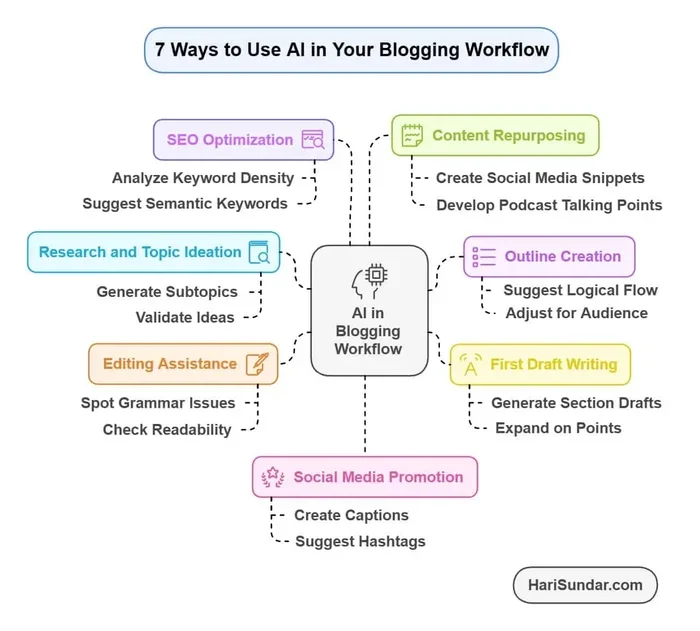
Visual guide about blogger using AI tools
Image source: harisundar.com
A strong writing assistant should do more than spit out generic text. It should help you stay organized and keep your message clear. Look for features like tone control, prompt templates, and editing suggestions. The more control you have, the better the output matches your voice.
Best Features to Look For
Start with ease of use. If the tool feels confusing, you will not use it consistently. A clean interface matters more than a long feature list. You also want flexible prompting. Good tools let you ask for outlines, introductions, examples, or rewrites with simple instructions.
Another useful feature is brand voice control. Some platforms let you save style notes, preferred phrases, or audience details. That helps the AI sound more like you over time. Editing support matters too. Inline suggestions, rewriting options, and length controls can speed up revision.
How to Use AI for Outlines and First Drafts
The smartest way to use AI is to break the process into steps. First, ask for a topic outline based on your main idea. Then review the structure and adjust the headings. After that, draft one section at a time. This keeps the content focused and easier to edit.
You can also use AI to test different angles. Ask for a beginner-friendly version, then a more advanced one. Compare the results and mix the best parts. This is especially helpful when you cover a topic for the first time. You get a faster start without losing control of the final post.
Quick Tips for Better AI Writing Results
- Give clear context: Tell the tool who your audience is and what the post should achieve.
- Ask for structure first: Outlines are easier to refine than full drafts.
- Write in small sections: Short prompts produce more focused output.
- Edit for personality: Add your own examples, stories, and opinions.
- Fact-check everything: Verify stats, names, and claims before publishing.
AI SEO Tools That Help Bloggers Rank Higher
Great content still needs to be found. That is why many creators look for the best AI tools for bloggers that also support search optimization. SEO features can help you choose better keywords, shape your headings, and improve your meta descriptions. The goal is not to game the system. The goal is to make your content easier for readers and search engines to understand.
A solid SEO workflow starts with research. You want to know what people are asking and how competitive the topic is. AI can speed up this process by suggesting related terms and questions. Then you can shape your post around real demand instead of guesses.
Keyword Research Made Simpler
Keyword research can feel tedious, but AI makes it more manageable. You can start with a broad topic and ask for related search terms. The tool may group them by intent, difficulty, or popularity. That helps you pick a primary keyword and support it with smaller related terms.
Do not stop at one keyword. Good blog posts usually cover a topic from several angles. AI can suggest subheadings, FAQs, and supporting points that naturally fit the main theme. This creates a more complete post that answers more reader questions.
On-Page Optimization Without the Stress
Once the draft is ready, optimization comes next. AI can suggest where to place your main keyword, how to improve sentence flow, and which parts may need clearer wording. It can also help you write meta titles and descriptions that invite clicks. These small changes can make a big difference.
Keep the reader in mind first. If a suggestion makes the post sound awkward, skip it. Search optimization works best when it supports natural writing. The best results come from clear structure, useful information, and a smooth reading experience.
Expert Insights on SEO and AI
Many seasoned bloggers say AI is best for structure and ideas, not final judgment. Use it to spot gaps, refine headings, and improve clarity. Then add your own expertise to make the post trustworthy. Search engines reward content that shows real understanding, not just polished wording.
A practical habit is to compare your draft with the reader’s intent. Ask yourself whether the post answers the question fully. If not, expand the weak sections. AI can help you find those weak spots, but your judgment decides the fix.
Content Editing and Grammar Tools for Polished Posts
Even a great draft needs a careful review. Typos, awkward phrasing, and repetitive words can distract readers. That is why editing tools are a major part of the best AI tools for bloggers conversation. They help you catch mistakes early and make your writing sound more natural.
Editing tools work best when they are fast and easy to use. You want suggestions that explain why a change matters. You also want control, so you can accept or ignore each edit. A helpful tool improves your writing without taking over your style.
Grammar, Tone, and Readability Checks
Basic grammar checks catch missing words, punctuation issues, and common mistakes. Tone checks help you stay consistent, especially if your post needs to sound friendly, professional, or persuasive. Readability checks point out long sentences, dense paragraphs, and confusing phrasing.
These features are useful because they reduce second-guessing. You can move faster from draft to publish. They also help new writers build better habits over time. The more you pay attention to clarity, the easier writing becomes.
How to Edit With AI Without Losing Your Voice
AI editing should support your voice, not flatten it. If a suggestion makes the post sound robotic, change it back. Keep your favorite phrases, personal examples, and natural rhythm. Think of the tool as a careful reviewer, not the author.
A simple editing routine works well. First, check for big-picture clarity. Then fix grammar and flow. Finally, read the post aloud or preview it on a phone. That last step often reveals small issues that screens hide.
Common Mistakes When Using Editing AI
- Accepting every suggestion: Not every change fits your style or meaning.
- Ignoring context: A fix may be grammatically correct but wrong for the topic.
- Over-polishing: Too much editing can make the post feel stiff.
- Skipping manual review: AI can miss nuance, tone, and factual issues.
- Forgetting the audience: A clean sentence is not helpful if it confuses readers.
AI Tools for Blog Graphics, Planning, and Repurposing
A blog post is more than text. Images, planning, and content reuse all matter. That is why many lists of the best AI tools for bloggers now include visual helpers, schedulers, and repurposing features. These tools help your posts look better, stay organized, and reach more people.
Visuals make posts easier to scan and more memorable. Planning tools keep your publishing schedule realistic. Repurposing tools help you stretch one idea across multiple channels. Together, they create a smoother content system.
AI Image and Design Helpers
You do not need to be a designer to create decent visuals. AI image tools can suggest layouts, generate simple graphics, or help you brainstorm ideas for featured images. Some tools also help with thumbnails, social cards, and in-post illustrations.
The key is consistency. Use a simple color style, clear fonts, and a recognizable format. That makes your blog feel more professional. Even small visual improvements can increase engagement and time on page.
Planning, Scheduling, and Repurposing
Good blogging needs a plan. AI can help you build content calendars, suggest posting frequency, and remind you of follow-up tasks. Some platforms also help you turn one blog post into email snippets, social captions, or short summaries.
Repurposing is especially powerful. A single long post can become several smaller pieces. That means more visibility without starting from scratch every time. You save effort and keep your audience engaged across different formats.
Quick Tips for Visuals and Repurposing
- Keep visuals simple: Clear images often work better than busy designs.
- Reuse the strongest points: Turn key takeaways into social posts or newsletter blurbs.
- Match the format to the channel: Short text for social, deeper detail for the blog.
- Stay consistent: Use similar styles so readers recognize your content.
- Track what works: Notice which visuals and snippets get the most attention.
How to Choose the Right AI Tool for Your Blog
There is no single winner for every creator. The best AI tools for bloggers depend on your goals, budget, and workflow. A solo writer may want one platform that handles drafting and editing. A growing site may need SEO support and content planning too. The best choice is the one you will actually use.
Start by defining your main pain point. Do you need help starting drafts? Do you want better optimization? Do you struggle with visuals or scheduling? Once you know the problem, it becomes easier to compare tools without getting distracted by flashy features.
Budget, Workflow, and Long-Term Value
Free plans are useful for testing, but paid plans often unlock better control and higher limits. Think about how often you will use the tool. If it saves you several hours a week, the cost may be worth it. If you only need occasional help, a lighter plan may be enough.
Workflow matters just as much as price. A tool that fits your process will save time from day one. A tool that feels clunky may slow you down, even if it has more features. Try to choose software that blends into your routine instead of forcing a new one.
Simple Comparison Table
Here is a simple way to compare options before you decide.
Focus – What part of blogging needs the most help right now?
Ease of use – Can you start quickly without a steep learning curve?
Control – Does it let you guide tone, structure, and edits?
Output quality – Does the content feel useful, or just generic?
Support for SEO – Does it help with keywords, headings, or meta text?
Value – Does the time saved justify the cost?
This kind of checklist keeps the decision practical. You are not looking for perfection. You are looking for the best fit.
Key Takeaways for Choosing Wisely
- Define your main goal first: Writing, SEO, editing, or planning.
- Test before you commit: Use free trials to compare real workflow fit.
- Prioritize control: The tool should support your voice, not replace it.
- Think long term: Choose tools that can grow with your blog.
- Stay flexible: You can always adjust your stack as your needs change.
Conclusion
The best AI tools for bloggers are the ones that help you write faster, stay organized, and publish with confidence. They can support brainstorming, drafting, SEO, editing, visuals, and repurposing. More importantly, they free up your time for the parts of blogging that need a human touch.
If you want the best results, start with one clear problem and test a few options. Use AI to speed up the routine work, then add your own insight, examples, and editing. That combination gives you content that is efficient, useful, and genuinely yours.
Blogging does not have to feel overwhelming. With the right tools, you can keep your schedule steady and your ideas flowing. Choose wisely, stay involved in the process, and let technology handle the repetitive parts.
Frequently Asked Questions
What are the best AI tools for bloggers?
The best AI tools for bloggers usually include writing assistants, SEO helpers, editing checkers, and visual or planning platforms. The right choice depends on whether you need help with drafting, optimization, or content reuse. Start with your biggest pain point and test a few tools before committing.
Can AI replace a human blogger?
AI can support drafting, research, and editing, but it cannot fully replace human judgment, experience, and personality. Readers still want authentic perspective and reliable information. The best results come from using AI as a helper while you stay in control of the final content.
Are AI writing tools good for SEO?
They can be very helpful if you use them to shape headings, suggest related terms, and improve clarity. SEO still depends on useful content, good structure, and a strong reader experience. AI works best when it supports your strategy instead of replacing it.
How much do AI blogging tools usually cost?
Prices vary a lot, from free plans to monthly subscriptions with higher limits and more features. The right cost depends on how often you write and how much time the tool saves you. It is smart to start small, compare plans, and upgrade only when you need more capacity.
Will AI content sound robotic?
It can if you accept every suggestion without editing. The sound of the content depends on how much context you give the tool and how carefully you revise the draft. Add your own examples, tighten awkward phrasing, and keep your natural tone to avoid a generic feel.
What should I look for before buying an AI tool for blogging?
Look for ease of use, tone control, editing support, and features that match your workflow. If SEO matters to you, check whether the tool helps with keywords, meta text, or structure. A good test is to try it on a real post and see whether it saves time without lowering quality.