
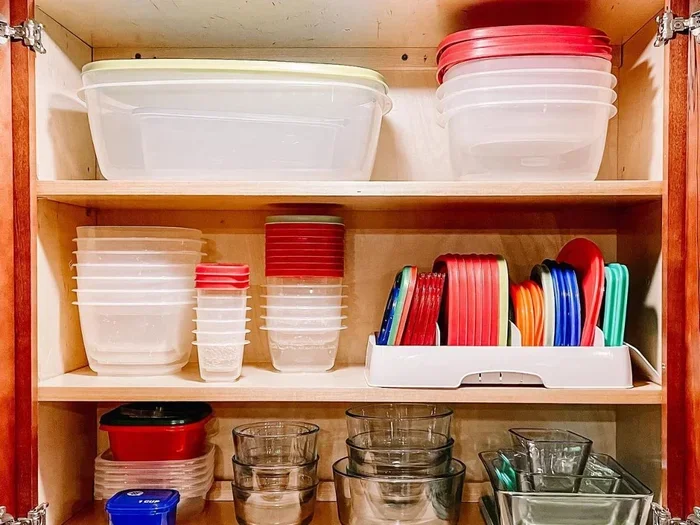
Featured image for how to organized kitchen Tupperware storage
Image source: decorhomeideas.com
If your kitchen cabinets feel like a Tupperware avalanche every time you open them, you are not alone. This guide shows you how to arrange Tupperware so it doesn’t fall out fast using simple stacking, grouping, and storage tricks. You will learn practical steps to keep containers and lids organized, save time, and make your kitchen feel calmer.
Opening a kitchen cabinet should not feel like a stacking game gone wrong. One minute you are reaching for a lunch container, and the next minute a pile of plastic bowls and loose lids is sliding onto the floor. If that sounds familiar, you are in the right place. This guide explains how to arrange Tupperware so it doesn’t fall out fast, even when your cupboards are crowded and your schedule is busy.
You will learn how to sort containers, store lids intelligently, use simple organizers, and build a system that stays tidy longer. The goal is not a perfect Pinterest kitchen. The goal is a practical setup that helps you find what you need, put it away quickly, and keep everything from crashing down when you open a door.
📑 Table of Contents
- Start by sorting every container and lid
- Match lids and containers before you stack
- Choose the right storage layout for your space
- Add simple organizers to keep everything in place
- Stack and store with stability in mind
- Make the system easy for everyone to follow
- Troubleshoot common Tupperware storage problems
- Keep the system working with small habits
- A simple plan you can use today
- Final thoughts
Start by sorting every container and lid
Before you rearrange anything, it helps to see what you actually have. Many kitchen storage problems begin with too many mixed pieces. Some containers have missing lids. Some lids have no matching bowls. Some pieces are rarely used and simply take up space. Sorting first makes the rest of the job much easier.
Empty the cabinet or drawer completely
Take every container out of the space you want to organize. Wipe down the shelf or drawer while it is empty. This gives you a clean starting point and helps you notice dust, crumbs, or spills that may have been hiding under the pile.
Group containers by shape and size
Sort your containers into simple piles. For example, keep round bowls together, square containers together, and odd-shaped pieces in a separate group. Then divide those piles into small, medium, and large sizes. This makes it much easier to stack pieces later without creating wobbly towers.
Separate lids from containers at first
It may feel strange to split lids and containers into two groups, but this step helps you see what is missing. Put lids in one area and containers in another. Then match them one by one. If a lid has no container, set it aside. If a container has no lid, decide whether you still want to keep it.
Decide what to keep, donate, or retire
Not every piece deserves cabinet space. Keep the containers you actually use for leftovers, meal prep, snacks, or freezing food. If a piece is cracked, warped, stained, or missing a lid and you do not plan to replace it, let it go. The fewer unnecessary pieces you store, the easier it is to keep the rest organized.
Match lids and containers before you stack
One of the biggest reasons Tupperware feels chaotic is that lids and bowls get separated over time. People grab a container, use it, and then put it away without the lid. Later, the lid ends up in one pile and the bowl in another. Matching them before storage solves a lot of the mess.
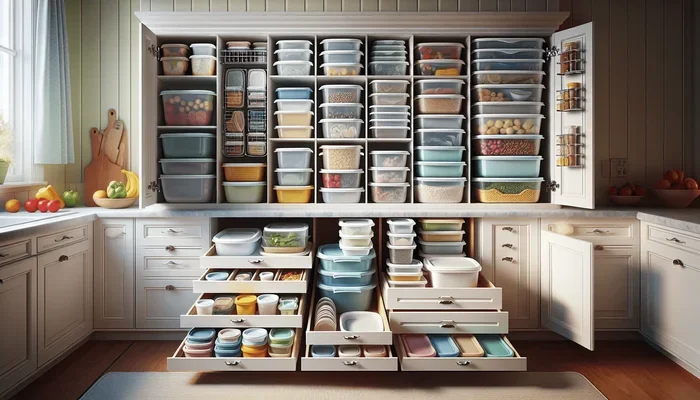
Visual guide about how to organized kitchen Tupperware storage
Image source: modernkitchenguru.com
Store lids with their matching containers
If possible, keep each lid with its container. For many people, this is the simplest method because it removes the hunt for the right top. You can nest the lid under the bowl, place it on top, or store it beside the container if the shape fits better that way.
Use a lid-only storage spot for extra tops
Some homes naturally collect more lids than containers. That happens when people replace old containers but keep the old lids, or when different brands mix together. For those extra lids, create one lid-only zone. A shallow bin, a drawer divider, or a narrow shelf section can keep lids from sliding around.
Group similar lid sizes together
Even if you do not match every lid to a container right away, group lids by size. Small lids in one pile, medium lids in another, and large lids in a separate spot. This makes it easier to find a top quickly and helps prevent lids from becoming a jumbled pile that spills when the cabinet opens.
Choose the right storage layout for your space
The best arrangement depends on the space you have. A deep cabinet, a shallow cupboard, and a drawer all work differently. Instead of forcing every container into one spot, think about where each size and type fits best.
Use deep cabinets for stacked layers
Deep cabinets can hold a lot, but they also make items disappear. To keep containers stable, place the heaviest or largest pieces on the bottom. Stack smaller containers on top in neat layers. If the shelf is very deep, place a small bin or basket at the back so items do not drift forward and fall when the door opens.
Use shelves for vertical stacking
If you have shelf space above the containers, use it carefully. Vertical stacking works best when the pieces are similar in shape. For example, square containers often stack more securely than mixed shapes. Keep the stack modest in height so it does not lean or topple when you reach for one piece.
Use drawers for lids and smaller items
Drawers can be excellent for lids, small bowls, and snack containers. They work especially well when you divide the drawer into sections. A divider or small bin keeps pieces from sliding over each other. This is one of the easiest ways to arrange Tupperware so it doesn’t fall out fast, because drawers naturally close and contain items better than open shelves.
Add simple organizers to keep everything in place
You do not need a huge storage overhaul to make a difference. Sometimes a small organizer is enough to stop the chaos. The right tool depends on the type of clutter you have and the space you are working with.
Try shelf risers or small platforms
Shelf risers create a second level inside a cabinet. That extra level can help you separate containers by size or use. For instance, you might keep everyday containers on the lower level and occasional pieces on the upper level. Risers also make it easier to see what is behind the front row, which reduces the urge to pull everything out at once.
Use bins or baskets for loose pieces
Loose containers often move around because they are not contained. A bin or basket gives them a home. You can sort by purpose, such as lunch containers, freezer pieces, or snack boxes. When the bin is easy to lift, you can pull out the whole group instead of digging through a pile.
Use drawer dividers for lids
Dividers are especially helpful for lids because lids are flat and easy to spill. Place dividers in a drawer to create separate lanes for different lid sizes. This keeps lids from sliding sideways and piling up in a messy heap. It also makes it easier for other people in the home to return lids to the right spot.
Consider a dedicated container drawer or cabinet
If you have enough space, a single dedicated area for containers can save a lot of frustration. When everything lives in one place, you are less likely to leave pieces in random spots around the kitchen. A dedicated zone also makes cleanup easier because you know exactly where to look when a container is missing.
Stack and store with stability in mind
Good storage is not just about neatness. It is also about stability. A stack that looks tidy but leans every time you touch it is not really organized. Stable storage helps prevent falls, breaks, and the annoying sound of plastic containers tumbling out.
Put heavier items lower
Place larger, heavier containers on the bottom shelf or in the lowest part of a stack. Lighter pieces can go above them. This simple rule improves balance and reduces the chance that a stack will tip over when you open a door or pull out one item.
Keep stacks modest in height
Tall stacks may seem efficient, but they can become shaky. If you have to tug hard to remove the bottom piece, the stack may collapse. Instead, keep stacks short enough that you can remove a container without disturbing the rest. If you need more storage, add another shelf or bin rather than building a higher tower.
Nest when it makes sense
Nesting saves space, but only when the pieces fit well. If one container fits neatly inside another without much force, nesting can work nicely for storage. If the pieces are too tight or the shapes are uneven, nesting can make it hard to separate them later. In that case, stacking side by side may be better than forcing them together.
Leave a little room around the edges
Cramming containers tightly against the sides of a cabinet can make them stick and then suddenly release all at once. Leave a small margin so pieces can shift slightly without falling. That extra space can make the whole system feel calmer and less likely to spill open.
Make the system easy for everyone to follow
An organized kitchen works best when the whole household can use it. If only one person knows where things go, the system usually breaks down. The easier your setup is to understand, the more likely it is to last.
Keep everyday containers easy to reach
Store the containers you use most in the most accessible spot. This might be a middle shelf, a front bin, or a top drawer. If you use certain bowls or lunch boxes often, they should not be buried behind occasional pieces. Easy access reduces the temptation to leave items out or put them away in the wrong place.
Store occasional items separately
Some containers are used only for special meals, batch cooking, or travel. Those pieces can go in a less accessible spot. Keeping rarely used items separate helps the main storage area stay clear and makes daily use much smoother.
Use simple labels or color cues
Labels are not required, but they can help. You might label a bin for lids, a bin for lunch containers, or a shelf for freezer-safe pieces. If labels feel like too much, even a simple color cue or consistent placement can help. The point is to make the system obvious so people do not guess where things belong.
Teach the “return it clean and matched” habit
A tidy system breaks down quickly if containers come back dirty, wet, or without lids. Encourage a simple habit: rinse the container, dry it, match the lid, and return both to the same spot. That small routine prevents a lot of future clutter and helps keep stacks stable.
Troubleshoot common Tupperware storage problems
Even a good system can run into trouble. Here are a few common issues and practical ways to handle them.
The pile keeps falling when I open the cabinet
This usually means the items are too loose or the stack is too tall. Try grouping containers into smaller bins, lowering the stack height, or moving heavier pieces lower. If the shelf is deep, place a backstop like a low bin so items do not slide forward all at once.
Lids are everywhere and containers are nowhere
This is a matching problem. Create one lid zone and one container zone, then pair them up again. If you have more lids than containers, decide whether you really need all those extra tops. Reducing the mismatch makes the whole system easier to manage.
The cabinet is too deep and I cannot find anything
Use a bin or basket so you can pull out a group instead of reaching into the back. You can also place everyday items near the front and occasional items in the back. A small shelf riser can also help create a front row that is easier to see.
There is not enough space for all our containers
First, reduce the collection. Keep the pieces you use and let go of damaged or unused ones. Second, store less-frequent containers elsewhere if you have another suitable spot. Third, use vertical space carefully with risers or stacking, but keep stability in mind so the storage does not become shaky.
The system gets messy again after a few weeks
That usually means the setup is too complicated or the everyday containers are not in the easiest spot. Simplify the layout, make the most-used items more accessible, and remind everyone to return lids with their containers. A quick reset every few weeks can keep small problems from growing.
Keep the system working with small habits
A stable Tupperware setup does not need constant effort. It needs a few repeatable habits. When those habits are simple, the kitchen stays organized with less work.
Start by putting containers away as soon as they are clean and dry. Do not let them sit in the sink or on the counter where they can be knocked over. Match lids before storing them, and place items back in their assigned zone instead of wherever there is a gap. If you notice a stack starting to lean, lower it before it becomes a problem.
Every so often, do a short check. Look for lids without containers, containers without lids, and pieces that are cracked or worn. A few minutes of maintenance can save you from a messy cabinet later. This is one of the easiest ways to keep your kitchen storage calm without making the task feel overwhelming.
A simple plan you can use today
If you want a fast starting point, try this order: empty the space, sort by size and shape, match lids to containers, remove what you do not need, and then use bins or dividers to keep the remaining pieces stable. Put heavier items low, keep stacks manageable, and store the containers you use most where they are easy to reach.
This approach works because it focuses on the real causes of the mess: mixed shapes, separated lids, overcrowded shelves, and unstable stacks. Once those issues are addressed, it becomes much easier to arrange Tupperware so it doesn’t fall out fast and stay that way.
Final thoughts
Organizing kitchen containers does not have to be a big project. You do not need perfect storage or expensive tools to make a noticeable difference. A little sorting, some thoughtful stacking, and a few simple organizers can turn a frustrating cabinet into a space that actually works for your daily routine.
The best system is the one you can maintain. Keep it simple, keep it stable, and make the most-used pieces easy to grab and return. With a little consistency, your containers can stay neat, easy to find, and far less likely to tumble out every time you open the door.