
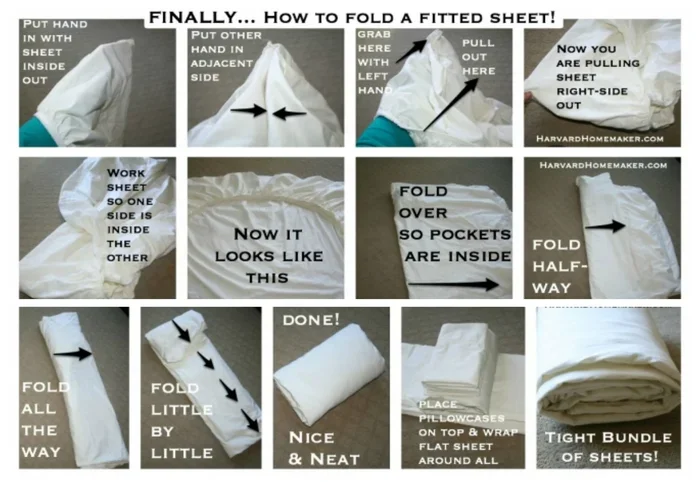
Featured image for how to folded fitted sheet stack
Image source: i.pinimg.com
Fitted sheets can feel frustrating to stack because of their elastic corners, but a simple folding method turns them into neat, compact squares. You only need a few clear steps to tame the corners, smooth the fabric, and create a uniform shape that slides neatly onto a shelf. With a little practice, you can keep your closet tidy, find linens faster, and make room for more storage without buying extra bins.
📑 Table of Contents
- How to Fold Fitted Sheets to Save Closet Space Easily
- Why Fitted Sheets Take Up So Much Space
- What You Need Before You Start
- Step-by-Step Instructions for Folding a Fitted Sheet
- How to Make the Fold Smaller for Tight Storage
- How to Store Folded Fitted Sheets So They Stay Neat
- Helpful Tips for Faster, Cleaner Folding
- Common Problems and How to Fix Them
- How This Method Helps Your Closet Stay Organized
- A Simple Routine You Can Repeat Every Time
- Final Thoughts on Folding Fitted Sheets
How to Fold Fitted Sheets to Save Closet Space Easily
Fitted sheets are one of those household items that seem simple until you try to stack them. The elastic edges, curved corners, and stretchy fabric make them awkward to handle, especially when you are trying to keep a closet organized. If you have ever opened a linen shelf and found a tangled pile of bedding, you know how quickly clutter can build up. The good news is that you do not need special tools or a complicated system. You just need a repeatable method.
This guide explains how to fold fitted sheets in a way that saves closet space and keeps your linens easy to find. You will learn a practical step-by-step process, a few helpful shortcuts, and simple ways to store the finished folds so they stay neat. Whether you are organizing a small bedroom closet, a shared linen cabinet, or a guest-room storage shelf, a clean folding routine can make a big difference. Once you learn the habit, you can move through the task faster and keep every sheet looking orderly.
Why Fitted Sheets Take Up So Much Space
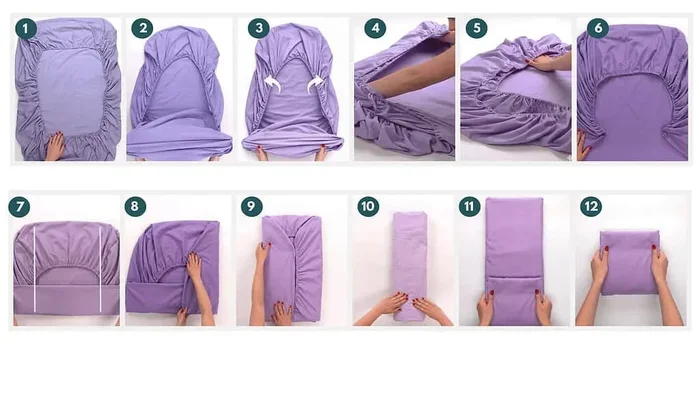
Visual guide about how to folded fitted sheet stack
Image source: alisonsnotebook.com
Most closet clutter comes from irregular shapes. Flat sheets, pillowcases, and towels usually fold into neat rectangles, so they stack predictably. Fitted sheets do not. Their elastic hems create bulk, and the corners tend to poke out when you try to force them into a square. That means the sheet often ends up folded unevenly, tucked into a half-shape, or shoved on top of other linens where it can unravel later.
Another issue is that many people fold fitted sheets while standing near a bed or holding the sheet in the air. That can work for a quick toss into a pile, but it is not ideal for creating a compact storage shape. A better approach is to use a clear surface and a few deliberate movements. When the sheet lies flat and the corners are aligned, the fabric behaves more like a regular rectangle, which makes it much easier to store.
What You Need Before You Start
You do not need much to fold a fitted sheet well. A little preparation helps more than anything else. Before you begin, gather the following:
A clean, flat surface
A bed, dining table, or clean floor can work well. The surface should be large enough for the sheet to lie fully open. If the sheet is wrinkled from the washer or dryer, smooth it out first so the corners are easier to match.
Dry, freshly laundered sheets
Fitted sheets are much easier to fold when they are dry and relaxed. Damp fabric can cling, stretch, and fold unevenly. If the sheet has just come out of the dryer, let it cool for a moment before folding so the fabric settles.
A consistent storage spot
Decide where the folded sheets will live before you start. That could be a shelf, a drawer, a bin, or a hanging organizer. Knowing the destination helps you choose a fold size that fits the space instead of making a shape that is too large or too small.
Step-by-Step Instructions for Folding a Fitted Sheet
The easiest way to fold a fitted sheet is to focus on the corners first. Once the corners are under control, the rest becomes much simpler. Follow these steps in order.
Step 1: Turn the sheet inside out and find the corners
Hold the sheet by two corners on one side. Most fitted sheets have a top side and a bottom side, but the key is to locate the four corner pockets. If the sheet is inside out in places, smooth it so the seams and corners are easier to see. You want the elastic edges facing the same direction so the corners can line up.
Step 2: Match one pair of corners
Bring two corners together so the elastic edges meet. One easy method is to place one hand inside each corner and then bring your hands together. The corners should fold into one another neatly. If the sheet is especially stretchy, take your time and smooth the fabric with your other hand.
Step 3: Match the second pair of corners
Now do the same with the other two corners. At this point, you should have both pairs aligned. If you hold the sheet by one matched set, the other set can be brought in and joined. The goal is to create a shape where all four corners are grouped together in one section.
Step 4: Lay the sheet flat and smooth it out
Once the corners are matched, place the sheet on your flat surface. The grouped corners will usually sit in one area, while the rest of the sheet spreads out around them. Smooth the fabric from the center outward so the edges are as even as possible. This step matters because a flatter sheet folds more cleanly and takes up less space.
Step 5: Fold the curved edges inward
Fitted sheets are not perfectly rectangular, so the sides often curve outward. To create a more uniform shape, fold the edges inward toward the center. You do not need a perfect line. The main idea is to reduce the extra width so the sheet becomes more manageable. If the sheet is large, you may need two or three folds on each side.
Step 6: Fold into a rectangle
After the edges are tucked in, fold the sheet lengthwise or in thirds, depending on the size of your storage space. A longer fold works well for shelves, while a smaller square may be better for drawers or bins. Keep the corners tucked neatly inside the fold so they do not poke out later.
Step 7: Finish with a final smooth press
Give the folded sheet one last smooth pass with your hands. This helps remove loose wrinkles and keeps the shape compact. The finished fold should be tidy enough to stack or stand upright without unraveling.
How to Make the Fold Smaller for Tight Storage
If your closet space is limited, you may want a more compact fold. The basic method stays the same, but you can adjust the final shape to fit the area you have.
Use narrower folds
Instead of folding the sheet into a large rectangle, make additional lengthwise folds. This is especially useful for deep shelves where you want the stack to stay stable. Narrower folds also make it easier to pull one sheet out without disturbing the rest.
Tuck the corners more tightly
When you match the corners, keep the elastic edges aligned closely. A tighter corner bundle reduces bulk and helps the sheet keep a cleaner shape. If the fabric is very stretchy, avoid pulling too hard, because that can create uneven folds.
Choose a storage-friendly size
Think about the shelf height, bin depth, or drawer width before you finish the fold. A sheet folded to match the storage space will stay neater than one that is folded randomly and then forced into place. If you store several sets together, try to keep each one the same size so the stack is uniform.
How to Store Folded Fitted Sheets So They Stay Neat
Folding is only half the job. Storage matters just as much, especially if you want to save closet space over time. A good storage method keeps the sheets accessible and prevents the stack from turning into a mess.
Stack sheets in a single layer when possible
If you have several fitted sheets, stacking them flat can work well on a shelf. Place the folded sheets one on top of another so they stay aligned. This is simple and works best when the stack is not too tall. If the stack gets heavy, the bottom sheets may flatten or shift, so keep the height manageable.
Store sheets upright in a bin or drawer
For some spaces, upright storage works better than stacking. Place the folded sheets vertically in a shallow bin or drawer so you can see each one at a glance. This method helps you grab a single set without disturbing the others. It also makes it easier to keep the folded shape intact.
Group matching sets together
Keep fitted sheets with their matching flat sheets and pillowcases if you store them together. That way, when you need fresh bedding, everything is in one place. You can fold the fitted sheet first, then add the other pieces around it or stack them in the same section. Grouping sets also helps you notice when you have too many duplicates.
Use labels or simple categories
If your closet holds many linens, labels can save time. You do not need a complicated system. A simple label like “twin,” “queen,” or “guest room” can help everyone put sheets back in the right spot. This is especially useful in shared homes, rentals, or busy households.
Helpful Tips for Faster, Cleaner Folding
Once you understand the basic method, a few small habits can make the process smoother.
Work with one sheet at a time
It is tempting to grab several sheets at once, but that often creates more frustration. One sheet is easier to control, and the corners are easier to match. After you fold it, move on to the next one.
Smooth as you go
Small wrinkles can turn into bulky folds later. If you smooth the fabric at each stage, the final shape will be cleaner. This does not have to be perfect. A few quick passes with your hands are usually enough.
Keep the fold consistent
If you want your closet to look orderly, use the same folding size for similar sheets. That makes stacking easier and helps every sheet fit the shelf or bin without awkward gaps. Consistency also makes it easier to pull out one set without knocking the rest over.
Fold while the sheet is still warm from the dryer, if convenient
Warm fabric can be easier to shape, especially right after drying. If you prefer to fold soon after laundry day, the sheet may be more pliable. Just avoid folding when it is damp, because moisture can create creases and make the fabric cling.
Use the corners as your anchor
The corner-matching step is the most important part of the process. If the corners are aligned well, the rest of the fold usually falls into place. If the sheet keeps slipping, pause and re-match the corners before continuing.
Common Problems and How to Fix Them
Even with a good method, fitted sheets can be stubborn. Here are some common issues and simple ways to handle them.
The corners keep popping out
This usually happens when the elastic edges are not fully aligned. Try matching the corners again and hold them together while you smooth the rest of the sheet. If the fabric is very stretchy, reduce the tension and fold more gently.
The sheet keeps folding unevenly
Uneven folding often comes from a wrinkled surface or mismatched corners. Lay the sheet flat, smooth it out, and start again from the corner-matching step. A flat surface makes a big difference.
The folded sheet is still too bulky
If the sheet feels thick after folding, the edges may need more inward folds. Try narrowing the sides a little more before making the final rectangle. You can also reduce bulk by avoiding tight pulling, which stretches the fabric and creates extra volume.
The stack keeps falling apart in the closet
If your folded sheets unravel on the shelf, the stack may be too tall or the folds may be too loose. Store fewer sheets in each stack, or switch to upright storage in a bin. A more stable layout often solves the problem better than forcing the sheets into a tall pile.
The sheet looks neat but takes up too much space
If the folded shape is tidy but still large, adjust the final fold to match your storage area. You may be able to fold it into a smaller rectangle without making it messy. The goal is a shape that fits the closet without wasting room.
How This Method Helps Your Closet Stay Organized
A reliable folding routine does more than make your shelves look nicer. It also makes daily organization easier. When fitted sheets are folded into consistent shapes, they are simpler to stack, store, and retrieve. That means less digging through piles and less re-folding later. It also helps you see what you have, so you can avoid keeping too many duplicate sets or forgotten linens.
This approach is especially useful if you want to save closet space without buying extra storage containers. A compact fold takes up less room, and a tidy stack makes the shelf easier to use. If you combine the folding method with a simple storage habit, such as grouping sets or using a shallow bin, the whole closet becomes easier to maintain.
A Simple Routine You Can Repeat Every Time
The best folding method is the one you can remember and repeat. Once you practice the corner-matching steps a few times, the process gets faster. You can even make it part of your laundry routine. Fold one sheet right after it comes out of the dryer, or set aside a few minutes once a week to organize the linen shelf. Small, regular efforts usually work better than waiting until the closet becomes messy again.
If you live in a busy household, keep the system simple. Use the same fold for similar sheets, store them in one designated place, and return each set to the same spot after laundry day. That way, the closet stays usable instead of becoming a place where linens are piled and forgotten.
Final Thoughts on Folding Fitted Sheets
Fitted sheets do not have to be the most annoying item in your closet. With a clear method, they can be folded into compact, tidy shapes that save space and make storage easier. The key is to match the corners, smooth the fabric, and create a rectangle that fits your shelf or bin. Once you get comfortable with the process, you can fold sheets quickly and keep your closet more organized with less effort.
The best part is that this is a practical skill that pays off every time you do laundry. A neat folded sheet is easier to store, easier to find, and easier to put away. If your goal is to save closet space and reduce clutter, a simple folding routine is one of the easiest places to start.