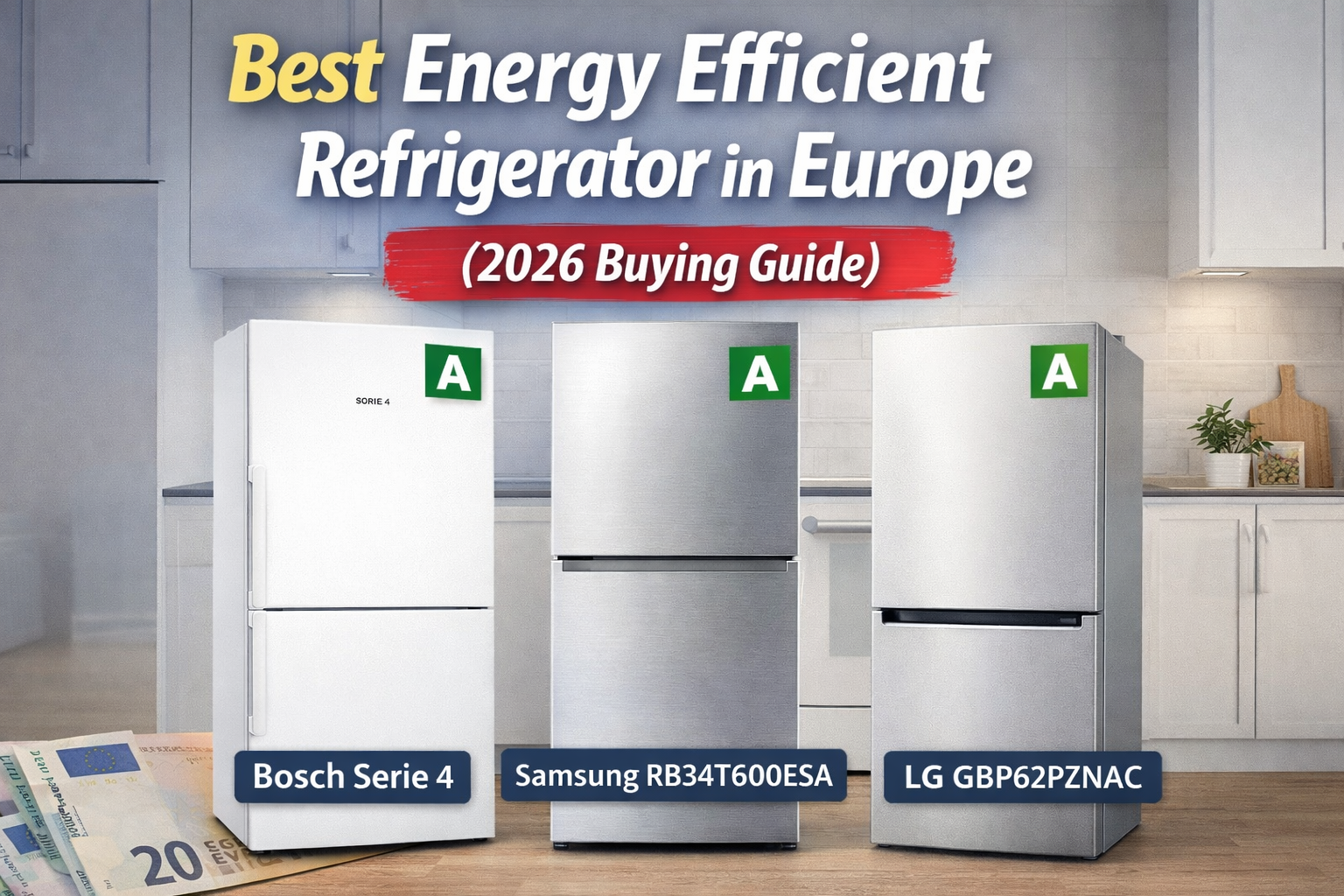

Best Energy Efficient Refrigerator in Europe (2026 Buying Guide)
Electricity prices across Europe continue to rise, making energy efficiency one of the most important factors when buying a refrigerator. Since a fridge runs 24/7, choosing the right model can significantly reduce your annual electricity bill.
In this Energy Efficient Refrigerator 2026 buying guide, we compare some of the best energy efficient refrigerators available in Europe, including:
- Bosch Serie 4 KGN36VWEA
- Samsung RB34T600ESA
- LG GBP62PZNAC
This guide is written specifically for EU users, considering the new EU energy label system, electricity costs, apartment size, and long-term savings.
Why Energy Efficiency Matters in Europe
Refrigerators operate 24 hours a day. In countries like Germany, France, Italy, and Spain, electricity prices are among the highest in the world.
Choosing an A-rated refrigerator (EU energy label) can:
✔ Reduce yearly electricity bills
✔ Lower environmental impact
✔ Increase long-term savings
✔ Improve resale value
Understanding the New EU Energy Label (A–G Scale)
The EU updated its energy labeling system. Instead of A+++, the new scale runs from A (most efficient) to G (least efficient).
When comparing refrigerators, check:
- kWh per year
- Total capacity (liters)
- Noise level (dB)
- No Frost technology
- Climate class
For most households, an A or B-rated fridge offers excellent efficiency.
Top 3 Energy Efficient Refrigerators in Europe (2026)
🥇 Bosch Serie 4 KGN36VWEA
Best for: Quiet and reliable performance
Key Features:
- Energy-efficient design
- No Frost technology
- MultiAirflow system
- 324L capacity
- Low noise (~39 dB)
Why It’s Ideal for EU Apartments:
Bosch refrigerators are known for durability and low energy consumption. The No Frost system prevents ice build-up, reducing maintenance and improving efficiency.
Perfect for small to medium European kitchens.
🥈 Samsung RB34T600ESA
Best for: Modern design + strong cooling
Key Features:
- Digital Inverter Compressor
- No Frost system
- 340L capacity
- Sleek stainless steel design
- Low vibration motor
This model offers stable temperature control and quiet operation, ideal for apartments with open kitchens.
🥉 LG GBP62PZNAC
Best for: Smart cooling technology
Key Features:
- Linear Inverter Compressor
- DoorCooling+
- 384L capacity
- Multi Air Flow
- Low noise level
LG refrigerators are known for efficient compressors that reduce electricity consumption while maintaining consistent cooling.
What Size Refrigerator Should You Buy?
| Household Size | Recommended Capacity |
|---|---|
| 1–2 people | 200–300L |
| 3–4 people | 300–400L |
| 5+ people | 400L+ |
For small European apartments, 300–350L is usually ideal.
Key Features to Look For in 2026
✔ No Frost Technology
Prevents ice build-up and improves efficiency.
✔ Inverter Compressor
Uses less electricity and reduces noise.
✔ Adjustable Shelves
Flexible storage for compact kitchens.
✔ Low Noise Level
Below 40 dB is ideal for apartments.
Estimated Electricity Savings
Switching from an older D or E-rated fridge to an A-rated model can save:
- €70–€150 per year
- 15–30% electricity usage
Over 5 years, that equals €350–€750 in savings.
Price Range in Europe (2026)
- Mid-range efficient models: €600–€900
- Premium smart refrigerators: €900–€1500
Prices vary by country and retailer.
Smart Refrigerator – Is It Worth It?
Some modern refrigerators include:
- WiFi connectivity
- Smart temperature control
- App monitoring
For most users, a reliable inverter model is enough. Smart features are optional unless you want a connected home setup.
Final Verdict – Which One Should You Choose?
✔ Best Overall → Bosch Serie 4
✔ Best Design → Samsung RB34T600ESA
✔ Best Large Capacity → LG GBP62PZNAC
For most EU households, a 300–350L A-rated No Frost refrigerator with inverter compressor is the best balance between efficiency and price.