
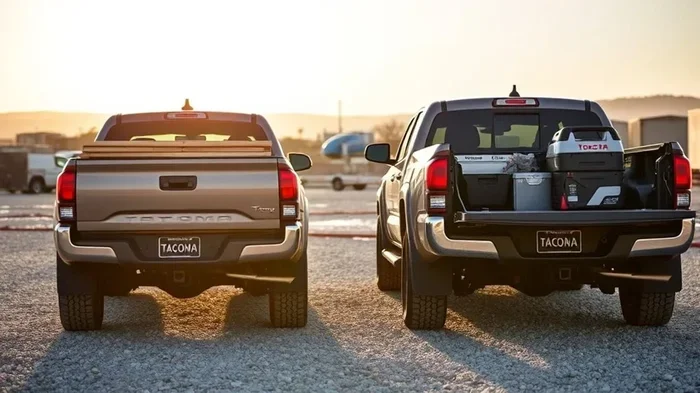
The Toyota Tacoma is a rugged mid-size truck built for tough jobs. But how much weight can Toyota Tacoma carry safely? The answer depends on your model year, trim level, and configuration. Most Tacomas handle between 1,400 and 1,700 pounds of payload. We will break down the exact numbers, explain cargo limits, and show you how to load your truck without risking damage.
Key Takeaways
- Payload varies by model: Most Toyota Tacomas carry between 1,400 and 1,700 pounds, but exact numbers depend on your trim and options.
- Check your door sticker: The safest way to find your truck’s limit is to read the yellow payload sticker on the driver’s side door jamb.
- Distribute weight evenly: Place heavy items over the axles and keep the center of gravity low to maintain control.
- Watch out for extra gear: Accessories like bed liners, tow hooks, and roof racks reduce your available payload capacity.
- Do not confuse towing with carrying: Towing capacity and payload capacity are different numbers. Your truck can tow more than it can carry in the bed.
- Exceeding limits causes damage: Overloading hurts your suspension, brakes, and frame. It also voids warranties and creates safety risks.
- Upgrade wisely: Heavy-duty springs and suspension parts can help, but always stay within legal and manufacturer guidelines.
📑 Table of Contents
- How Much Weight Can Toyota Tacoma Carry Exactly?
- Understanding Payload vs Towing Capacity
- How Much Weight Can Toyota Tacoma Carry by Model Year
- What Affects the Payload Capacity of a Toyota Tacoma
- How to Find Your Exact Payload Rating
- Safe Loading Tips for Your Tacoma
- Common Mistakes When Loading a Tacoma
- Key Takeaways for Safe Hauling
- Key Takeaways
- Final Thoughts on How Much Weight Can Toyota Tacoma Carry
How Much Weight Can Toyota Tacoma Carry Exactly?
The Toyota Tacoma has earned a strong reputation as a reliable mid-size truck. It handles daily driving, weekend projects, and rough off-road trails with ease. Many owners ask the same question before loading up for a big trip. How much weight can Toyota Tacoma carry before it becomes unsafe or damaged? The answer is not a single number. It changes based on your specific truck. In this guide, we will walk through the real payload limits, explain what affects them, and show you how to load your Tacoma the right way.
Understanding Payload vs Towing Capacity
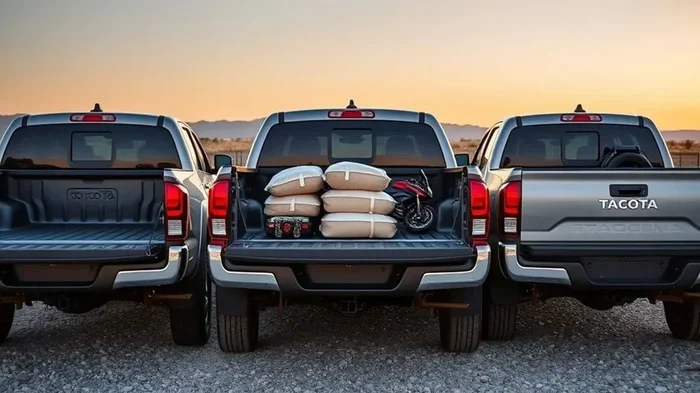
Visual guide about Toyota Tacoma payload capacity
Image source: gomyreview.com
People often mix up payload and towing. They sound similar, but they mean very different things. Payload capacity is the total weight your truck can carry on its own. This includes passengers, cargo, fuel, and any accessories mounted to the vehicle. Towing capacity is how much your truck can pull behind it with a hitch. A Tacoma can usually tow more than it can carry inside the bed. That is why you need to know both numbers before you load up.
Payload Includes Everything on the Truck
Payload is the weight that sits on the truck itself. Think of it as the total load the frame, suspension, and tires must support. This number covers the driver, passengers, fuel, tools, and anything in the bed or on a roof rack. If you add a heavy toolbox or a winch, that weight counts too. The manufacturer sets a strict limit for a reason. Going over that limit stresses the axle, the springs, and the brakes. It also changes how the truck handles on sharp turns or wet roads.
Towing Uses a Different Set of Limits
Towing relies on the hitch, the engine, and the transmission. The Tacoma’s towing rating is usually higher than its payload rating. You can pull a small trailer or a light camper, but that trailer weight does not count toward your payload limit. However, the tongue weight of the trailer does. Tongue weight pushes down on the hitch and adds to the load on the rear axle. Always check both numbers before you hook up a trailer and fill the bed.
Quick Comparison: Payload vs Towing
Here is a simple way to see the difference.
- Payload: Weight carried on the truck itself. Includes people, fuel, cargo, and accessories.
- Towing: Weight pulled behind the truck on a trailer. Does not count toward payload, except for tongue weight.
- Payload limit: Usually around 1,400 to 1,700 pounds for a Tacoma.
- Towing limit: Usually around 6,000 to 6,500 pounds for most Tacomas.
How Much Weight Can Toyota Tacoma Carry by Model Year
The Tacoma has gone through several generations. Each generation brought changes to the frame, engine, and suspension. That means payload numbers shift from one model year to the next. Most modern Tacomas fall into a similar range, but you should always verify your exact truck. The safe answer to how much weight can Toyota Tacoma carry starts with your door sticker and your build sheet.
Third Generation (2016 to 2023)
The third generation Tacoma brought a stronger frame and more trim options. Most models in this range carry between 1,400 and 1,600 pounds of payload. The exact number depends on the cab style, bed length, and drivetrain. Four-wheel drive models often carry slightly less payload because of the extra hardware. Rear-wheel drive models can sometimes handle a bit more. The SR, TRD, and Limited trims all sit in a similar ballpark. If you add heavy options like a tow package or a locking differential, the payload may drop a little.
Fourth Generation (2024 and Newer)
The fourth generation Tacoma arrived with a redesigned body and new engine choices. The payload range stays close to the previous generation. Many 2024 models still land between 1,400 and 1,700 pounds. The exact figure depends on your configuration. A base work truck may have a different rating than a fully loaded off-road trim. Always check the sticker on your specific truck. If you are shopping for a new Tacoma, ask the dealer for the payload rating before you buy.
Older Generations and Classic Models
Older Tacomas can still haul a solid amount of weight. Many pre-2016 models carry between 1,300 and 1,600 pounds. The numbers vary by engine and axle ratio. If you own an older Tacoma, check the door sticker first. If the sticker is faded or missing, you can contact a Toyota dealer with your VIN. They can pull the original build data and give you the factory payload rating. That is the most accurate way to answer how much weight can Toyota Tacoma carry for your specific truck.
What Affects the Payload Capacity of a Toyota Tacoma
Payload is not a fixed number that never changes. Several factors can raise or lower the amount of weight your Tacoma can safely carry. Some of these factors are built into the truck at the factory. Others come from the accessories you add later. Understanding these variables helps you load smarter and stay within safe limits.
Cab Style and Bed Length
The cab and bed configuration changes the weight of the truck itself. A double cab with a longer bed usually weighs more than a standard cab with a short bed. That extra factory weight reduces the payload available for cargo. In simple terms, the heavier the truck is from the factory, the less room you have for extra load. This is why two Tacomas with the same engine can have different payload numbers.
Drivetrain and Axle Ratio
Four-wheel drive adds components like a front differential, extra driveshafts, and heavier axles. Those parts add weight. A four-wheel drive Tacoma often carries slightly less payload than a rear-wheel drive version. The axle ratio also matters. A higher numerical axle ratio can help with towing and crawling, but it may change the overall weight and gearing. These differences are usually small, but they add up when you are near the limit.
Factory Options and Packages
Toyota offers several packages that change the truck’s weight. A tow package, a locking differential, or an off-road package can add hardware. That hardware reduces payload. Even small items like heated seats or a premium audio system add a little weight. The factory rating already accounts for the options that come on your truck. That is why two identical-looking Tacomas can have different payload stickers. Always trust the sticker on your own vehicle.
Aftermarket Accessories and Modifications
Many owners add accessories after purchase. Bed liners, tonneau covers, roof racks, bull bars, and light bars all add weight. A heavy steel bull bar can eat into your payload quickly. A roof rack with a tent adds weight high up, which also affects stability. If you modify your Tacoma, you need to recalculate your available payload. The safest approach is to weigh your truck with all your regular gear before you load extra cargo.
How to Find Your Exact Payload Rating
You do not need to guess. Toyota prints the payload rating right on the truck. Finding it takes only a minute. Once you know the number, you can plan your loads with confidence. This is the most reliable way to answer how much weight can Toyota Tacoma carry for your specific truck.
Read the Door Sticker
Open the driver’s side door and look at the yellow sticker on the door jamb. That sticker lists several important numbers. One of them is the payload capacity. It may also list the tire pressure, the VIN, and the GVWR. The payload number tells you the maximum weight the truck can carry in normal operation. Write it down and keep it in mind whenever you load up.
Understand GVWR and GAWR
The door sticker also shows the GVWR and the GAWR. The GVWR is the gross vehicle weight rating. It is the maximum total weight of the truck, including everything on it. The GAWR is the gross axle weight rating. It shows how much weight each axle can handle. These numbers work together. If you load too much on one axle, you can exceed the GAWR even if you are under the GVWR. Spread your cargo evenly to protect both axles.
Weigh Your Truck at a Scale
If you want a real-world check, drive your truck to a public scale. Many truck stops and recycling centers have scales. Load your truck exactly the way you normally do. Include fuel, passengers, tools, and gear. Then weigh it. Compare the result to your GVWR and payload rating. This simple step reveals how much room you have left. It also helps you spot hidden weight from accessories you may have forgotten about.
Safe Loading Tips for Your Tacoma
Knowing the limit is only half the job. You also need to load the truck in a way that keeps it stable and safe. A well-loaded Tacoma handles better, brakes better, and lasts longer. Use these practical tips every time you haul cargo.
Distribute Weight Evenly
Place heavy items close to the axles. Do not stack all the weight at the very back of the bed. Too much weight behind the rear axle can make the truck squat and steer lightly. Too much weight far forward can overload the front axle. Aim for a balanced load. Keep the center of gravity low by placing heavy items on the floor of the bed. Secure everything with straps or tie-downs so it does not shift during turns.
Watch the Tongue Weight If Towing
If you tow a trailer, remember that tongue weight counts toward your payload. A good rule is to keep tongue weight around ten to fifteen percent of the total trailer weight. That downward push adds load to the rear axle. If your bed is already full, you may need to move some cargo or reduce the trailer weight. Always check both the payload limit and the tongue weight before you hit the road.
Do Not Forget Fuel and Passengers
Fuel adds weight. A full tank of gas can weigh more than a hundred pounds. Passengers count too. If you plan to carry a full crew and a full bed, you need to do the math. Start with your payload rating. Subtract the weight of the driver and passengers. Subtract the weight of a full fuel tank. Subtract the weight of any permanent accessories. What is left is the cargo you can safely carry.
Quick Tips for Loading
- Load heavy items first: Place them low and centered over the axles.
- Secure loose items: Use straps, nets, or a tonneau cover to prevent shifting.
- Check tire pressure: Proper inflation helps support the load and improves handling.
- Re-check after modifications: Any new bumper, rack, or bed cap changes your available payload.
- Weigh before big trips: A quick stop at a scale can save you from overloading.
Common Mistakes When Loading a Tacoma
Even experienced owners make mistakes. Some errors seem small, but they add up over time. Avoid these common pitfalls to keep your Tacoma safe and reliable.
Ignoring the Door Sticker
Many people guess their payload limit. Some assume all Tacomas have the same number. That is not true. The door sticker is the only accurate source for your truck. Ignoring it can lead to overloading. Always check it before a big load.
Forgetting About Accessories
A steel bed liner, a roof tent, and a heavy bumper all reduce payload. Owners often forget to count these items. The result is a truck that is closer to its limit than it seems. Make a list of every added part and its approximate weight. Subtract that from your payload rating.
Overloading the Rear Axle
Some loads pile weight at the tailgate. That can overload the rear axle and make the front end light. The truck may feel unstable in corners or during hard braking. Spread the load out. Keep heavy items near the middle of the bed when possible.
Mixing Up Towing and Payload
It is easy to think that a high towing rating means you can fill the bed to the top. That is not correct. Towing and payload are separate limits. You can tow a heavy trailer and still overload the bed. Always check both numbers. If you want a deeper look at towing limits, you can read our guide on how much can the Toyota Tacoma tow.
Expert Insight: Plan Your Load Before You Load
Experienced truck owners plan their cargo before they start stacking. They know the weight of their gear, their fuel, and their passengers. They leave a safety margin below the maximum limit. That margin helps with ride quality and brake performance. A good rule is to stay a few hundred pounds under the rated payload when possible. That extra room makes the truck feel more controlled, especially on rough roads or steep grades.
Key Takeaways for Safe Hauling
Key Takeaways
- Know your number: Find the payload rating on your door sticker and treat it as your hard limit.
- Count everything: Include passengers, fuel, accessories, and cargo in your total.
- Balance the load: Keep heavy items low and centered to protect both axles.
- Separate towing from carrying: Towing capacity does not increase your bed payload.
- Weigh when in doubt: A public scale gives you a real-world check in minutes.
- Stay under the limit: A small safety margin improves handling, braking, and long-term wear.
Final Thoughts on How Much Weight Can Toyota Tacoma Carry
The Tacoma is a capable and dependable truck. It can handle a wide range of jobs, from weekend hauling to serious off-road adventures. The key is to know your limits and respect them. How much weight can Toyota Tacoma carry depends on your exact model, your options, and the gear you add. Most Tacomas carry between 1,400 and 1,700 pounds of payload. Your door sticker gives you the precise number for your truck. Use that number as your guide. Load evenly, secure your cargo, and leave a safety margin. If you plan to tow as well, check both your payload and your towing limits before you leave. With the right habits, your Tacoma will stay safe, stable, and ready for years of hard work.
Frequently Asked Questions
How much weight can a Toyota Tacoma carry in the bed?
Most Toyota Tacomas can carry between 1,400 and 1,700 pounds in the bed and on the truck combined. The exact number depends on your trim, cab style, and options. Always check the payload sticker on your driver’s door jamb for the precise limit.
Does the payload capacity change with four-wheel drive?
Yes, four-wheel drive models usually carry slightly less payload than rear-wheel drive models. The extra front differential, driveshafts, and heavier axles add weight. That weight reduces the cargo capacity by a small but important amount.
Where can I find the exact payload rating for my Tacoma?
Look at the yellow sticker on the driver’s side door jamb. It lists the payload capacity, the GVWR, and the tire pressure information. If the sticker is missing, a Toyota dealer can look up your VIN and give you the factory rating.
Do accessories like bull bars and roof racks reduce payload?
They do. Any added part adds weight, and that weight counts against your payload limit. A heavy steel bull bar or a roof tent can reduce your available cargo capacity quickly. Always subtract the weight of your accessories before loading extra gear.
Is tongue weight part of the payload capacity?
Yes, tongue weight counts toward your payload because it pushes down on the hitch and the rear axle. A trailer’s tongue weight is usually about ten to fifteen percent of the total trailer weight. If your bed is already full, tongue weight can push you over the limit.
What happens if I exceed the payload limit on my Tacoma?
Overloading can strain your suspension, brakes, and frame. It also makes the truck harder to steer and stop, especially in emergencies. Going over the limit can void warranties and create safety risks. It is best to stay at or below the rated payload at all times.