
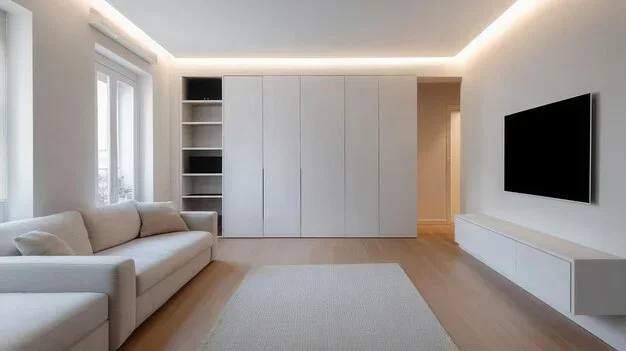
Featured image for how to minimalist living room with hidden storage
Image source: img.freepik.com
A living room with no storage does not have to feel crowded or messy. You can create a calm, usable space by decluttering first, choosing furniture that hides items, and using vertical space wisely. This guide walks you through simple steps to organize your room without adding bulky cabinets or shelves.
Living rooms often become the catch-all space in a home. Mail lands on the coffee table. Remote controls scatter across the couch. Shoes, blankets, and kids’ toys seem to appear out of nowhere. When your room has little or no built-in storage, the mess can feel impossible to manage. The good news is that you do not need a walk-in closet or a wall of cabinets to get organized. You just need a smart plan.
In this guide, you will learn how to organize a living room with no storage space in a way that feels practical, not punishing. We will cover how to clear out what you do not need, how to choose furniture that works harder, and how to use walls, corners, and hidden spots more effectively. You will also find simple maintenance habits that help the room stay tidy after the hard work is done.
The goal is not to turn your living room into a showroom. The goal is to make the space easier to use every day. A room with no storage can still feel open, comfortable, and calm when everything has a clear place.
📑 Table of Contents
- Step 1: Clear the Room and Decide What Stays
- Step 2: Create Zones So Everything Has a Job
- Step 3: Use Furniture That Doubles as Storage
- Step 4: Use Vertical Space Wisely
- Step 5: Contain Small Items Before They Spread
- Step 6: Reduce Visual Clutter on Surfaces
- Step 7: Handle the “No Closet” Problem Directly
- Step 8: Build a Simple Reset Routine
- Troubleshooting Common Problems
- Making the Room Feel Bigger and Calmer
- Final Thoughts
Step 1: Clear the Room and Decide What Stays
Before you buy bins, move furniture, or hang shelves, start with the simplest step: sorting. A room with no storage can quickly become overloaded if you keep trying to organize things you do not even use.
Empty the main surfaces
Begin with the obvious spots. Clear the coffee table, side tables, shelves, and any flat surface where clutter tends to collect. Put everything into one large pile or into a few temporary boxes so you can see the full amount at once. This makes the task feel more manageable and helps you avoid missing small items.
Sort into four groups
As you pick up each item, place it into one of four groups:
- Keep: Things you use often and truly want in the living room.
- Relocate: Items that belong somewhere else, like kitchen tools, office supplies, or bedroom items.
- Donate or discard: Broken, unused, or duplicate items you no longer need.
- Store elsewhere: Seasonal or occasional items that can live in another room, a closet, or under a bed.
This step matters because a room with no storage has to stay selective. If everything stays, nothing feels organized.
Keep only what has a clear purpose
A living room should support the things you actually do there. If you read, keep one or two books or a reading lamp. If you watch TV, keep the remotes and a blanket or two. If you host friends, keep seating and a few easy-serving items. The more intentional you are, the easier it is to organize the room without extra storage.
Step 2: Create Zones So Everything Has a Job
When storage is limited, organization works best when the room has clear purposes. Instead of thinking about the room as one big space, break it into zones. Each zone gets a job, and each job gets a home.
Choose the main activities
Think about how you use the room most often. Common living room zones include:
- Relaxing: Seating, blankets, and a small side table.
- TV or movie time: Remotes, charging area, and snacks within reach.
- Reading or quiet time: A lamp, a book stack, and a comfortable chair or corner.
- Games or family time: Board games, cards, or kids’ items in one contained spot.
- Entry or drop-off: A place for bags, keys, and everyday carry items.
Give each zone a limited footprint
A room with no storage can still feel organized if each zone stays contained. For example, keep the reading pile on one side of the room instead of spreading books across every surface. Keep the game area in one basket instead of letting pieces wander across the table. Small boundaries make a big difference.
Avoid overlap
One common problem is letting one category take over the whole room. If magazines, blankets, chargers, and toys all share the same space, the room can look messy even when it is not full. Try to keep each zone visually separate, even if the room is small.
Step 3: Use Furniture That Doubles as Storage
If your living room has no storage space, the furniture you choose becomes your best tool. The right pieces can hold items out of sight without making the room feel heavy or crowded.
Pick furniture with hidden compartments
Look for pieces that do more than one job. Helpful options may include:
- Storage ottomans: These can hold blankets, games, chargers, or other small items while giving you extra seating.
- Benches with lift tops: A bench at the end of a couch or near a window can stash items inside.
- Coffee tables with drawers or shelves: A small drawer or lower shelf can keep everyday items contained.
- Nesting tables: These can be tucked away when you need space and pulled out when you need surface area.
Choose a lighter visual footprint
Furniture that looks bulky can make a room feel even smaller. If your living room already lacks storage, try to avoid large pieces with sharp, heavy lines unless they truly earn their place. Slimmer profiles, raised legs, and open shapes can make the room feel airier.
Keep the number of pieces realistic
It is tempting to solve every problem with one more table or basket. But too many items can create new clutter. Before adding a piece, ask yourself what it will hold and whether you already have something that can do the same job.
Step 4: Use Vertical Space Wisely
When floor space is tight, the wall becomes your best friend. Vertical storage does not always mean installing large shelving units. It can mean using the space above, behind, or beside your furniture in smart ways.
Add wall hooks or rails
Hooks are useful for bags, hats, scarves, headphones, and even lightweight blankets. A simple wall rail with hooks can keep everyday items off the couch and table. If you prefer a softer look, choose hooks that match your decor so the setup feels intentional.
Use tall shelves or narrow storage
If you have wall space, tall and narrow shelves can hold books, plants, or decorative boxes without spreading across the room. The key is to keep the arrangement balanced. Too many small items on a tall shelf can look busy, so mix storage boxes with a few clean visual breaks.
Take advantage of high ledges and top surfaces
The tops of bookshelves, cabinets, or door frames can hold less-used items if you keep them organized. This works well for seasonal décor, extra serving items, or storage boxes you do not need every day. Just be sure the items are easy to reach and not likely to fall.
Use the back of doors
If your living room has a closet door, entry door, or even a room divider with a door, the back of that surface can be useful. Over-the-door organizers can hold small items, accessories, or lightweight supplies. This is especially helpful when you need storage without using floor space.
Step 5: Contain Small Items Before They Spread
Small things are often the real cause of living room clutter. Remotes, charging cables, magazines, coasters, pens, glasses, and loose toys can make a room feel chaotic fast. Containers help keep these items under control.
Use baskets and bins with a purpose
Baskets work best when each one has a clear job. For example:
- One basket for blankets
- One bin for games or kids’ items
- One tray for remotes and small electronics
- One container for magazines or reading material
When each container has a label or a known purpose, it is easier for everyone in the home to put things back where they belong.
Keep everyday items easy to reach
Storage only works if you can use it without effort. If you have to dig through five boxes to find the TV remote, the system will fail. Place the most-used items in the most accessible spots, and save harder-to-reach containers for occasional things.
Manage cords and chargers
Cords are a common source of visual clutter. A small charging tray, cable clips, or a drawer-style box can keep power cords from tangling across the room. If possible, keep charging in one spot so the rest of the living room stays cleaner.
Step 6: Reduce Visual Clutter on Surfaces
A room with no storage can still feel organized if the visible surfaces stay calm. Too many objects on display can make the room feel crowded, even if the floor is clear.
Keep tables mostly clear
Coffee tables and side tables work best when they are not covered in random items. Try to leave open space on top. A tray can help group the few items you do want out, like a candle, a drink, or a remote. The goal is to make the surface look chosen, not accumulated.
Limit decor to a few strong pieces
A small number of well-placed decorations often looks better than many tiny ones. One or two framed pieces, a plant, or a single decorative object can feel more peaceful than a crowded shelf. If you love collecting items, rotate them instead of displaying everything at once.
Use matching containers when possible
You do not need everything to match perfectly, but a few similar baskets, trays, or storage boxes can make the room feel more unified. When storage blends in, the room looks less like a collection of containers and more like a finished space.
Step 7: Handle the “No Closet” Problem Directly
Some living rooms do not have closets, chests, or built-in storage at all. If that describes your space, you may need to think beyond the room itself.
Store occasional items elsewhere
If you have items you only use sometimes, they may belong somewhere else. Seasonal blankets, spare cords, old magazines, and special-occasion décor can often move to a bedroom closet, hall storage, or another part of the home. The living room should hold what it uses most often.
Keep a small “landing spot” for daily items
Even without a closet, you can create a simple drop zone. A tray for keys, a hook for a bag, or a small basket for everyday carry items can keep the room from becoming the household dumping ground. The trick is to keep the landing spot small and easy to reset.
Use furniture that hides everyday mess
If you cannot store much outside the room, make the room’s storage invisible. Closed bins, storage ottomans, and baskets with lids can help the space feel tidy even when you are living in it daily.
Step 8: Build a Simple Reset Routine
Organizing a living room with no storage is not a one-time project. It is a system. The best systems are easy enough to maintain, because a hard system usually gets skipped.
Do a quick daily reset
A daily reset does not need to take long. Try these small actions:
- Put remotes and chargers back in their spot
- Fold blankets and place them in the storage ottoman or basket
- Clear the coffee table
- Move items that belong in other rooms back to their homes
Do a weekly tidy
Once a week, take a few minutes to look at the room with fresh eyes. Check for items that have drifted out of place. Remove anything that no longer belongs in the living room. This is also a good time to straighten baskets and wipe down surfaces.
Watch for the slow creep
Clutter rarely arrives all at once. It builds gradually. A magazine stack grows. A basket overflows. A table collects cups. Catching these small changes early keeps the room from feeling overwhelming again.
Troubleshooting Common Problems
Even a good plan can hit snags. Here are a few common issues and practical ways to handle them.
The room still feels crowded
If the room looks busy after organizing, the problem may be too many visible items rather than too little storage. Try removing a few objects from view, grouping smaller items into one container, or moving one category to another room. Sometimes less on display creates more breathing room.
Storage pieces are creating more clutter
Bins and baskets only help when they are used consistently. If a container becomes a dumping spot for random things, it stops working. Give each container a clear purpose, and empty anything that does not belong there.
The room gets messy again fast
Fast rebound usually means the system is too complicated. Make the storage easier to use. Place frequently used items where people can reach them without thinking. If the room is shared with family or roommates, keep the rules simple enough that everyone can follow them.
You do not have wall space for shelves
If walls are limited, focus on furniture-based storage and contained baskets. A storage ottoman, a slim console table, or a rolling cart can provide organization without relying on the wall. You can also use the space under a table or near a corner more intentionally.
Making the Room Feel Bigger and Calmer
Organization is not only about hiding things. It is also about how the room feels when you walk into it. A few small changes can make a living room with no storage seem more open.
Keep walkways clear. Too many chairs, tables, and baskets can make movement feel awkward. Leave enough space to sit, stand, and walk comfortably.
Use light and airiness to your advantage. A room with open surfaces, limited clutter, and a few coordinated storage pieces often feels larger than a room packed with mismatched containers.
Think in terms of function first. If a piece of furniture or decorative item does not help the room work better, it may be taking up space that you cannot afford to lose.
Final Thoughts
Learning how to organize a living room with no storage space is mostly about working smarter, not bigger. Start by removing what you do not need. Give each area a clear purpose. Use furniture that hides everyday items. Make the most of walls, doors, and vertical space. Keep small things contained, and build a routine that is easy to repeat.
A living room does not need a closet full of cabinets to stay orderly. It needs a system that matches the way you live. When every item has a place and every surface has a purpose, the room becomes easier to enjoy.