
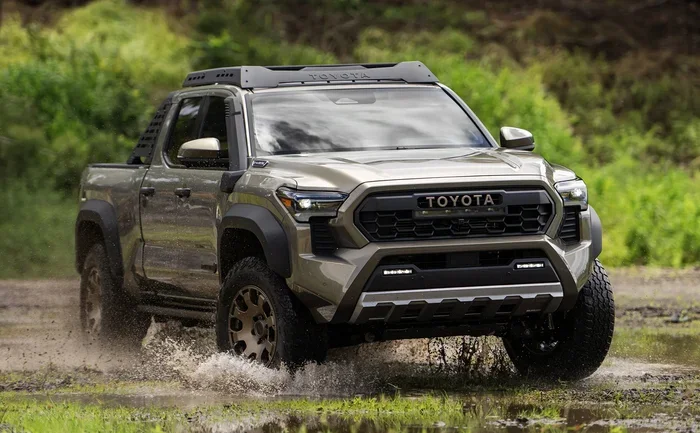
Not all Toyota Tacomas come with 4WD. The Toyota Tacoma offers both two-wheel drive (2WD) and four-wheel drive (4WD) options across its various trim levels. Choosing the right drivetrain depends on your driving needs, terrain, and budget. This guide breaks down everything you need to know about Toyota Tacoma drivetrain options so you can make a confident purchase decision.
Key Takeaways
- Not all Tacomas are 4WD: Toyota offers both 2WD and 4WD configurations across different trims.
- Trim level matters: Higher trims like the TRD Off-Road and TRD Pro typically come standard with 4WD.
- Base models often start as 2WD: The SR and SR5 trims can be ordered in either 2WD or 4WD depending on your preference.
- 4WD adds cost and capability: Four-wheel drive improves traction in snow, mud, and rough terrain but raises the purchase price and reduces fuel economy.
- Part-time vs. full-time systems: Most Tacoma 4WD models use a part-time system designed for off-road use, not constant highway driving.
- Consider your actual needs: If you mostly drive on paved roads, 2WD may be the smarter financial choice.
- Check the specific model year: Drivetrain availability can vary slightly by year, so always verify the build sheet.
📑 Table of Contents
- Are All Toyota Tacomas 4WD The Real Answer
- Toyota Tacoma Trim Levels and Drivetrain Options
- Understanding 4WD vs 2WD in the Tacoma
- Off-Road Capability and Real-World Performance
- Fuel Economy, Cost, and Long-Term Value
- How to Choose the Right Tacoma for Your Lifestyle
- Common Questions About Toyota Tacoma Drivetrains
Are All Toyota Tacomas 4WD The Real Answer
If you are shopping for a rugged midsize truck, you have probably asked yourself: are all Toyota Tacomas 4WD? It is a common question, and the short answer is no. Toyota builds the Tacoma with flexibility in mind. Some buyers want a lighter, more fuel-efficient work truck. Others want a capable off-road machine. Toyota gives you both paths.
The Tacoma has earned a strong reputation for durability and resale value. People trust it for trail riding, daily commuting, and everything in between. But that trust sometimes creates confusion about what you actually get from the factory. Let’s clear things up so you can pick the right truck for your life.
In this guide, we will look at how the drivetrain options work, which trims come with which setup, and what the choice really means for your wallet and your weekend adventures. You will also find practical tips to help you decide between 2WD and 4WD without guessing.
Toyota Tacoma Trim Levels and Drivetrain Options
The Tacoma lineup has grown over the years, but the core idea stays simple. You get a few trim levels, and each one can usually be ordered in more than one drivetrain configuration. Here is how it generally breaks down.
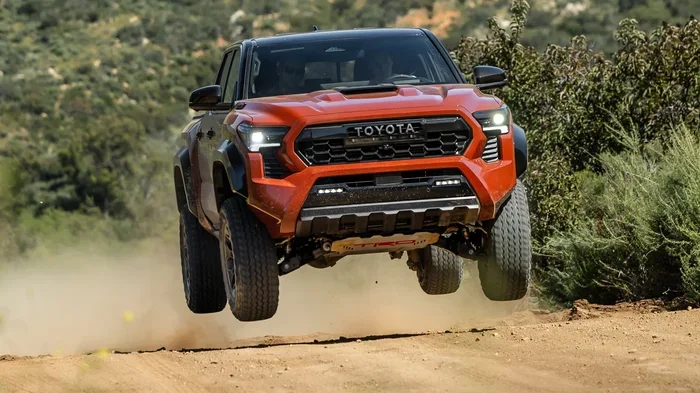
Visual guide about Toyota Tacoma 4WD off-road
Image source: motortrend.com
Base and Mid-Level Trims
The lower trims, such as the SR and SR5, are popular because they balance cost and capability. These trims often give you the choice between rear-wheel drive (RWD) and four-wheel drive (4WD). That means you are not locked into one system just because you picked a certain badge.
The SR trim is usually the most budget-friendly. It works well for city driving, light hauling, and straightforward daily use. The SR5 adds more comfort features and a bit more style, but it still keeps the same basic drivetrain flexibility. If you want a Tacoma that does not cost a fortune, these trims are where many buyers start.
Off-Road Focused Trims
Things change when you move up to the adventure-oriented trims. The TRD Off-Road, TRD Sport, and TRD Pro models are built with tougher terrain in mind. On these trims, 4WD is usually standard or heavily emphasized. You also get features like a locking rear differential, crawl control, and enhanced suspension tuning on the more serious versions.
That does not mean every off-road trim is identical. Some focus more on style and street comfort, while others lean hard into rock crawling and mud duty. Still, if your goal is maximum traction, these trims are the easiest path to a capable 4WD Tacoma.
Which Trim Fits Your Needs
Choosing a trim is really about matching the truck to your routine. Ask yourself a few simple questions:
- Do you drive on gravel roads, snow, or loose dirt often?
- Do you tow or haul heavy loads regularly?
- Do you want better fuel economy and a lower sticker price?
- Are you planning serious off-road trips or just occasional dirt roads?
If your answers lean toward paved roads and budget savings, a 2WD model may make more sense. If you expect rough terrain, 4WD is worth the extra cost.
Understanding 4WD vs 2WD in the Tacoma
People sometimes use the terms 4WD and AWD interchangeably, but they are not the same thing. The Tacoma uses a traditional four-wheel drive system, not a full-time all-wheel drive setup. That distinction matters because it affects how the truck behaves on pavement and off it.
How the Tacoma 4WD System Works
Most Tacoma 4WD models use a part-time system. In normal driving, the truck sends power mainly to the rear wheels. When you engage 4WD, power goes to all four wheels. This gives you much better grip when the road is slippery or the trail is rough.
Part-time systems are great for low-traction situations. They are simple, strong, and reliable. The tradeoff is that you should not use 4WD on dry pavement for long periods. Doing so can cause binding in the drivetrain because the front and rear axles turn at slightly different speeds when turning.
When 2WD Makes More Sense
A rear-wheel drive Tacoma can be a smart choice for many buyers. It usually costs less upfront. It also tends to deliver better miles per gallon because there is less drivetrain friction and weight. If your daily driving happens on clear roads, 2WD is often all you need.
2WD Tacomas are also easier to maintain in some ways. Fewer drivetrain components means fewer parts that can wear or fail over time. For contractors, urban drivers, and budget-minded buyers, that simplicity has real value.
Off-Road Capability and Real-World Performance
The Tacoma’s reputation is built on more than just marketing. It is a truck that many people use for hunting, camping, farming, and trail riding. But 4WD alone does not guarantee off-road success. Tires, suspension, ground clearance, and driver skill all matter too.
What 4WD Actually Helps With
A 4WD Tacoma shines when traction is limited. Think muddy boat ramps, snow-covered driveways, loose gravel hills, and wet grass. The extra grip can help you climb steeper grades and recover from slippery spots without getting stuck.
It also helps when you are carrying a load in bad conditions. A heavy bed or a trailer can make a 2WD truck feel less confident on slick surfaces. Engaging 4WD spreads the work across all four wheels and improves stability.
What 4WD Does Not Fix
It is important to keep expectations realistic. 4WD helps you get moving, but it does not magically stop a truck from sliding. Braking is still up to your tires and your driving habits. If you head into deep sand, huge rocks, or steep off-camber terrain, you will still need the right setup and careful throttle control.
Tires make a huge difference. A 4WD Tacoma on highway tires will struggle more than a 2WD Tacoma on proper all-terrain tires in some situations. If off-road ability is your goal, do not stop at the drivetrain. Build the whole package.
Fuel Economy, Cost, and Long-Term Value
Buying a Tacoma is a big decision, and the drivetrain choice affects more than just capability. It touches your fuel bill, your purchase price, and even your maintenance habits over time.
Upfront Price Differences
4WD models usually cost more than their 2WD counterparts. The exact amount varies by trim and model year, but the pattern is consistent. You are paying for extra hardware, including the front drive components, transfer case, and related controls.
For some buyers, that premium is easy to justify. For others, it is hard to swallow if they rarely use the extra capability. The best move is to compare the actual out-the-door price of both versions before you fall in love with one configuration.
Fuel Economy Considerations
Midsize trucks are not known for tiny fuel bills, but the drivetrain still matters. A 2WD Tacoma typically uses a bit less fuel because it carries less weight and has fewer moving parts in the drivetrain path. A 4WD model adds front differential gearing, half-shafts, and a transfer case, all of which can nudge efficiency down.
If you drive a lot of miles each year, that difference can add up. If you mostly take short trips or use the truck for local chores, the gap may feel smaller. Either way, it helps to think about your real annual driving rather than just the sticker price.
Resale and Ownership Value
One reason people love Tacomas is their strong resale market. Both 2WD and 4WD models hold value well, but 4WD versions often attract a wider pool of buyers when you sell. Off-road enthusiasts, outdoor workers, and rural drivers all want a capable truck. That demand can make 4WD models easier to move later.
Still, the best value comes from buying the version you will actually use. A 4WD truck that sits mostly on pavement is not a bad choice, but it may not deliver the full return on its extra cost. Match the truck to your habits, and you will likely feel better about the purchase.
How to Choose the Right Tacoma for Your Lifestyle
The best Tacoma is the one that fits your daily life and your occasional adventures. You do not need the most extreme trim to have a great experience. You just need the right mix of features.
Questions to Ask Before You Buy
Use this quick checklist when you are comparing models:
- Where do I drive most? Paved roads, gravel, snow, or trails?
- How often will I use 4WD? Monthly, seasonally, or rarely?
- Do I tow or haul? If yes, consider payload and traction needs.
- What is my budget? Include fuel, insurance, and future mods.
- Do I want to modify the truck? Lift kits and tires can change the equation.
Common Buyer Mistakes
A few mistakes come up again and again. Avoid them if you can:
- Buying 4WD just because it sounds tougher. Capability is great, but only if you will use it.
- Ignoring tire choice. The wrong tires can undo a lot of your drivetrain advantage.
- Forgetting about daily comfort. Some off-road trims ride stiffer than simpler trims.
- Overlooking payload and towing needs. Drivetrain is only one part of the truck’s job.
Quick Tips for a Smarter Purchase
Here are a few practical moves that can save you time and money:
- Test drive both 2WD and 4WD versions if possible.
- Compare the full price, not just the base MSRP.
- Think about your worst-case weather and terrain, not just your best days.
- Check the specific model year, since options can shift over time.
- Plan for tires first if off-road performance matters to you.
Common Questions About Toyota Tacoma Drivetrains
Buyers often have the same core questions when they are deciding between 2WD and 4WD. Here are straightforward answers to help you move forward with confidence.
Do all Toyota Tacomas come with 4WD from the factory?
No, they do not. Toyota offers both 2WD and 4WD versions, and the availability depends on the trim and model year. Lower trims often give you a choice, while more off-road-focused trims usually lean toward 4WD.
Is a 4WD Tacoma better for snow and ice?
A 4WD Tacoma can help you get moving in snow and ice because all four wheels share the work. It does not improve braking, though, so good tires and careful driving still matter a lot. For many winter drivers, 4WD plus proper tires is a very reassuring combination.
Can I switch a 2WD Tacoma to 4WD later?
It is possible in some cases, but it is not a simple bolt-on job. Converting a 2WD truck to 4WD involves major drivetrain changes and can be expensive. In most situations, it is smarter to buy the configuration you want from the start.
Does 4WD reduce fuel economy on the Tacoma?
Usually yes, though the difference is not always huge. The extra drivetrain parts add weight and friction, which can lower efficiency. Your driving style, tires, and load also play a big role, so real-world results vary.
Which Tacoma trim is best for off-road use?
That depends on how serious your off-roading is. The TRD Off-Road and TRD Pro trims are the most purpose-built for rough terrain, with features like locking differentials and more rugged tuning. For lighter use, a 4WD SR5 can still be a very capable and more affordable option.
Are 2WD Tacomas less reliable than 4WD models?
Not necessarily. Both versions use the same core platform and engine options, so reliability is generally strong across the board. A 2WD model may even have slightly fewer drivetrain parts, which can mean fewer components to service over time.