
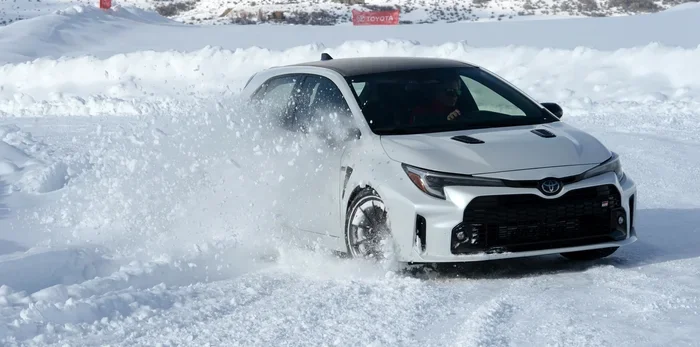
Are Toyota Corollas good in the snow? Yes, they can handle light to moderate winter conditions well, especially with proper tires and smart driving habits. The Corolla offers solid stability control, reliable engineering, and decent ground clearance for a compact sedan. However, it is not a dedicated winter vehicle, so severe snowstorms or deep ice may challenge its limits. This guide breaks down exactly what you can expect, how to prepare your Corolla for cold weather, and when you might want a different vehicle for heavy snowfall.
Key Takeaways
- Solid winter capability for a sedan: The Corolla handles light to moderate snow reliably when equipped with proper tires and safety features.
- All-wheel drive is not available: Every Corolla comes with front-wheel drive, so traction depends heavily on tires and road conditions.
- Electronic aids help a lot: Traction control, stability control, and ABS improve confidence on slippery roads.
- Tires make the biggest difference: Winter tires dramatically improve snow and ice performance compared to all-season tires.
- Ground clearance is modest: The Corolla sits low, so deep snow or unplowed roads can be a real challenge.
- Cold-weather prep matters: Battery health, fluid checks, wipers, and gentle driving habits keep your Corolla safe in winter.
- Know when to choose another vehicle: If you face frequent heavy snow, steep hills, or unplowed roads, a crossover or AWD SUV may suit you better.
📑 Table of Contents
- Are Toyota Corollas Good in the Snow? A Practical Winter Review
- How the Toyota Corolla Handles Snow Traction
- Toyota Corolla Winter Safety Features
- Tires, Ground Clearance, and Real Snow Performance
- Toyota Corolla Cold Weather Reliability and Maintenance
- How the Corolla Compares to Other Winter Vehicles
- Best Practices for Driving a Corolla in Winter
- Final Thoughts on Are Toyota Corollas Good in the Snow
Are Toyota Corollas Good in the Snow? A Practical Winter Review
Winter driving raises a simple question for many car shoppers: can my daily sedan handle the cold, the slush, and the occasional snowstorm? The Toyota Corolla has a long reputation for reliability, affordability, and everyday practicality. But does that reputation hold up when the temperature drops and the roads turn white? In this review, we look at how the Corolla performs in snowy conditions, what features help, what limits it, and how to make your car safer for winter commutes.
The short answer is that a Corolla can be a capable winter car for many drivers, as long as you understand its strengths and its limits. It is not a rugged off-roader or a tall SUV built for deep snow. It is a compact sedan with front-wheel drive, a low center of gravity, and a suite of electronic safety aids. Those traits can work well on plowed roads, during light to moderate snowfall, and in city driving where speeds stay moderate. If your winters are mild or your roads get cleared regularly, the Corolla is a sensible choice. If you regularly face heavy snow, steep icy hills, or unplowed side streets, you may want to think about tires first and vehicle type second.
Below, we walk through the details so you can decide with confidence. We cover traction, safety technology, tires, ground clearance, maintenance, and real-world winter driving tips. We also compare the Corolla to other common choices so you can see where it fits in the bigger picture.
How the Toyota Corolla Handles Snow Traction

Visual guide about Toyota Corolla snow driving
Image source: cardivision.com
Traction is the biggest factor in winter driving. The Corolla uses front-wheel drive, which means the engine sends power to the front tires. In snow, front-wheel drive can feel steady and predictable because the weight of the engine sits directly over the drive wheels. That extra weight can help the tires bite into loose snow better than a rear-wheel drive layout with a lighter front end.
That said, front-wheel drive is not magic. If the snow is deep, packed, or icy, any sedan can struggle. The Corolla’s traction control system helps by reducing wheel spin and adjusting power delivery when a tire starts to slip. This can make a noticeable difference during gentle acceleration on slippery on-ramps, wet intersections, or light snow-covered streets. It does not create grip that does not exist, but it helps you use the grip you have more efficiently.
Another helpful trait is the Corolla’s relatively light weight and balanced handling. In slippery conditions, a lighter car can feel easier to control at low speeds than a much heavier vehicle. It also tends to stop in a shorter distance when tires and brakes are in good shape. Still, braking on ice is always a serious challenge, and no sedan can completely remove that risk. The best approach is to slow down early, leave more space, and avoid sudden moves.
Front-Wheel Drive vs. All-Wheel Drive in Winter
Many drivers wonder whether they need all-wheel drive for snow. All-wheel drive can help with acceleration and stability when pulling away from a stop in snow or climbing a slippery incline. It can also add confidence in changing conditions. But it does not improve braking or cornering on its own. A front-wheel drive car with great winter tires can outperform an all-wheel drive vehicle with worn all-season tires in many real-world situations.
For the Corolla, this means that your tire choice matters more than the drivetrain in most daily winter scenarios. If your routes are mostly cleared roads with occasional snow, front-wheel drive can be perfectly adequate. If your area sees frequent heavy snowfall, steep hills, or long stretches of untreated roads, all-wheel drive may be worth considering. The key is to match the vehicle to your actual driving conditions, not just to the idea of winter.
What Traction Control and Stability Control Do
Modern Corolla models include electronic systems that monitor wheel speed, steering angle, and vehicle direction. When the car detects slip, it can reduce engine power, apply braking to specific wheels, or both. These systems work quietly in the background and can help you stay on course during sudden slides or gusts of wind. They are especially useful for drivers who are still building winter driving experience.
It is important to remember that these systems are aids, not substitutes for good tires and careful driving. They react after slip begins, so they cannot always prevent a loss of control if the road is extremely slick or if you enter a corner too fast. Use them as a safety net, not as a reason to drive aggressively in winter conditions.
Toyota Corolla Winter Safety Features
Safety features play a major role in how comfortable you feel during winter driving. The Corolla comes with a solid set of standard and available technologies that support snow and ice driving. These features do not turn the car into a winter specialist, but they do add meaningful protection and control.
Some of the most useful systems include:
- Anti-lock brakes: Help you maintain steering control during hard braking on slippery surfaces.
- Traction control: Reduces wheel spin when accelerating in snow or on wet roads.
- Stability control: Helps keep the car pointed where you want it if it starts to slide.
- Multiple airbags: Provide important protection in the event of a collision.
- Brake assist: Can add braking pressure during emergency stops.
- Available driver-assist features: Depending on trim and package, options may include lane support, adaptive cruise control, and collision avoidance aids.
In winter, the most valuable features are usually the ones that help you brake and steer with confidence. Anti-lock brakes and stability control are especially helpful when roads are unpredictable. Driver-assist features can also reduce fatigue during long, gray commutes, though they should be used with extra caution in heavy snow because sensors and cameras can be affected by bad weather.
Does the Corolla Have All-Wheel Drive?
If you are asking whether the Corolla offers all-wheel drive, the answer is no. The Corolla is built as a front-wheel drive sedan. That design keeps the vehicle efficient, compact, and affordable. It also helps with interior space and fuel economy, which are big reasons many people choose the Corolla in the first place.
For snow driving, the lack of all-wheel drive is not necessarily a dealbreaker. Many front-wheel drive cars handle winter roads well when paired with the right tires and driven carefully. The Corolla’s electronics and low center of gravity can support steady, controlled driving. If your winters are moderate and your roads are usually maintained, the Corolla can be a practical and economical winter car.
If your routine includes frequent snow-covered highways, long climbs, or rural roads that may not get plowed quickly, you might prefer a vehicle with all-wheel drive. In that case, it is worth comparing the Corolla to compact crossovers or all-wheel drive sedans that better match your environment.
Tires, Ground Clearance, and Real Snow Performance
When people ask, are Toyota Corollas good in the snow, the answer often depends on three things: tires, clearance, and driving style. The car itself matters, but the setup and the driver matter just as much. A well-prepared Corolla can handle a lot. A poorly prepared one can struggle even in light snow.
Tires are the single most important upgrade for winter. All-season tires can work in mild winter conditions, but they usually lose grip as temperatures drop and snow builds. Winter tires use softer rubber and tread patterns designed for snow and ice. They can improve acceleration, braking, and cornering in cold weather. If you live where winters are real and not just a few cold days, winter tires are one of the best investments you can make.
Ground clearance is another limitation to keep in mind. The Corolla sits lower than a crossover or SUV. That lower stance helps with handling and efficiency, but it also means the undercarriage is closer to the road. In deep snow, this can lead to scraping or reduced ability to move through unplowed areas. If your driveway is steep or your neighborhood gets heavy accumulation, clearance becomes a real concern.
Winter Tires vs. All-Season Tires
Here is a simple comparison to help you think through tire choices:
- All-season tires: Good for year-round use in mild climates. They offer a balance of wet, dry, and light snow performance, but they are not optimized for serious winter conditions.
- Winter tires: Designed for cold temperatures, snow, and ice. They usually provide better grip in winter, but they wear faster in warm weather and should be swapped out when the season ends.
- All-terrain or off-road tires: Not typical for a Corolla, and usually unnecessary unless you are using the car in very unusual conditions.
If you want the best snow performance from your Corolla, winter tires are the strongest option. They can make the car feel more willing in slippery starts, more stable in turns, and more confident under braking. Even a front-wheel drive sedan with winter tires can feel much more capable than many people expect.
Ground Clearance and Deep Snow Limits
The Corolla is not meant for deep snow. If snow piles up beyond a few inches and roads are not cleared, a low sedan can have trouble. The front bumper, lower skirt, and undercarriage may contact snow or slush, and that can slow the car down or cause damage. In plowed city streets and suburban roads, this is usually not a big issue. In rural or severe conditions, it can be.
If you often drive through unplowed parking lots, long unmarked roads, or deep drifts, the Corolla may not be the best tool for the job. In that kind of environment, a vehicle with higher ground clearance and more approach angle can be easier to live with. The Corolla is best suited to winter driving where the road is still recognizable and the snow is manageable.
Toyota Corolla Cold Weather Reliability and Maintenance
Winter is hard on cars, even reliable ones. Cold temperatures affect batteries, fluids, rubber parts, and visibility. The Corolla has a strong reliability reputation, which is one reason it remains popular in so many climates. But reliability does not mean zero maintenance. A little seasonal care goes a long way toward keeping your car safe and starting every morning.
Cold weather can reduce battery performance. If your battery is older, winter is a good time to have it tested. A weak battery may still work in summer but struggle when the engine oil is thick and the cabin heater is drawing power. It is also smart to check coolant levels, brake fluid, washer fluid, and oil condition. Using the correct washer fluid for freezing temperatures matters more than many drivers realize, especially when road spray and salt are constant.
Winter Maintenance Checklist
Use this checklist before the cold gets serious:
- Battery test: Check charge and health, especially if the battery is more than a few years old.
- Tire inspection: Look for tread depth, cracks, and uneven wear. Replace damaged tires before winter if possible.
- Winter wiper blades: Consider blades designed to handle snow and ice better than standard ones.
- Fluid check: Confirm coolant, brake fluid, and washer fluid are at proper levels and suitable for cold weather.
- Lights: Make sure headlights, taillights, turn signals, and brake lights work well for short winter days.
- Emergency kit: Keep an ice scraper, small shovel, blanket, flashlight, phone charger, and basic supplies in the car.
These steps are simple, but they can prevent frustrating cold-weather problems. A Corolla that starts quickly, stops reliably, and sees clearly is much easier to trust in snow.
Fuel Economy and Winter Driving Habits
Winter usually reduces fuel economy a bit. Cold air is denser, the engine takes longer to warm up, and heaters draw energy from the system. Tire pressure can also drop in colder temperatures, which may affect rolling resistance. The Corolla is known for efficient everyday driving, but winter conditions will still affect your miles per gallon.
To help maintain efficiency and safety, try these habits:
- Warm up the car only as needed, not for long periods.
- Keep tire pressure at the recommended level, checking it more often in winter.
- Drive smoothly, with gentle acceleration and early braking.
- Remove snow and ice from the car to reduce drag and improve visibility.
- Plan routes that favor main roads and better plowing when possible.
These habits do more than save fuel. They also make the car easier to control when the weather turns messy.
How the Corolla Compares to Other Winter Vehicles
The Corolla is not the only option for winter commuting, so it helps to compare it with other common choices. The best vehicle depends on your roads, your snowfall, and how much you value comfort, efficiency, cargo space, or traction.
Here is a simple comparison of how the Corolla fits among other popular choices:
- Toyota Corolla: Front-wheel drive, efficient, reliable, easy to handle, lower ground clearance, best for cleared roads and light to moderate snow.
- Compact crossover with front-wheel drive: Slightly more ground clearance, more cargo space, still front-wheel drive, better for light snow and occasional rough roads.
- All-wheel drive crossover or SUV: More traction help in acceleration and slippery starts, higher seating position, more clearance, usually less efficient, often more expensive.
- Dedicated winter vehicle or AWD sedan: Can be a strong choice for frequent snow, hills, and longer untreated stretches, depending on tires and drivetrain tuning.
The Corolla stands out for efficiency, simplicity, and low running costs. It is a strong fit for drivers who want a dependable daily car and do not need maximum snow capability. If your winters are more demanding, an all-wheel drive option or a higher-clearance vehicle may be a better match. The right choice is the one that fits your actual routes, not just the one with the most impressive marketing.
When the Corolla Makes Sense in Snow
The Corolla is a smart winter car for many people. It works well when:
- Your roads are usually plowed and treated.
- Snowfall is light to moderate rather than constant and deep.
- You drive mainly in cities or suburbs with reasonable speeds.
- You want strong fuel economy and low ownership costs.
- You are willing to use winter tires and practice careful driving.
In those situations, the Corolla can be a very practical winter companion. It is easy to park, easy to drive, and generally easy to live with. For a lot of everyday commuters, that matters more than having the most aggressive traction setup on the market.
When You Might Want a Different Vehicle
There are times when the Corolla is not the best fit. You may want to consider another vehicle if:
- You regularly drive through deep or unplowed snow.
- Your commute includes steep, icy hills.
- You live in a region with long, severe winters and limited road maintenance.
- You need more cargo space for winter gear, passengers, or equipment.
- You want the extra confidence of all-wheel drive for frequent slippery conditions.
If any of those sound familiar, it is worth looking at higher-clearance or all-wheel drive options. That does not mean the Corolla is a bad car. It simply means different tools suit different jobs.
Best Practices for Driving a Corolla in Winter
Good winter driving is more about technique than hardware. Even a capable car can get into trouble if it is driven too hard for the conditions. The Corolla’s size and front-wheel drive layout make it fairly approachable, but winter still rewards patience and smooth control.
A few practical habits can make a big difference:
- Leave more space: Snow and ice increase stopping distance, so give yourself extra room ahead.
- Brake earlier: Start slowing down sooner than you would on dry pavement.
- Steer gently: Sudden steering inputs can break traction, especially in slush or packed snow.
- Accelerate softly: Apply throttle gradually to avoid spinning the front tires.
- Avoid cruise control on slick roads: It can reduce your ability to react quickly to changing traction.
- Watch for black ice: Shaded areas, bridges, and early morning roads can be slick even when they look wet.
If you are new to winter driving, practice in a safe, empty lot after a light snowfall. Getting a feel for how the car slides, stops, and starts in a controlled setting can build confidence before you face real traffic. The Corolla is a forgiving car for learning, which is one more reason it works well for many winter drivers.
Emergency Preparedness and Visibility
Visibility is critical in snow. Keep your windows, mirrors, lights, and roof clear before driving. Snow on the roof can slide forward when you brake, and packed snow on lights reduces visibility to others. A few extra minutes of clearing can improve safety a lot.
It is also wise to keep a small winter kit in the car. A scraper, brush, gloves, flashlight, phone charger, and blanket can be very helpful if you get delayed or stuck in slow traffic. In heavier weather, let someone know your route and expected arrival time when possible. Winter driving is safer when you plan for the unexpected.
Final Thoughts on Are Toyota Corollas Good in the Snow
So, are Toyota Corollas good in the snow? For many drivers, yes, they can be. The Corolla offers a practical, reliable, and efficient way to handle winter commuting, especially when roads are maintained and snowfall is moderate. Its front-wheel drive layout, electronic safety aids, and stable handling can support confident driving in everyday winter conditions. With winter tires, good maintenance, and careful habits, the Corolla becomes even more capable.
At the same time, the Corolla has clear limits. It does not have all-wheel drive, its ground clearance is modest, and it is not designed for deep snow or severe unplowed conditions. If your winters are heavy, your hills are steep, or your roads are often untreated, you may want a different vehicle or at least a serious tire upgrade. The best choice depends on your real-world environment, not just on the car’s general reputation.
If you are looking for a dependable daily sedan and your winters are manageable, the Corolla is a strong candidate. It is affordable to run, comfortable to drive, and usually easy to trust when properly prepared. For drivers who need more snow capability, the smartest move is often to start with tires and then decide whether the vehicle itself needs to change. That balanced approach usually leads to the best winter driving experience.
Quick Winter Checklist for Corolla Owners
- Install winter tires if you face regular snow and cold temperatures.
- Test the battery and check fluids before the deep cold arrives.
- Keep tire pressure at the recommended level throughout winter.
- Clear snow from all windows, lights, mirrors, and the roof before driving.
- Drive smoothly, brake early, and leave extra space on slick roads.
- Carry a basic emergency kit for delays, poor visibility, and cold snaps.
With the right preparation, the Corolla can be a reassuring winter car for a wide range of drivers. It may not be the most rugged option available, but for many people, it is a smart, sensible, and cost-effective one.
Frequently Asked Questions
Are Toyota Corollas good in the snow?
Yes, Toyota Corollas can be good in the snow for light to moderate winter conditions, especially when equipped with winter tires and driven carefully. They are front-wheel drive sedans, so they work best on plowed or treated roads rather than deep, unplowed snow.
Does the Toyota Corolla have all-wheel drive?
No, the Toyota Corolla is available only with front-wheel drive. That means it relies on front tire grip and electronic aids for snow traction, rather than the extra pull of all-wheel drive.
Do I need winter tires for a Corolla in snow?
Winter tires are strongly recommended if you face regular snow, ice, or freezing temperatures. They usually provide better grip than all-season tires in cold weather and can improve starting, stopping, and cornering.
Can a Toyota Corolla handle heavy snow?
A Corolla can struggle in heavy or deep snow because it has low ground clearance and front-wheel drive. It is better suited to cleared roads and moderate snowfall than to severe winter conditions or unplowed areas.
What safety features help the Corolla in winter driving?
Features like anti-lock brakes, traction control, and stability control help the Corolla stay more stable and controllable on slippery roads. Available driver-assist technologies can also support safer commuting, though they should be used with extra caution in bad weather.
How should I maintain a Corolla for winter?
Check the battery, tire pressure, fluids, wipers, and lights before winter gets serious. It also helps to use cold-weather washer fluid, keep an ice scraper and emergency kit in the car, and drive smoothly to reduce strain on the vehicle.