
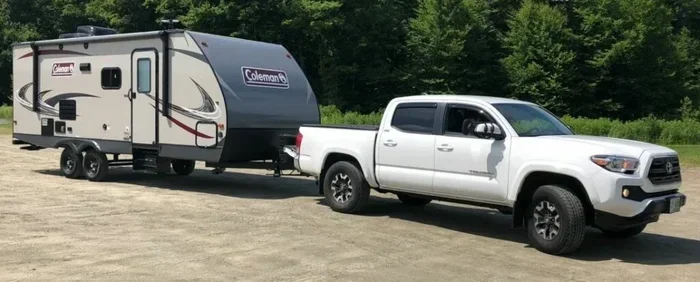
Yes, a Toyota Tacoma can pull a camper, but you must respect its towing capacity and payload limits. The right setup depends on your truck’s configuration, the camper’s weight, and proper equipment. This guide breaks down everything you need to know to tow safely and confidently.
Key Takeaways
- Know your rating: Always check the door jamb sticker for your specific Tacoma’s towing capacity and payload.
- Match the camper: Choose a travel trailer or camper that stays well under your truck’s maximum rated limits.
- Use the right gear: Proper hitch, brake controller, and tire pressure make a huge difference in towing safety.
- Watch the tongue weight: Keep tongue weight between 10% and 15% of the total trailer weight for stable towing.
- Drive carefully: Allow extra stopping distance, take corners wider, and avoid sudden maneuvers when towing.
- Check local laws: Some states require trailer brakes, special licensing, or speed restrictions for heavier setups.
- Plan ahead: Know your route, campground road conditions, and fuel stops before hitting the road with a loaded camper.
📑 Table of Contents
- Can Toyota Tacoma Pull Camper Safely and Effectively
- Understanding Toyota Tacoma Towing Capacity
- Payload Capacity and Why It Matters More Than You Think
- Choosing the Right Camper for Your Tacoma
- Essential Towing Equipment and Setup
- Driving Tips for Towing a Camper with a Tacoma
- Real-World Tacoma Towing Scenarios
- Maintenance and Long-Term Towing Care
- Frequently Asked Questions
Can Toyota Tacoma Pull Camper Safely and Effectively
If you are asking can Toyota Tacoma pull camper, you are not alone. This question comes up constantly among outdoor lovers, weekend warriors, and first-time tower owners. The short answer is yes. The longer answer requires a bit of homework. Your Tacoma is a capable mid-size truck. It was built for work, play, and adventure. But it is not a heavy-duty hauler. Knowing exactly what your truck can handle will keep you safe and stress-free on the road.
The Toyota Tacoma has earned a strong reputation for reliability and off-road prowess. Many owners use it to haul small campers, pop-up trailers, and lightweight travel trailers. Some even pull small fifth wheels or teardrop campers with ease. The key is matching your specific truck to the right camper. A well-matched setup feels smooth and controlled. A mismatched setup feels heavy, sluggish, and potentially dangerous. Let us walk through the details so you can tow with confidence.
Understanding Toyota Tacoma Towing Capacity
The first step is knowing your truck’s official towing capacity. This number tells you the maximum weight your Tacoma can pull safely. It is not a guess. It comes from engineering tests and manufacturer ratings. You can find this information on the driver-side door jamb sticker. You can also check your owner’s manual or the Toyota website using your VIN.
Several factors change the towing number. Engine size matters. The standard turbo-four engine offers solid towing for lighter loads. The optional V6 engine generally provides more pulling power. Cab style plays a role too. A double-cab model may have different ratings than a access cab. Bed length can affect weight distribution and payload. Two-wheel drive and four-wheel drive setups also shift the numbers slightly.
Here is a general look at what different Tacoma configurations can handle:
| Configuration | Typical Max Towing | Best For |
|---|---|---|
| 2.4L Turbo, 4WD, Double Cab | Around 3,500 lbs | Light campers, pop-ups, small trailers |
| 2.4L Turbo, 2WD, Access Cab | Around 3,500 lbs | Budget-friendly light towing |
| 3.5L V6, 4WD, Double Cab | Around 6,000 lbs | Mid-size travel trailers, larger campers |
| 3.5L V6, 2WD, Access Cab | Around 6,000 lbs | Higher towing with lighter rear end |
These numbers are general guides. Your exact rating may be higher or lower. Always verify with your door sticker. Remember that towing capacity is only one part of the puzzle. Payload capacity matters just as much. We will cover that next.
What Changes the Towing Number
The towing capacity is not a fixed number for every Tacoma. It shifts based on several key elements. Engine choice is the biggest factor. The V6 delivers more horsepower and torque. That extra muscle helps when climbing hills or passing on the highway. The turbo-four engine is efficient and strong enough for lighter campers. It works well for weekend trips with a small setup.
Drivetrain also plays a role. Four-wheel drive adds weight to the truck. That extra weight reduces payload and can slightly lower towing ratings. Two-wheel drive models often rate a bit higher because they are lighter. However, four-wheel drive gives you better traction in mud, snow, and loose gravel. Many tower owners prefer it for campground access.
Cab and bed configuration matter too. A longer bed can help with weight distribution on certain trailers. A double cab gives you more passenger space but adds weight. The manufacturer balances these factors when setting the official rating. Always use the rating for your exact build.
Payload Capacity and Why It Matters More Than You Think
Many people focus only on towing capacity and ignore payload capacity. That is a common mistake. Payload is the total weight your truck can carry on its frame. This includes you, your passengers, cargo in the bed, fuel, and the trailer’s tongue weight. If you exceed payload, your truck will squat, handle poorly, and wear out faster. In worst cases, it can become unsafe.
Tongue weight is the downward force the trailer puts on the hitch. A good rule is to keep tongue weight between 10% and 15% of the total trailer weight. For example, a 3,000-pound camper should put about 300 to 450 pounds on the hitch. That weight counts against your payload. Add a 200-pound driver, a full tank of fuel, and some gear in the bed. You can see how payload fills up fast.
Here is a simple payload example:
- Driver and passenger: 350 lbs
- Fuel (full tank): 120 lbs
- Bed cargo and gear: 200 lbs
- Hitch and tongue weight: 400 lbs
- Total payload used: 1,070 lbs
If your Tacoma’s payload rating is 1,500 pounds, you still have room. If it is 1,200 pounds, you are getting close. Always leave a buffer. Do not max out every limit at once. A comfortable margin keeps your truck stable and your ride smoother.
How to Check Your Payload
Check the yellow sticker on your door jamb. It lists the payload capacity in pounds. Subtract everything you plan to carry. Include people, fuel, cargo, and tongue weight. The remaining number is your safe margin. If the math feels confusing, start with a lighter camper. You can always upgrade later once you learn your truck’s habits.
Choosing the Right Camper for Your Tacoma
Not all campers are built the same. Some are light and easy to tow. Others are heavy and demand a bigger truck. The best camper for your Tacoma is one that stays well under your towing capacity and fits your payload. A good match makes towing feel natural. A bad match makes every drive feel like work.
Teardrop campers are among the lightest options. Many weigh between 1,000 and 2,000 pounds. They are easy to tow and store. Pop-up campers are also popular. They collapse for transport and expand at camp. Dry weights often range from 1,500 to 3,000 pounds. Travel trailers vary widely. Some small models weigh around 2,500 pounds. Larger ones can reach 4,500 pounds or more. Fifth wheels and heavy toy haulers are usually too much for a Tacoma.
Quick Tips for Picking a Camper:
- Check dry weight first: This is the camper’s weight without gear, water, or fuel.
- Add 10-20% for gear: Water, food, propane, and personal items add up quickly.
- Measure your setup: Know the camper’s length, height, and width before buying.
- Think about use: Weekend trips need less capacity than full-time or long-distance towing.
- Test before you buy: Hike the camper up with your truck if possible. Feel how it handles.
If you want a simple rule, aim for a camper that weighs no more than 80% of your truck’s towing capacity. This leaves room for error and keeps your Tacoma in a comfortable zone. For example, if your Tacoma rates for 5,000 pounds, target a camper around 4,000 pounds or less. This approach builds confidence and reduces strain on your truck.
Lightweight Camper Options That Work Well
Teardrop trailers are a favorite for Tacoma owners. They are compact, easy to maneuver, and simple to store. Many include a small galley and a cozy sleeping area. Pop-up campers offer more interior space when set up. They stay light because the walls fold down for travel. Some models include hard sides, kitchens, and small bathrooms. Lightweight travel trailers are also available. Look for models built with aluminum frames and light interiors. These designs save weight without sacrificing comfort.
Essential Towing Equipment and Setup
The right equipment makes towing safer and easier. A good hitch is the foundation. Most Tacoma towing setups use a class III or class IV hitch. These hitches are rated for common Tacoma loads. Make sure the hitch receiver matches your trailer’s coupler size. A 2-inch receiver is common for mid-size towing. Always check the hitch’s own weight rating. It should meet or exceed your trailer’s weight.
A weight distribution hitch can help on heavier setups. It spreads the tongue weight across all axles. This reduces squat at the rear and improves steering. It also helps keep the trailer level. Many Tacoma owners use this type of hitch for travel trailers. Sway control is another useful addition. It reduces side-to-side movement in wind or when passing large trucks.
Brake controller is essential for trailers with electric brakes. Most campers over 1,500 pounds benefit from trailer brakes. The controller lets you adjust braking strength. It also syncs the trailer brakes with your truck’s brakes. This shortens stopping distance and reduces wear on your Tacoma’s brakes.
Tire pressure matters too. Check your truck’s tires before every trip. Use the pressure listed on the door jamb sticker for the loaded condition. Do not guess. Underinflated tires run hot and wear faster. Overinflated tires reduce grip. Trailer tires also need proper pressure. Check the sidewall for the max pressure and adjust for the load.
Hitch and Sway Control Basics
A quality hitch keeps your trailer connected securely. Look for a hitch with a clear rating plate. Install it with the correct bolts and torque specs. A loose hitch is a safety risk. Sway control helps keep the trailer tracking straight. There are two main types. Friction sway controllers are simple and affordable. Integrated sway control hitches are smoother and easier to use. Either option can make a big difference on longer trips.
Driving Tips for Towing a Camper with a Tacoma
Towing changes how your truck drives. The extra weight affects acceleration, braking, and cornering. You do not need to be a pro to tow well. You just need to adjust your habits. Give yourself more space. Plan ahead. Drive smoothly. These simple habits make the trip safer and more enjoyable.
When merging or passing, allow extra time. Your Tacoma will accelerate slower with a camper behind it. Use the on-ramp early. Build speed gradually. On the highway, keep a steady pace. Avoid sudden lane changes. Large vehicles and crosswinds can push the trailer. Stay alert and make small corrections. If your trailer starts to sway, ease off the accelerator. Do not slam the brakes. Use the manual trailer brake or sway control if your setup has it.
Braking distance grows with trailer weight. Start slowing down sooner than usual. Use engine braking on long downhill stretches. This saves your service brakes and reduces fade. Keep both hands on the wheel. Take corners wider to avoid clipping curbs or signs. Backing up takes practice. Move slowly. Use a spotter when possible. A backup camera helps, but a person outside is even better.
Common Mistakes to Avoid:
- Overloading the camper: Water, fuel, and gear add weight fast. Pack light and plan ahead.
- Ignoring tongue weight: Too little or too much tongue weight causes handling problems.
- Skipping the brake controller: Trailer brakes are a major safety upgrade. Use them.
- Driving too fast: Speed magnifies sway and braking issues. Keep it moderate.
- Forgetting pre-trip checks: Tires, lights, hitch, and chains should be checked every time.
Pre-Trip Checklist for Safe Towing
Run through this quick list before every trip. It takes only a few minutes and prevents headaches on the road.
- Hitch and coupler: Locked, secured, and lubricated if needed.
- Safety chains: Crossed under the tongue and attached properly.
- Electrical connection: Lights, brakes, and turn signals working.
- Tire pressure: Truck and trailer tires at correct levels.
- Tongue weight: Within the 10-15% range and balanced.
- Load distribution: Heavy items over the axle, light items spread out.
- Brake controller: Adjusted and tested at low speed.
- Mirrors: Extended if needed for clear rear visibility.
Real-World Tacoma Towing Scenarios
People use their Tacomas for many different trips. Some tow a small camper to a mountain lake. Others pull a pop-up to a desert campsite. A few even use their truck for occasional job-site hauling. The common thread is planning. A well-planned trip goes smoothly. A rushed trip leads to stress and mistakes.
Consider a weekend mountain trip. You pack a lightweight travel trailer with sleeping gear, a small kitchen, and a few coolers. The total loaded weight stays near 3,500 pounds. Your Tacoma rates for 5,000 pounds. You have plenty of margin. You still check tongue weight and tire pressure. You drive at a steady pace on winding roads. The truck handles the load well. You arrive relaxed and ready to enjoy the campsite.
Now consider a heavier setup. You find a nice travel trailer that weighs 4,800 pounds loaded. Your Tacoma rates for 5,000 pounds. On paper, it fits. In reality, you are close to the limit. Payload becomes tight. Braking feels heavier. Hill climbing takes more effort. This setup can work, but it demands careful driving and strict weight control. Many owners prefer to downsize in this situation. A lighter camper often brings more fun and less worry.
Expert Insights:
- Leave margin: Staying under 80% of your rating is a smart habit. It builds confidence and reduces wear.
- Train your driving: Practice in an empty lot. Get comfortable with backing, turning, and brake feel.
- Upgrade wisely: A weight distribution hitch and brake controller are high-value additions for many setups.
- Keep records: Note your camper’s loaded weight and your truck’s setup. This helps with future planning.
Maintenance and Long-Term Towing Care
Towing puts extra stress on your truck. Regular maintenance keeps it reliable. Check your oil on schedule. Towing generates heat, and clean oil protects your engine. Inspect brakes more often. Trailer braking helps, but your truck’s brakes still do a lot of work. Look for pad wear and rotor condition. Keep an eye on suspension components. Bushings, shocks, and springs work harder when towing.
Cooling system health matters too. Check coolant levels and condition. Overheating is a real risk on long climbs. Make sure your radiator and fans are in good shape. Wheel bearings on the trailer need attention as well. Pack them with grease and check for play. A failed bearing can ruin a trip fast.
Rotate your truck’s tires on schedule. Towing can cause uneven wear if alignment is off. Check alignment if you notice pulling or uneven tread. Keep your hitch parts clean and lubricated. Inspect the receiver, ball, and coupler for cracks or wear. Replace damaged parts right away. Safety hardware is not the place to save money.
What Oil Does Toyota Use:
Most modern Toyota trucks use synthetic blend or full synthetic oil. The exact viscosity depends on your engine. Check your owner’s manual for the recommended grade. Using the right oil helps your engine handle towing heat and load. If you want more detail, you can read about what oil does Toyota use for their engines.
Frequently Asked Questions
Can a Toyota Tacoma pull a travel trailer?
Yes, a Toyota Tacoma can pull a travel trailer as long as the trailer’s loaded weight stays within your truck’s rating. Smaller travel trailers and lightweight models work best. Always check your door jamb sticker and include tongue weight in your payload math.
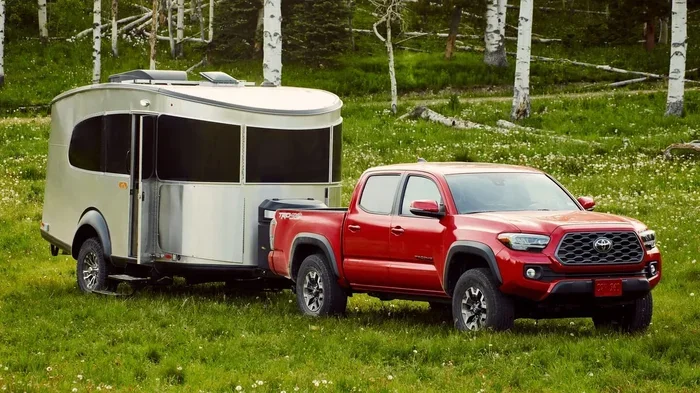
Visual guide about Toyota Tacoma towing camper
Image source: camperguide.org
How much weight can a Tacoma tow safely?
Most Tacoma models tow between 3,500 and 6,000 pounds depending on engine, cab, bed, and drivetrain. The exact number is on your door jamb sticker. Use that rating as your hard limit and leave a comfortable margin for safety.
What size camper can a Toyota Tacoma pull?
A Tacoma can pull campers that fit its rating, often from teardrop trailers up to mid-size travel trailers. As a rule, aim for a camper that weighs no more than 80% of your truck’s towing capacity. This keeps the setup manageable and safe.
Do I need a weight distribution hitch for my Tacoma?
A weight distribution hitch is helpful for heavier travel trailers and setups that cause rear squat. It improves stability and steering. For light campers, a standard hitch may be enough. Choose based on your trailer weight and how your truck behaves while hitched.
Can a Tacoma pull a fifth wheel camper?
Most standard Tacomas are not ideal for traditional fifth wheel campers because of weight and hitch placement. Some owners use light fifth wheel setups with special hitches, but this is not common. A travel trailer or teardrop camper is usually a better match for this truck.
What is the best camper for a Toyota Tacoma?
The best camper is one that matches your truck’s rating and your travel needs. Teardrop trailers, pop-up campers, and lightweight travel trailers are popular choices. Focus on dry weight, loaded weight, and tongue weight rather than just length or style.