
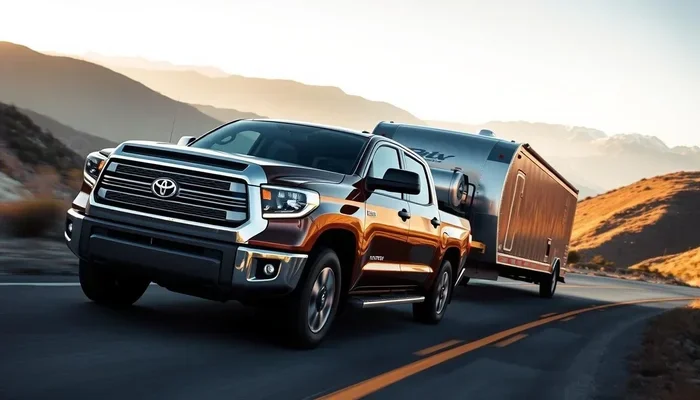
Toyota Tundra towing capacity depends on your engine, drivetrain, and equipment. Most models safely pull between 8,000 and 12,000 pounds when properly equipped. Always check your owner’s manual, trailer weight, and payload limits before hitting the road. This guide breaks down every factor so you can tow confidently.
Key Takeaways
- Engine choice matters: The i-FORCE MAX hybrid and twin-turbo V6 offer different towing strengths and torque curves.
- Payload limits are critical: Your trailer tongue weight plus passengers and cargo must stay under the door-jamb rating.
- Towing packages change results: Factory tow hooks, integrated brake controllers, and upgraded radiators boost safety and capacity.
- Tongue weight rules: Aim for 10 to 15 percent of the total trailer weight on the hitch for stable handling.
- Weight distribution helps: Sway controls and load-leveling hitches keep the rig steady on long trips.
- Regular checks prevent trouble: Inspect tires, brakes, lights, and fluid levels before every heavy haul.
- Know your exact config: Trim, cab style, bed length, and axle ratio all shift the final towing number.
📑 Table of Contents
- How Much Can I Tow With a Toyota Tundra
- Understanding Toyota Tundra Towing Capacity
- Engine and Drivetrain Options That Affect Towing
- Payload, Tongue Weight, and Gross Combined Weight
- Towing Packages, Hitches, and Essential Equipment
- Real-World Towing Scenarios and Best Practices
- Maintenance, Safety, and Long-Term Durability
- How Much Can I Tow With a Toyota Tundra: Final Thoughts
How Much Can I Tow With a Toyota Tundra
If you are planning to haul a boat, a travel trailer, or a heavy work load, you probably want a straight answer. The short version is that most Toyota Tundra models can tow between 8,000 and 12,000 pounds when properly equipped. That range covers a lot of real-world uses, from weekend camping to serious job-site hauling. Still, the exact number depends on your engine, cab and bed setup, axle ratio, and the towing package you choose.
This guide walks you through the key numbers, the hidden limits that matter just as much as the advertised rating, and the simple checks that keep every trip safe. You will learn how to read your door-jamb sticker, how tongue weight affects control, and which upgrades make a real difference. By the end, you will know exactly what your Tundra can handle and how to set it up for the job.
Understanding Toyota Tundra Towing Capacity
Towing capacity is not a single fixed number for every truck. It is the maximum weight your vehicle can pull safely under ideal conditions, based on engineering limits like engine output, transmission cooling, frame strength, and brake performance. For the Tundra, Toyota designs a strong ladder frame and a capable chassis, then tunes each configuration to a specific limit. That limit appears in your owner’s manual and on the certification label inside the door jamb.

Visual guide about Toyota Tundra towing trailer
Image source: pictures.dealer.com
Two trucks that look nearly identical can have different ratings. A double-cab with a shorter bed and a tow package may rate higher than a crew-max setup with a lot of interior options. The reason is simple: every extra pound in the truck reduces the payload available for tongue weight and cargo. Towing capacity and payload work together, so you must check both before you hook up.
How the Rating Is Calculated
Manufacturers start with the gross combined weight rating, which is the total weight of the truck, passengers, cargo, and trailer together. They subtract the truck’s curb weight and the weight of everything inside it. The remaining margin sets the practical towing ceiling. They also factor in hitch strength, cooling system capacity, and drivetrain durability. The lower of these limits becomes your official number.
This means the advertised figure assumes a base or lightly optioned truck with the right equipment. If you add heavy accessories, a large toolbox, or a full crew, your real-world number drops. Always run the math for your specific truck rather than trusting a generic brochure number.
What the Door-Jamb Sticker Tells You
Open the driver door and look for the yellow certification label. It lists your payload capacity, gross vehicle weight rating, and sometimes tire and pressure info. Payload is the total weight your truck can carry on its own tires, including you, your gear, and the trailer tongue. This number is often the true limiter on heavy setups. If your tongue weight plus passenger and cargo weight exceeds payload, you must reduce the load or change the setup.
Engine and Drivetrain Options That Affect Towing
The Tundra offers different powertrains, and each one changes how the truck feels on the road. A twin-turbo V6 delivers strong low-end torque, which helps get a heavy trailer moving from a stop. A hybrid setup adds instant electric torque at low speeds and can smooth out acceleration when the load is heavy. Both are capable, but they shine in slightly different situations.
Drivetrain matters too. Four-wheel drive can improve traction when launching from a steep boat ramp or climbing a slippery grade. It also adds a small amount of weight, which slightly reduces payload. Two-wheel drive models are a bit lighter and may free up a little more payload, but you lose the extra grip in poor conditions. Choose based on where you actually tow, not just the brochure.
Torque, Horsepower, and Real-World Feel
Torque is the twisting force that gets weight moving. Horsepower helps you maintain speed on long climbs. For towing, strong torque at low rpm often feels more useful than peak horsepower at high rpm. That is why a turbocharged engine or a hybrid assist can make a heavy trailer feel more manageable in everyday driving.
In practice, the best setup is the one that matches your usual routes. If you spend most of your time on flat highways, almost any well-equipped Tundra will feel confident. If you face steep passes or frequent stop-and-go traffic, prioritize strong low-end pull and good cooling.
Four-Wheel Drive vs Two-Wheel Drive for Hauling
Four-wheel drive helps when traction is limited. It is useful for wet boat ramps, loose gravel, and snowy roads. The tradeoff is a bit more weight and slightly lower fuel economy. Two-wheel drive saves weight and can free up a small amount of payload, which matters on tight setups. If your towing grounds are usually dry and flat, two-wheel drive may be enough. If you face varied conditions, four-wheel drive adds peace of mind.
Payload, Tongue Weight, and Gross Combined Weight
Towing capacity gets all the attention, but payload is where many trips go wrong. Payload includes everything on the truck: passengers, fuel, cargo, and the downward force from the trailer tongue. That downward force is tongue weight, and it usually should be about 10 to 15 percent of the total trailer weight. If your trailer is 8,000 pounds, the tongue should push down with roughly 800 to 1,200 pounds.
Gross combined weight is the big picture. It adds the truck, the trailer, the people, and the gear all together. If you exceed this limit, braking distance grows and component stress rises. Staying under all three limits—towing capacity, payload, and gross combined weight—is the only safe way to tow.
How to Measure Tongue Weight Accurately
Use a tongue weight scale or a simple puck-style gauge under the hitch. Drive forward until the trailer jack is off the ground and the weight rests on the scale. Check the number and compare it to your trailer’s total weight. If it is too high, slide the axle forward or move cargo toward the front of the trailer. If it is too low, shift load toward the rear or use a weight-distribution setup.
Recheck after any major gear change. Even moving a cooler, propane tank, or tool chest can shift the balance enough to affect handling. A quick check takes minutes and prevents sway on the highway.
Why Payload Often Limits You First
Many owners focus on the towing number and forget the payload sticker. A truck may be rated to pull a large trailer, but if the tongue weight plus your family and gear exceeds payload, the setup is unsafe. This is especially common with crew-cab trucks that carry heavy options, large infotainment systems, and full toolboxes. Always subtract your typical on-board weight from the payload rating before choosing a trailer.
Towing Packages, Hitches, and Essential Equipment
Factory towing packages make a real difference. They often include a stronger hitch receiver, integrated brake controller wiring, upgraded cooling, and sometimes a rear axle ratio tuned for pulling. These items do not always raise the official rating by huge amounts, but they improve safety, control, and durability. Aftermarket hitches can work well too, but they must match your truck’s limits and your trailer’s needs.
Hitch class matters. Most Tundra setups use a class III or class IV receiver that handles common trailer weights with room to spare. The hitch ball size and shank strength must match the trailer coupler. A mismatched ball is a serious safety risk. Always verify the rating on the hitch and the ball, not just the truck.
Integrated Brake Controllers and Sway Control
A trailer brake controller lets you apply the trailer brakes in sync with the truck. This shortens stopping distance and reduces brake fade on long descents. Many Tundra models offer integrated controls in the dash, which are easier to use than bulky aftermarket units. Set the gain based on the trailer’s weight and test it in a safe area before a long trip.
Sway control helps keep the trailer tracking straight. A weight-distribution hitch with built-in sway damping is a popular choice for larger travel trailers. It spreads the tongue load across all axles and reduces the side-to-side motion that can feel unsettling at speed. For lighter trailers, a friction sway control can be enough.
Cooling, Mirrors, and Visibility Upgrades
Heavy towing generates heat. An upgraded transmission cooler and a robust engine cooling system help during long climbs and hot days. If your truck did not come with a tow package, consider a transmission temperature gauge so you can watch trends on steep grades. Better towing mirrors also matter. Wider, extendable mirrors let you see along the trailer sides and reduce blind spots. Clear visibility is a simple upgrade that pays off every trip.
Real-World Towing Scenarios and Best Practices
The right setup depends on what you actually tow. A small utility trailer or a light jet ski load is easy for almost any Tundra. A mid-size travel trailer or a large boat calls for careful weight management and a good hitch. A heavy fifth-wheel or large deck-over trailer may push the limits of a half-ton truck, so match the rig to the task. Here are common scenarios and what to watch for.
- Boat hauling: Watch ramp traction, protect the tailpipe from water, and back up slowly with a spotter when possible.
- Travel trailers: Balance tongue weight, use sway control, and practice backing in an empty lot before your first campout.
- Cargo and equipment trailers: Secure the load, check tire pressure, and make sure the trailer brakes are adjusted for the weight.
- Off-pavement or job-site loads: Reduce speed, keep a wider turning radius, and avoid sharp bumps that can shift the load.
Pre-Trip Checklist for Heavy Loads
Before every long tow, run a short checklist. Check tire pressure on both the truck and the trailer, including the spare. Verify that all lights work, the brakes engage, and the coupler is locked over the ball. Confirm that safety chains are crossed and the breakaway cable is attached if your trailer has electric brakes. Look at fluid levels and glance at the transmission temperature gauge if you have one.
Do a final load check. Make sure cargo is tied down, the tongue weight is in range, and the hitch pin is secured with a lock. A few minutes of prep prevents most roadside problems.
Driving Techniques for Confident Towing
Start in a low gear when climbing steep hills. Let the engine and transmission do the work instead of riding the brakes. On long descents, use engine braking and tap the trailer brake controller if needed to control speed without overheating the truck’s brakes. Leave extra following distance because stopping takes longer with a heavy load.
Make wide turns and watch the trailer wheels during tight corners. Backing is easier with small steering inputs and a calm pace. If the trailer begins to sway, ease off the accelerator and steer straight. Do not brake hard unless necessary, as that can make sway worse. A weight-distribution hitch and proper tongue weight prevent most of these issues.
Maintenance, Safety, and Long-Term Durability
Towing puts extra stress on many parts of the truck. Oil changes matter more when you haul often, and transmission fluid should be checked on a regular schedule. Inspect the hitch receiver for cracks or deformation, and look at the hitch ball for wear. Check the brake controller wiring and trailer plug for corrosion, especially if you tow near water or in winter conditions.
Tires are another key area. Use tires rated for the load you carry, and keep them inflated to the pressure listed on your door-jamb sticker for the actual load. Do not guess. Underinflated tires run hotter and wear faster, while overinflated tires reduce grip. Rotate tires on schedule and replace them before the tread gets too low, especially if you tow in wet weather.
Common Mistakes to Avoid
- Ignoring payload: Loading up the truck and then adding a heavy tongue weight can exceed the door-jamb rating.
- Wrong hitch ball size: A ball that does not match the coupler can disengage on the road.
- Poor load balance: Too much weight forward or backward causes sway or steering lift.
- Skipping brake gain setup: Trailer brakes that are too weak or too aggressive reduce control.
- Overheating on grades: Not monitoring temps or riding the brakes can lead to fade and damage.
Quick Tips for Safer Towing
- Weigh the setup: Use a public scale to confirm truck, trailer, and tongue weights before a big trip.
- Match the hitch to the job: Choose a receiver and ball rated above your typical trailer weight.
- Set brake gain early: Test in an empty lot and adjust until the trailer brakes help without jerking.
- Watch the weather: Wind, rain, and steep grades all change how a heavy rig behaves.
- Plan fuel stops: Towing uses more fuel, so build in extra range and avoid running low.
How Much Can I Tow With a Toyota Tundra: Final Thoughts
So, how much can i tow with a toyota tundra? For most owners, the practical answer sits between 8,000 and 12,000 pounds when the truck is properly equipped and loaded within its limits. The exact figure depends on your engine, drivetrain, cab and bed configuration, axle ratio, and towing package. More important than the headline number is the setup: keep tongue weight in range, stay under payload, and use the right hitch and brakes for the trailer.
If you plan to pull heavier loads often, look at the full configuration before you buy or tow. Check the door-jamb sticker, weigh your typical gear, and choose a hitch that matches the job. With the right preparation, the Tundra can handle a wide range of tasks, from weekend recreation to serious work hauling. Take the time to set it up correctly, and the truck will reward you with confident, steady performance every time you hook up.
Frequently Asked Questions
How much can a Toyota Tundra tow with the hybrid powertrain?
Most hybrid-equipped Tundra models can tow in the range of about 8,000 to 11,000 pounds when properly equipped. The electric assist adds low-speed torque, which helps with initial movement and city driving. Always confirm the exact rating for your trim, cab, and axle ratio in the owner’s manual.
Does the towing package increase the Tundra’s capacity?
A factory towing package can improve cooling, hitch strength, and brake controller integration, which supports safer towing. It may also raise the official rating on some configurations, but the gain depends on the specific truck. The package is most valuable for frequent or heavy towing because it improves durability and control.
What percentage of trailer weight should be on the hitch?
Aim for about 10 to 15 percent of the total trailer weight as tongue weight for most conventional trailers. This balance helps keep the tow vehicle steady and reduces sway. Use a scale to verify the number, then adjust the load or use a weight-distribution hitch if needed.
Can I tow a boat with a Toyota Tundra in wet or steep ramp conditions?
Yes, a Tundra can tow boats in a wide range of conditions, but traction and protection matter. Four-wheel drive helps on slippery ramps, and you should back in slowly with a spotter when possible. Keep the exhaust and intake clear of water, and secure the boat tightly so it cannot shift during transport.
How do I know if my Tundra is overloaded before I tow?
Check the payload number on the door-jamb sticker and subtract the weight of passengers, fuel, and cargo. Then add the expected tongue weight and see if the total stays under the payload limit. If you are close, remove gear or choose a lighter trailer. A public scale gives the most accurate confirmation.
What maintenance should I focus on if I tow often?
Focus on oil changes, transmission fluid condition, tire pressure, and brake performance. Inspect the hitch, ball, and wiring regularly for wear or corrosion. If you tow in heat or on long grades, keep an eye on transmission temperature and consider an upgraded cooler if you notice high readings.