

When planning a big haul, you need to know how much weight can a Toyota Tundra tow without risking safety. The Toyota Tundra towing capacity ranges from 10,000 to 12,000 pounds depending on engine, configuration, and equipment. This guide breaks down real numbers, payload limits, and smart hauling practices so you can load up with confidence.
If you have ever stood in a dealership lot or stared at a trailer quote online, you have probably asked yourself one simple question: how much weight can a Toyota Tundra tow? The answer is not just a single number. It depends on the engine, the cab and bed setup, the drivetrain, and the equipment you install. That is exactly why this guide exists. We will walk through real capacity figures, explain the difference between towing and payload, and share practical tips that keep your trips smooth and safe.
Towing is more than hooking up a trailer and pressing the gas. You need to understand ratings, match the right hitch, and adjust your driving style. The good news is that the Tundra is built for this kind of work. It brings truck-grade structure, strong engines, and a reputation for dependable performance. Whether you are hauling a boat, a camper, or job-site materials, knowing your limits helps you plan better and drive with confidence.
In the sections below, you will learn the exact towing ranges for popular configurations, how to read the door-jamb sticker, and what factors change your real-world capacity. We will also cover braking, stability, fuel use, and maintenance so you can prepare for the road ahead. Let us start with the numbers that matter most.
Key Takeaways
- Tundra towing capacity varies by model: Most trims handle 10,000 to 12,000 pounds, but exact numbers depend on engine, drivetrain, and cab style.
- Engine choice matters: The i-FORCE MAX hybrid and 3.5L V6 deliver strong towing performance, while the 5.7L V8 offers classic torque and reliability.
- Payload and tongue weight are critical: Never exceed the payload limit, and keep tongue weight between 10% and 15% of total trailer weight.
- Proper equipment boosts safety: Use the right hitch class, brake controller, and weight distribution system for heavy loads.
- Towing affects driving dynamics: Braking distance, turning radius, and fuel economy change when hauling, so adjust your driving habits.
- Regular maintenance keeps you ready: Check tires, brakes, fluids, and suspension before every trip to avoid breakdowns on the road.
- Know your local laws: Some states require special licensing, lighting, or braking systems for trailers over certain weights.
📑 Table of Contents
- Understanding How Much Weight Can A Toyota Tundra Tow
- Toyota Tundra Towing Capacity By Engine And Trim
- Payload, Tongue Weight, and Real-World Limits
- How To Tow Safely With A Toyota Tundra
- Towing Performance, Fuel Economy, and Maintenance
- Choosing The Right Hitch, Brakes, and Accessories
- Comparing Tundra Towing To Other Toyota Trucks and SUVs
- Expert Insights and Final Recommendations
Understanding How Much Weight Can A Toyota Tundra Tow
Before you load up, you need a clear picture of what the truck can handle. The Toyota Tundra towing capacity is not a fixed number for every vehicle. It shifts based on engine, cab style, bed length, axle ratio, and optional equipment. Most current-generation Tundras fall into a strong range that suits many common hauling tasks. If you want the exact figure for your truck, the safest path is to check the manufacturer label and your owner’s manual.
Here is the basic idea. The truck’s towing rating tells you the maximum weight it can pull when properly equipped. That number assumes the right hitch, proper tire pressure, and a well-maintained vehicle. It also assumes you are not exceeding the payload limit inside the truck itself. Those two limits work together. If you overload the bed or the cab, you reduce what you can safely tow.
Why Capacity Numbers Change
Several factors move the number up or down. The engine plays a big role because torque and horsepower shape how the truck climbs hills and accelerates with a load. The axle ratio matters too. A numerically higher rear axle ratio can improve towing strength, while a lower ratio often helps fuel economy during light loads. Four-wheel drive can add weight and slightly change ratings compared with two-wheel drive. Cab and bed combinations also affect overall weight, which influences payload and, indirectly, towing setup.
Equipment counts as well. A factory tow package usually includes a stronger hitch receiver, wiring, transmission cooling, and sometimes a brake controller. Aftermarket hitches can work well, but they must match the truck’s rating and local rules. Always verify that the hitch class, ball size, and wiring setup align with the trailer you plan to pull.
Real-World Ranges You Can Expect
While exact figures vary, many Tundra configurations handle heavy trailers with ease. You will often see ratings in the 10,000 to 12,000 pound range for properly equipped models. Some setups lean lower, while others reach the top of that band. The key is to match the truck to the job instead of guessing. If you are pulling a large boat or a heavy travel trailer, confirm the specific rating for your VIN and option list.
It also helps to think about your usual loads. If most of your trailers sit near 6,000 to 8,000 pounds, you have a comfortable margin in most Tundra trims. That extra room gives you better acceleration, easier braking, and more stability in wind or when passing large trucks. Leaving headroom is one of the simplest ways to improve safety.
Quick Tips for Reading Your Truck’s Limits
- Check the door-jamb sticker: It lists payload and sometimes towing-related data for your exact vehicle.
- Read the owner’s manual: Look for the towing section and any required packages or limitations.
- Weigh your setup: Use a scale to measure the trailer and the truck’s loaded weight before long trips.
- Compare hitch ratings: The weakest link in the chain sets the real limit, so match hitch, ball, and mount to the job.
Toyota Tundra Towing Capacity By Engine And Trim
Engine choice is one of the biggest drivers of towing performance. The Tundra offers strong V6 options, including a turbo setup and a hybrid variant, and these powertrains are designed to handle serious work. If you are comparing trims, look beyond the badge and focus on the actual powertrain, axle ratio, and available tow package. Two trucks with the same exterior can have different ratings if their underpinnings differ.
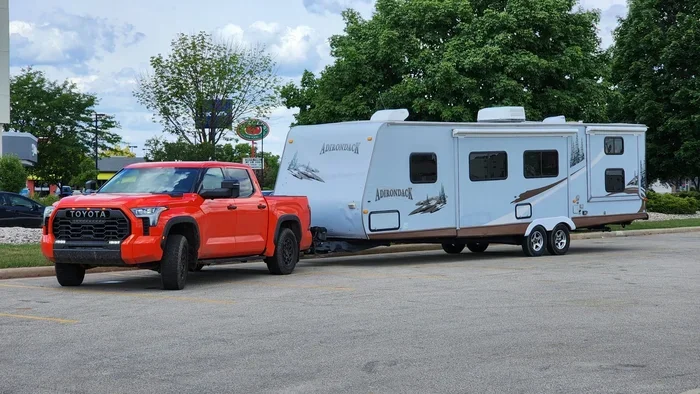
Visual guide about Toyota Tundra towing trailer
Image source: images-stag.jazelc.com
The i-FORCE MAX hybrid system adds electric assist, which can improve low-speed torque and help during climbs or merges. Many owners like the way it feels when starting from a stop with a loaded trailer. The turbocharged 3.5L V6 also delivers strong output and a broad torque curve, making it a solid choice for daily driving and hauling. If you prefer a more traditional feel, the 5.7L V8 remains a familiar, dependable option with ample torque for many tasks.
What the Numbers Mean in Practice
A higher rating does not just help you climb hills. It also affects how the truck feels at highway speed. With a well-matched trailer, a capable engine helps maintain speed when passing or facing headwinds. It can reduce strain on the transmission and brakes because the truck does not have to work as hard. That said, the best setup is the one that matches your typical load, not the one with the biggest number on paper.
Trim level matters too, but often in subtle ways. Some trims come with convenience features that do not change towing much, while others include the tow package you need for heavy loads. If you are shopping for a truck, ask specifically about the tow package, hitch receiver, wiring, and cooling upgrades. Those details often matter more than cosmetic choices.
Common Configuration Examples
- Daily driver with a boat: A mid-range trim with the tow package often handles small to mid-size boats comfortably.
- Camper or travel trailer: Look for the higher end of the rating range and confirm brake controller readiness.
- Work hauling: If you carry equipment in the bed, watch payload closely because bed load reduces towing margin.
- Heavy occasional loads: Choose a setup near the top of the rating range for better headroom and confidence.
Payload, Tongue Weight, and Real-World Limits
Towing capacity gets a lot of attention, but payload is just as important. Payload is the total weight the truck can carry on its frame, including passengers, cargo, fuel, and tongue weight. If you fill the cab and bed first, you leave less room for the trailer’s downward force. That is why two trucks with the same towing rating can behave very differently on the road.
Tongue weight is the downward force the trailer puts on the hitch. A common guideline is to keep it around 10% to 15% of the total trailer weight for conventional towing. Too little tongue weight can make the trailer unstable. Too much can overload the rear of the truck and affect steering. The right balance improves control and helps the truck track straight behind the trailer.
Why the Door-Jamb Sticker Matters
The sticker on the driver’s door jamb lists important limits for your specific truck. It usually shows the payload capacity and the original tire information. That payload number is your real ceiling for everything inside the truck and the hitch downward force. If you plan to carry family, gear, and a heavy hitch load, add it all up before you hook up.
This step is easy to skip, but it prevents trouble. Many people focus on the trailer’s total weight and forget the truck’s own load. A simple weigh-in at a local scale can save you from an overload. If the numbers are close to the limit, move cargo around or reduce what you carry. Small adjustments make a big difference.
Common Mistakes With Payload and Tongue Weight
- Ignoring passenger and cargo weight: Every person and bag counts toward payload.
- Mismatched hitch height: Incorrect height can shift tongue weight and hurt stability.
- Overloading the rear: Too much tongue weight can squat the rear and reduce front-end grip.
- Skipping a weigh-in: Guessing leads to surprises; measuring keeps you safe.
How To Tow Safely With A Toyota Tundra
Safe towing starts before you leave the driveway. Once you know how much weight can a Toyota Tundra tow for your setup, the next step is to prepare the truck, the trailer, and yourself. A careful pre-trip check takes only a few minutes and can prevent headaches later. Focus on tires, lights, brakes, hitch security, and load balance.
Begin with the tires. Check pressure on both the truck and the trailer, and make sure the tread is in good shape. Underinflated tires run hotter and wear faster, especially under load. Next, verify that all lights work, including brake lights, turn signals, and running lights on the trailer. Good visibility and clear signals help other drivers understand your intentions.
Hitching and Load Balance
A secure hitch is non-negotiable. Make sure the ball size matches the coupler, the latch is locked, and safety chains cross under the tongue. If your trailer has electric brakes, connect the controller and test it before moving out. For larger loads, a weight distribution system can help spread the force more evenly across all axles, which often improves handling and reduces sag at the hitch.
Load balance inside the trailer also matters. Place heavy items over the axles and keep the center of gravity low. Secure everything so it cannot shift during travel. A shifting load changes tongue weight as you drive, which can make the trailer sway or pull unexpectedly. Taking time to tie things down is one of the best investments you can make.
Driving Adjustments That Help
- Allow more following distance: Extra weight increases stopping distance, so leave room ahead.
- Brake earlier and smoother: Plan stops in advance and avoid sudden hard braking when possible.
- Take turns wider: Trailers cut in during turns, so swing out a bit more to avoid curbs.
- Watch wind and passing trucks: Large vehicles can push the trailer; stay alert and hold the wheel steady.
- Use lower gears on grades: Engine braking helps control speed on long downhill stretches.
Towing Performance, Fuel Economy, and Maintenance
Hauling a trailer changes how the truck behaves. Acceleration feels slower, braking takes longer, and fuel economy usually drops. That is normal. The important part is to anticipate those changes and plan accordingly. If you tow often, you may notice the difference most in stop-and-go traffic or on steep roads. Keeping your speed moderate helps in every season.
Maintenance becomes more important when you tow regularly. Heat and strain ask more from the engine, transmission, brakes, and cooling system. Following the service schedule helps the truck stay reliable. Check fluids, inspect brakes, and look for unusual wear on suspension parts and tires. If you tow long distances or in hot weather, pay extra attention to cooling performance.
A Simple Maintenance Checklist
- Engine oil and filters: Keep to the recommended intervals, especially if you tow in heat or mountains.
- Coolant and transmission fluid: Confirm levels and condition before long trips.
- Brakes: Inspect pads, rotors, and brake lines, and verify the trailer brake controller works.
- Tires and wheels: Check pressure, tread, and lug nut torque on both truck and trailer.
- Suspension and steering: Look for leaks, worn bushings, or loose components that affect control.
- Lights and wiring: Test every signal and clean connections to avoid intermittent faults.
Fuel Economy Tips When Towing
Fuel use rises with weight, speed, and aerodynamics. You cannot eliminate the drop, but you can reduce it. Keep speeds reasonable, remove unnecessary cargo, and make sure the trailer sits straight. On long highway stretches, a steady pace often works better than frequent passing. If your route includes mountains, plan fuel stops with extra margin so you are not racing to the next station.
It also helps to think about the whole trip, not just the tow. A lighter truck bed, fewer passengers when possible, and smart routing can all reduce strain. If you want a more efficient daily driver for lighter tasks, you might compare other Toyota options such as a Toyota Highlander towing capacity or a Toyota Tacoma tow setup. Those models serve different jobs, but they show how Toyota builds a range of trucks and SUVs for different hauling needs.
Choosing The Right Hitch, Brakes, and Accessories
The right accessories make towing easier and safer. Start with the hitch. A class-appropriate receiver, the correct ball size, and a rated mount are the foundation. If you plan to tow near the upper end of your truck’s range, consider a weight distribution hitch and a sway control setup if the trailer needs it. These tools help keep the rig stable, especially in crosswinds or when passing large trucks.
Brakes are the next priority. The truck’s brakes handle the truck, but the trailer’s brakes help stop the whole combination. An electric brake controller lets you adjust braking force to match the load. Test the controller at low speed before heading out. If the trailer has surge brakes or a different system, learn how it behaves so you are not surprised in an emergency.
Accessories Worth Considering
- Sway control: Helps reduce trailer movement in wind or when braking.
- Tow mirrors: Improve visibility for wider trailers and longer loads.
- Brake controller: Essential for trailers with electric brakes.
- Hitch lock and safety chains: Add security and backup protection if the coupler fails.
- Cargo management: Tie-downs, straps, and load bars keep gear from shifting.
If you are new to towing, practice in an open area first. Backing up, turning, and stopping feel different with a trailer attached. A short practice session builds confidence and helps you learn how your specific combination responds. That experience pays off the first time you face a tight campsite or a busy parking lot.
Comparing Tundra Towing To Other Toyota Trucks and SUVs
The Tundra sits near the top of Toyota’s truck lineup for heavy hauling. If your needs are smaller, you may compare it with other models. For example, some owners look at how much can Toyota 4Runner tow when they need a smaller, more agile option for light trailers. Others check how much can a Toyota Sienna tow when they want an SUV that can handle a modest load. Each vehicle has its own strengths, so the best choice depends on what you actually pull.
The Tacoma is another popular choice, especially for lighter work and outdoor gear. If you are curious about smaller truck limits, you can read more about how much weight can Toyota Tacoma pull in our related guide. The point is simple: match the vehicle to the trailer. A Tundra gives you more capacity and headroom for big loads, while smaller models can be a better fit for lighter, more frequent tasks.
Quick Comparison Snapshot
Below is a simple way to think about the differences. Use it as a starting point, then confirm the exact rating for the specific vehicle you are considering. Ratings change with equipment, so always verify the details for your situation.
- Toyota Tundra: Built for heavier trailers, with strong capacity across many configurations.
- Toyota Tacoma: Great for lighter loads, tools, and weekend gear, with a smaller footprint.
- Toyota 4Runner: Useful for modest towing needs and off-pavement adventures.
- Toyota Highlander: Better suited to lighter trailers and family use rather than heavy hauling.
- Toyota Sienna: Can handle limited towing when properly equipped, ideal for small loads.
If you are weighing purchase options, think about your typical trailer, how often you tow, and where you drive. A Tundra makes sense when you need a high ceiling and confident power. A smaller model may save money and feel easier to live with if your loads stay light. Either way, verify the rating and stay within the limits.
Expert Insights and Final Recommendations
Experienced towers often say the same thing: plan ahead and leave margin. Do not run right up to the limit for everyday tasks. A little extra capacity makes the truck feel calmer, improves braking, and gives you room for weather, terrain, and unexpected cargo. That philosophy applies whether you are hauling a boat to the lake or moving equipment for work.
Another smart habit is to keep records. Note your trailer weight, truck load, tire pressures, and any issues you notice on the road. Over time, that log helps you spot patterns and fine-tune your setup. If something feels off, stop and check it. A few minutes of inspection is always better than pushing through a problem.
Key Takeaways for Safe Towing
- Know your exact rating: Use the door-jamb sticker and owner’s manual for your specific truck.
- Balance the load: Keep tongue weight in the proper range and secure all cargo.
- Match the hitch and brakes: Use equipment rated for the job and test it before departure.
- Drive for the load: Allow more distance, brake earlier, and take turns carefully.
- Maintain the truck: Stay on schedule with fluids, brakes, tires, and cooling checks.
- Practice first: A short session in an open lot builds confidence for real-world towing.
If you want to dig deeper into related topics, you can explore more Toyota towing and ownership guides on our site. For example, you may find it helpful to read about how much can a Toyota Sienna tow for lighter family hauling, or how much can Toyota 4Runner tow for outdoor adventures. Those articles give you a broader view of what each model can do, so you can choose the right tool for the job.
At the end of the day, the question how much weight can a Toyota Tundra tow has a practical answer: enough for many serious tasks when properly equipped, but always within the limits of your specific truck and setup. Respect the ratings, prepare carefully, and drive with awareness. Do that, and your Tundra will serve you well on every haul.
Frequently Asked Questions
How much weight can a Toyota Tundra tow safely?
Most properly equipped Toyota Tundras can tow between 10,000 and 12,000 pounds, but the exact number depends on engine, drivetrain, cab and bed setup, and optional equipment. Always verify the rating for your specific vehicle using the door-jamb sticker and owner’s manual.
Does the engine change the towing capacity?
Yes, the engine and drivetrain configuration can influence towing performance and the official rating. Different axle ratios, four-wheel drive, and available tow packages can shift the number, so compare the specific build rather than relying on a generic figure.
What is the difference between towing capacity and payload?
Towing capacity is the maximum weight the truck can pull behind it. Payload is the maximum weight the truck can carry on its frame, including passengers, cargo, fuel, and tongue weight. Both limits matter, because overloading the truck reduces what you can safely tow.
How much tongue weight should I aim for?
For conventional towing, a common guideline is to keep tongue weight around 10% to 15% of the total trailer weight. Proper tongue weight improves stability, while too little or too much can make the combination harder to control.
Do I need a brake controller for a Toyota Tundra?
If your trailer has electric brakes, a brake controller is usually recommended so the trailer brakes work with the truck. Test the controller at low speed before a long trip, and make sure the wiring and connections are secure.
How can I make towing more stable in wind or traffic?
Keep the load balanced, use the correct hitch height, and secure all cargo so it cannot shift. Allow extra following distance, take turns wider, and stay alert when passing large trucks or driving in strong crosswinds. A weight distribution system can also help on heavier setups.