
Featured image for how to Compact coffee station setup
Image source: cdn.shopify.com
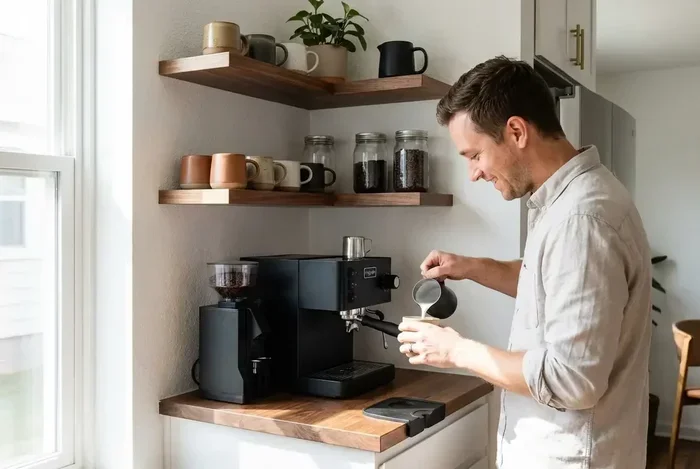
Creating a coffee station in a small kitchen is easier than you think when you focus on a compact layout, smart storage, and a few essential tools. By choosing a dedicated spot, organizing your supplies, and keeping the setup tidy, you can enjoy a calm, efficient morning routine without crowding your workspace.
Making coffee in a tiny kitchen can feel messy if everything is scattered across the counter. The good news is that a compact setup can still feel neat, attractive, and easy to use. If you want to create a coffee station in a small kitchen, the goal is simple: keep the right tools in one place, leave enough room for daily use, and avoid adding more clutter than you need.
This guide will show you how to choose a spot, organize your supplies, and build a coffee routine that fits a small space. You will learn how to decide what belongs on the counter, what can be stored elsewhere, and how to keep the area clean without extra effort. Whether you brew a single cup or make drinks for the whole household, a well-planned station can make mornings feel smoother.
A good coffee station does not have to be large. In a small kitchen, it only needs to be practical. Once you know what you use most often, you can arrange the setup around your habits instead of forcing yourself to adapt to a crowded layout.
📑 Table of Contents
- Choose the Best Spot for Your Coffee Station
- Decide What Belongs in Your Coffee Station
- Build the Layout So It Works Every Day
- Add Smart Storage for a Small Kitchen
- Make the Space Feel Inviting
- Troubleshooting Common Small-Kitchen Coffee Station Problems
- Keep the Station Working Over Time
- Final Thoughts on Creating a Small-Kitchen Coffee Station
Choose the Best Spot for Your Coffee Station
The first step is finding a place that feels natural in your daily routine. A good coffee station should be easy to access, easy to clean, and out of the way when you are cooking or preparing other meals. In a small kitchen, that often means using a corner, a narrow counter section, or a shelf that does not interrupt the main workspace.
When you are evaluating possible spots, think about three things: traffic, convenience, and power. You want a location where the coffee maker can sit safely, where you can reach supplies without moving too many items, and where cords or spills will not get in the way of other tasks.
Look for an unused corner or counter edge
A small corner can be one of the best places for a coffee station because it keeps the setup contained. If you have an L-shaped layout, the corner may already feel like a separate zone. Even a narrow strip along the edge of the counter can work if you keep the arrangement simple.
Try to leave a little open space around the brewer so you can lift it, refill it, or wipe the surface without struggling. If the area is too tight, the station may become frustrating instead of helpful.
Consider a shelf, cart, or rolling setup
If counter space is limited, a shelf or small rolling cart may give you the room you need without taking over your main workspace. A cart can be especially useful if you want to move the coffee station aside during busy moments. A shelf can also help if you prefer to keep the counter clear and store items above or below it.
Just make sure whatever you choose is stable and easy to reach. A setup that is too high or too low can make your morning routine feel awkward over time.
Keep power and water access in mind
If your coffee maker plugs in, you will need a spot near an outlet. That may narrow your options, but it can also help you avoid awkward extension cords. You should also think about water access if you refill the machine by hand. A station near the sink may be convenient, but it can also be busier and more prone to splashes.
The best choice is usually the spot that balances convenience with calm. If one area is close to the sink but always crowded, another location may work better in practice.
Decide What Belongs in Your Coffee Station
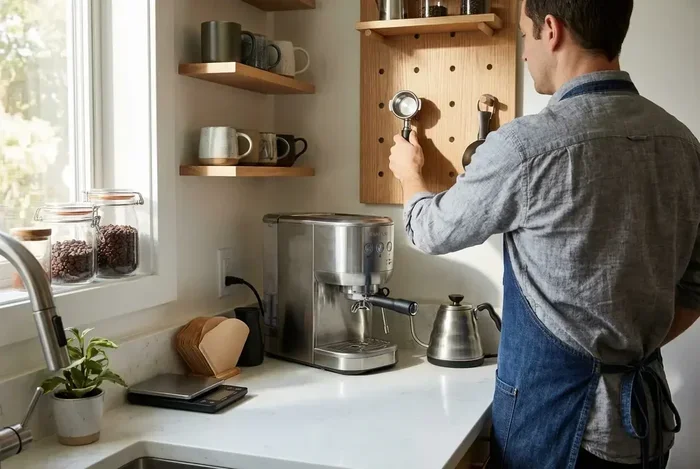
A small kitchen works best when every item has a clear purpose. Instead of trying to store everything on the counter, choose the pieces you reach for every day and keep the rest tucked away. This makes the station easier to use and easier to clean.
Visual guide about how to Compact coffee station setup
Image source: cdn.shopify.com
Start by thinking about your routine. Do you use a drip brewer, a single-serve machine, a French press, or another method? The answer will help you decide what must stay visible and what can live in a cabinet or drawer.
Keep the daily essentials within reach
For most people, the essentials are the coffee maker, mugs, and the coffee itself. If you use pods, keep a small supply nearby. If you grind beans, you may want the grinder close by as well. A small tray or container can help hold the items you use most often so they do not drift around the counter.
The idea is to reduce friction. If you can make coffee without opening several cabinets, the station is doing its job.
Store backup supplies elsewhere
Extra coffee, backup mugs, filters, and spare accessories can usually live in another cabinet or pantry area. This keeps the station compact while still giving you enough stock for regular use. If you store backup items nearby, you can refill the visible supply quickly without crowding the counter.
A good rule is to keep only what you use in a typical week on the station itself. Everything else can be stored out of sight.
Use small containers to reduce visual clutter
Open packages and loose items can make even a tiny station look messy. Small bins, jars, canisters, or baskets can help group similar items together. When everything has a home, the area feels calmer and stays tidier.
Choose containers that fit the space rather than buying large organizers that take over the counter. In a small kitchen, proportion matters.
Build the Layout So It Works Every Day
Once you know your spot and your essentials, it is time to arrange them in a way that feels natural. A good layout should match how you move through the space. If you usually scoop coffee with your right hand, for example, placing the canister on the right may feel easier than forcing yourself to reach across.
Try to create a simple flow: prepare, brew, serve, and clean up. Each step should feel smooth, with enough room to set a mug down or grab a spoon without knocking anything over.
Group items by use
Keeping related items together can make the station feel more organized. Mugs can sit near the brewer, coffee can stay near the grinder or scoop, and cleaning items can be placed where you can reach them quickly. Grouping by use also makes it easier to notice when something is missing or needs refilling.
If you have limited space, one small tray can help define the area and keep the most-used items from sliding around.
Leave breathing room on the counter
A coffee station that is packed too tightly can become annoying fast. Try to leave a little open space for setting down a warm mug, wiping the surface, or temporarily placing a spoon. That extra room can make the station feel much more comfortable.
If your counter is very narrow, focus on the items you truly need and move the rest elsewhere. A smaller, cleaner setup often works better than a crowded one.
Make the setup easy to clean
Spills and drips happen, especially in the morning when you may be rushing. Choose a spot that is easy to wipe down, and think about a tray or mat that can catch small spills. If your coffee maker tends to leave drops behind, placing it on a removable mat can simplify cleanup.
The easier it is to clean, the more likely you are to keep the station looking neat. That matters in a small kitchen, where mess can spread quickly.
Add Smart Storage for a Small Kitchen
Smart storage is what makes a coffee station feel manageable in a compact space. The goal is not to hide everything, but to use the available area wisely. Vertical space, drawers, and nearby cabinets can all help you keep the counter clear.
Use height instead of floor space
If you cannot spread out, look upward. A shelf above the station, wall-mounted hooks for mugs, or a narrow organizer can free up valuable counter space. Vertical storage works especially well when you want the station to stay compact but still hold the essentials.
Be careful not to make the area feel overcrowded. A few well-chosen storage pieces usually work better than too many shelves or containers.
Use drawers and cabinets nearby
If you have a drawer or cabinet near the station, use it for items you do not need every second. Extra cups, backup coffee, cleaning cloths, and small tools can live there while the counter stays open. This gives you the best of both worlds: easy access without constant clutter.
You can also use drawer dividers or small bins inside the cabinet to keep everything easy to find. When items are grouped well, you spend less time searching.
Keep the station flexible
A small kitchen often needs a flexible setup. Your habits may change, your coffee method may change, or your available counter space may shift. If your station is built with some flexibility, it will be easier to adjust later without starting over.
For example, a tray-based setup can be moved or resized more easily than a permanent arrangement. That kind of flexibility can be helpful in a space that serves many purposes.
Make the Space Feel Inviting
A coffee station does not have to look plain. Even in a small kitchen, a few thoughtful touches can make the area feel more personal and enjoyable. The key is to add style without adding clutter.
You might use a small tray, a favorite mug, a simple sign, or a plant if there is room. These details can make the station feel like a deliberate part of the kitchen rather than just a pile of supplies.
Choose a simple color or material theme
A consistent look can make a small area feel more organized. Matching containers, a single tray, or a few coordinating colors can help the station blend into the kitchen instead of standing out as messy. You do not need a perfect match; even a general theme can help.
If your kitchen already has a style, try to echo it in a subtle way. That usually works better than adding bold decor that competes for attention.
Keep decorations minimal
In a small space, decorations should support the setup, not crowd it. One or two personal items are usually enough. Too many extras can make the station harder to use and harder to clean.
A good test is to ask whether a decorative item adds comfort or simply takes up room. If it does not help the routine, it may be better to leave it out.
Troubleshooting Common Small-Kitchen Coffee Station Problems
Even a well-planned station can run into small problems. The good news is that most of them are easy to fix once you notice the pattern. If the station feels awkward, do not assume you need more space right away. Often, a small adjustment is enough.
The counter feels too crowded
If the station feels cramped, remove one or two items that you rarely use during the morning. Store them elsewhere and see whether the space feels better. Often, the issue is not the size of the kitchen but the number of items left out on the counter.
You can also switch to smaller containers or a narrower tray to free up room.
There is not enough room for mugs
If mugs are taking over the station, keep only the mugs you use most often nearby. The rest can go in a cabinet or shelf. If you have a wall hook or hanging option, that can also reduce counter clutter.
Another option is to use a stackable mug rack or a small shelf nearby so the cups do not compete for space.
The station gets messy too quickly
If mess builds up fast, look for the source. Is coffee dripping onto the counter? Are packets or grounds spreading around the brewer? A tray, a small waste bin, or a better placement for the scoop can solve a lot of the problem.
It also helps to reset the station once a day. A quick wipe and a return of items to their spots can prevent clutter from piling up.
The setup feels awkward to use
If the station is clean but still frustrating, the layout may not match your routine. Try moving the most-used item to a more comfortable position. Sometimes a small shift in placement makes the whole process feel easier.
Pay attention to where you reach, where you set things down, and where you tend to bump into items. Those clues can help you improve the arrangement.
Keep the Station Working Over Time
A coffee station is easiest to maintain when it stays simple. If you keep the essentials visible and store the extras nearby, the setup can remain useful without becoming a burden. A small kitchen benefits from habits that are easy to repeat.
Try a quick reset after each use or at the end of the day. Put mugs back where they belong, refill what is running low, and wipe the surface when needed. These small habits keep the station ready for the next morning.
It also helps to review the setup from time to time. If your coffee habits change, your station can change too. The best layout is the one that still feels comfortable after a few weeks of real use.
Final Thoughts on Creating a Small-Kitchen Coffee Station
Learning how to create a coffee station in a small kitchen is mostly about making smart choices with a limited amount of space. When you pick a practical spot, keep the daily essentials close, and use storage wisely, you can build a setup that feels tidy, efficient, and pleasant to use.
The best station is not the one with the most items. It is the one that helps you make coffee with less effort and less clutter. Start with the basics, keep the layout simple, and adjust as you go. With a little planning, even a small kitchen can support a coffee routine that feels calm and dependable.