
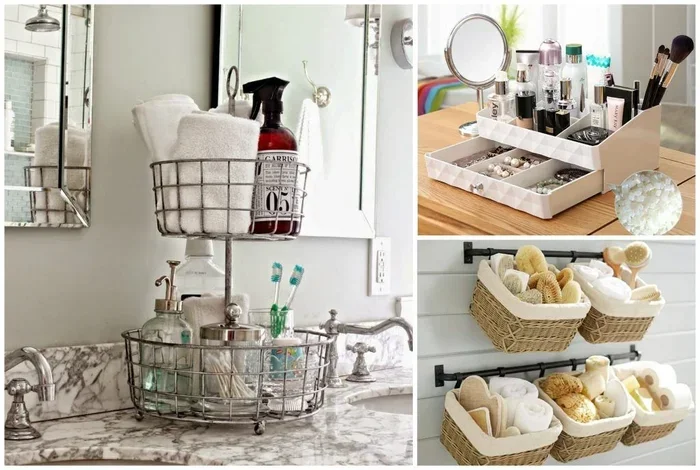
Featured image for how to small bathroom counter organization
Image source: i.pinimg.com
A small bathroom counter can feel messy fast, but a few simple habits and smart storage choices can make a huge difference. This guide walks you through practical steps to clear space, organize essentials, and keep everything looking clean without constant effort. You will learn how to edit your items, use vertical space, and build a routine that actually sticks.
A small bathroom counter can go from tidy to chaotic in a hurry. Toothpaste tubes, hair tools, lotion bottles, soap, and a few stray items can crowd the surface before you even notice. The good news is that you do not need a giant vanity or a full renovation to fix it. With a little editing, a few smart containers, and a repeatable routine, you can keep the space functional and calm.
In this guide, you will learn how to keep a small bathroom counter clutter-free in a way that fits your routine. We will cover how to clear the counter, decide what stays, organize what remains, and create habits that make the results last. You will also find practical storage ideas, troubleshooting tips, and simple ways to maintain the space without feeling like you are constantly cleaning up after yourself.
📑 Table of Contents
- Step 1: Empty the counter completely
- Step 2: Sort every item into clear groups
- Step 3: Edit ruthlessly, but realistically
- Step 4: Give everything a home
- Step 5: Keep the counter visually calm
- Step 6: Build a two-minute daily reset
- Step 7: Use drawers and cabinets as support space
- Step 8: Adjust for your routine and household
- Troubleshooting: What to do when clutter keeps returning
- A simple setup you can adapt
- How to make the results last
- Conclusion
Step 1: Empty the counter completely
Start with a clean slate. Take everything off the counter, including bottles, trays, tools, soap dispensers, and decorative items. If something is sitting in a basket or tray, remove that too. This gives you a true view of how much you have and makes it easier to judge what the space can reasonably hold.
Once everything is out, wipe the surface clean. A cleared counter also helps you notice problem areas like water spots, cramped corners, or places where items tend to slide. If your bathroom has a small sink area, this step is especially helpful because it shows how much room you actually have for day-to-day use.
Why starting fresh matters
It is easy to organize around clutter when you keep everything in place. Moving items aside often hides the real issue: too many things competing for too little space. Emptying the counter helps you make better decisions instead of simply shuffling items around.
Step 2: Sort every item into clear groups
Before you put anything back, sort the items you removed into categories. A simple way to do this is to make piles for daily use, occasional use, and items that do not belong on the counter at all. You can also separate by type, such as skincare, hair products, dental care, and cleaning items.
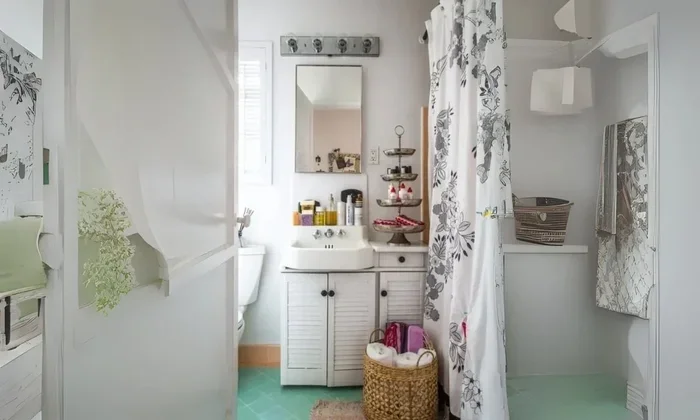
Visual guide about how to small bathroom counter organization
Image source: homekitdecor.com
This step is where many people get the most relief. Small bathrooms often collect duplicates, half-used bottles, and products that were useful once but are not part of your routine anymore. Grouping gives you a chance to see those problems clearly.
Use simple categories
Try categories that match how you live, not just how products are sold. For example:
- Daily essentials: items you reach for every day
- Occasional items: products you use a few times a week or less
- Small loose items: razors, tweezers, cotton swabs, nail tools
- Items that belong elsewhere: laundry supplies, bulk storage, or things that fit better in a drawer or cabinet
If an item is broken, expired, empty, or duplicated, set it aside for removal. The goal is not to keep every item you own; it is to keep the ones that earn their place.
Step 3: Edit ruthlessly, but realistically
Now comes the part that makes the biggest difference: deciding what stays. A small bathroom counter works best when it holds only the items you truly use. If you keep everything, the surface will fill up again quickly no matter how clever the storage is.
As you edit, ask simple questions. Do I use this daily or weekly? Do I have another item that does the same job? Is this product still good to use? Does it need to live here, or would it fit better in a cabinet or drawer?
What to keep within easy reach
Keep the items you use most often on the counter, but limit them to the essentials. For many people, that may include hand soap, a toothbrush holder, a small tray for daily skincare, and maybe one or two other frequently used items. The exact list depends on your routine, but the principle is the same: keep the surface reserved for what matters most.
What to move or remove
Consider moving occasional items out of the counter area. Extra bottles, backup products, special treatments, and bulky tools often work better in a cabinet, drawer, or nearby storage spot. If you have items you keep “just in case,” decide whether that case is realistic. If you have not used something in months and can easily replace it if needed, it may be time to let it go.
Step 4: Give everything a home
Clutter often returns when items do not have a clear place. Once you know what stays on the counter, assign each item a home. That home might be a tray, a small dish, a caddy, a shelf, or a designated corner of the counter. The important part is consistency.
When each item has a spot, cleanup becomes faster. You are not guessing where the hairbrush goes or whether the lotion belongs on the counter or in a drawer. You simply return things to their homes.
Use trays and containers to define space
A tray can make a small counter feel more organized because it groups items and contains mess. For example, you might place daily skincare items in one tray and hand soap with a small towel in another. This keeps items from spreading across the whole surface.
Small containers can also help with loose items. A cup for toothbrushes, a dish for jewelry or contact lens supplies, and a bin for small grooming tools can keep the counter from becoming a catch-all. If you prefer a cleaner look, choose containers that match your style and do not crowd the space.
Think vertically
When counter space is tight, use height instead of spreading everything flat. A small riser, stackable organizer, or tiered tray can make a surprising difference. Vertical storage helps you keep items visible without taking up extra footprint space.
You can also look at the walls around the sink if your setup allows it. A wall-mounted holder, shelf, or hook can move some items off the counter entirely. Even moving one or two things upward can make the surface feel much lighter.
Step 5: Keep the counter visually calm
A clutter-free counter is not only about function. Visual calm matters too. Too many colors, labels, bottles, and random shapes can make a small bathroom feel crowded even when the number of items is reasonable.
You do not need to make everything match perfectly. Still, a few simple choices can help the space feel more settled. Clear containers, coordinated trays, and fewer loose bottles can reduce visual noise. If you prefer a more personal look, keep decorative items minimal and intentional.
Reduce duplicate packaging where possible
Some products come in bulky packaging that takes up more room than necessary. If you have a choice, keep the everyday version in a smaller bottle or a neat container. This is especially helpful for soap, lotion, and other items you refill or use often.
If you use refillable containers, make sure they are easy to handle and not awkward to clean. A storage solution only helps if it fits your routine.
Limit decorative items
A small counter can handle a little personality, but too many decorations can make the surface feel crowded. Choose one or two pieces that matter to you, and keep the rest of the space available for use. A small plant, a simple soap dispenser, or one favorite bowl can be enough.
Step 6: Build a two-minute daily reset
A tidy counter stays tidy when you give it a quick reset. You do not need a long cleanup session. In many bathrooms, a two-minute reset at night is enough to keep clutter from building up.
The reset can be simple: put items back in their spots, wipe away any water or drips, toss trash, and check whether anything does not belong on the counter. If you share the bathroom, this habit becomes even more helpful because it keeps everyone from leaving items out.
Make the reset easy
A good reset works because it is easy, not because it is perfect. Keep the process simple:
- Return daily items to their designated spots
- Remove anything that landed on the counter by accident
- Wipe the surface if needed
- Check for empty bottles, wrappers, or items that belong in another room
If you make the habit too complicated, it will not stick. The goal is to stop clutter before it grows, not to create a new chore list.
Step 7: Use drawers and cabinets as support space
A small bathroom counter works best when it is not doing all the work. Drawers, cabinets, and nearby storage can hold the items that do not need to sit out all day. Think of the counter as the front stage and the rest of the storage as the backstage area.
This is especially useful for items you use regularly but do not need within arm’s reach every minute. Drawers can also help with small things that tend to scatter, like extra razors, tweezers, cotton swabs, or travel items.
Organize the supporting storage
If you put items in a drawer or cabinet, give them a quick system too. Small bins, dividers, or simple separators can keep drawers from becoming messy again. When the backup storage is organized, it is easier to return items to the right place instead of setting them on the counter.
Try to keep only one layer of storage for frequently used items when possible. If you have to dig through several containers every time, the system may be too complicated for a small bathroom.
Step 8: Adjust for your routine and household
There is no single perfect setup for every bathroom. A counter that works for one person may not work for another. The best system reflects how you use the space. If you do a lot of skincare, your counter may need a small tray for those items. If you mostly need dental care and hand soap, the setup can stay minimal.
If more than one person uses the bathroom, the system should be easy for everyone to understand. Clear spots and simple containers help reduce confusion. You do not need a complicated arrangement for a shared space; you need a clear one.
Make room for real life
A small bathroom counter should support your routine, not fight it. If something is always ending up on the counter because it is inconvenient to store elsewhere, that may be a sign to rethink the storage, not to blame the habit. The best organization setup is the one you can actually maintain.
Troubleshooting: What to do when clutter keeps returning
If your counter gets messy again quickly, do not assume the problem is your personality or your cleaning habits. Usually, the setup is asking too much of the space. Here are a few common reasons clutter returns and what to do about them.
Too many items are staying on the counter
If the surface is full again within a few days, you may simply have too much out. Reduce the number of items you keep on display and move the rest to drawers, cabinets, or other storage. A small counter usually needs a smaller selection of visible items.
Items do not have clear homes
When things are left out, it often means they do not have a obvious place to go. Give each item a specific spot, even if that spot is inside a drawer or in a small bin. Without a home, items drift and collect in piles.
The storage is awkward or hard to use
If a container is difficult to clean, too tight, or awkward to reach, you will probably stop using it. Choose storage that fits the items you have and feels easy to maintain. Practical storage works better than fancy storage that creates friction.
The routine is too complicated
A complicated system can feel good at first, but it often falls apart in daily life. Keep the setup simple enough that you can reset it quickly. If the counter needs constant sorting, the system may be overloaded.
Moisture and mess are making it harder
Small bathrooms can be damp, and water spots, drips, and humidity can make surfaces feel messy even when they are organized. Keep water-sensitive items away from direct splashes, and wipe the counter when needed. A quick dry-off can make the whole space feel cleaner.
A simple setup you can adapt
If you want a starting point, think of the counter in three layers:
- Top layer: the few items you use every day
- Middle layer: a tray or container that keeps those items together
- Lower storage: drawers or cabinets for everything else
This simple structure helps keep the surface open while still giving your essentials a place. You can adjust it based on whether you need more room for skincare, grooming, or other daily tasks.
For example, a very small counter might hold only hand soap, a toothbrush holder, and one small tray. A slightly larger setup might include a tray for daily products, a small dish for tiny items, and a corner spot for one frequently used bottle. The right version depends on your habits and the size of your sink area.
How to make the results last
The best way to keep a small bathroom counter clutter-free is to treat it as an ongoing habit, not a one-time project. A few small practices can help the space stay manageable.
First, edit periodically. Products change, routines change, and new items come into the bathroom over time. Every so often, take a quick look and remove what no longer belongs. Second, keep the daily reset short. If it takes too long, it will feel like a burden. Third, be honest about what belongs on the counter. If an item is only there because it is convenient, ask whether the convenience is worth the clutter.
Finally, remember that a small bathroom does not need to hold everything. Sometimes the best way to keep the counter clear is to reduce the number of items you keep in the room at all. That might mean consolidating duplicates, storing backup products elsewhere, or moving occasional items to a more suitable place.
Conclusion
Learning how to keep a small bathroom counter clutter-free is mostly about making deliberate choices. Empty the surface, sort what you have, keep only the essentials, and give each item a clear home. Add a few simple storage tools, use vertical space when you can, and build a quick reset habit that fits your routine.
The goal is not a perfect vanity. The goal is a bathroom counter that feels easy to use, easy to clean, and easy to keep tidy. With a small amount of structure and a little consistency, even a compact sink area can stay calm and functional day after day.