
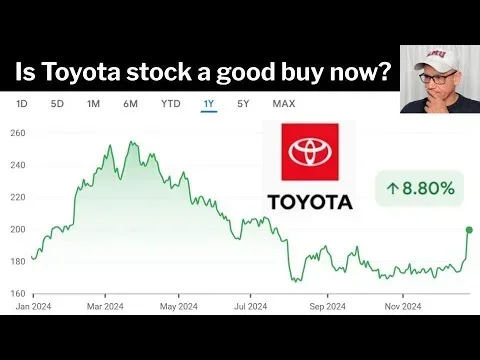
Toyota Motor Corporation remains a top choice for many investors seeking stability and steady growth. With strong dividend yields, global market leadership, and a clear hybrid and EV strategy, the stock shows resilience. However, currency shifts and rising competition require careful analysis. This guide breaks down the key factors to help you decide if Toyota fits your portfolio.
Investing in car companies can feel exciting and a little scary at the same time. You want growth, but you also want safety. That is why many people ask the same question: is Toyota a good stock to buy for the year ahead. Toyota Motor Corporation is one of the largest automakers in the world. It sells everything from compact cars to rugged trucks and popular hybrid models. The brand also has a strong reputation for quality and reliability. These traits matter when you look at a stock for the long run.
In this guide, we will walk through the main reasons investors like Toyota and the main concerns they watch. We will look at earnings, dividends, electric vehicle plans, and global demand. We will also talk about risks that can affect returns. The goal is simple. You will finish with a clearer picture of whether this stock matches your goals, your timeline, and your comfort with risk.
Key Takeaways
- Stable Dividend Income: Toyota has a long history of paying reliable dividends, making it attractive for income-focused investors.
- Hybrid Leadership: The company dominates the hybrid vehicle segment, which provides a strong cash flow bridge while EVs scale.
- Global Manufacturing Power: Toyota operates factories across multiple continents, reducing regional risk and supporting consistent sales.
- EV Transition Pressures: Pure electric vehicle sales lag behind some rivals, which could impact long-term growth if the shift slows.
- Currency Sensitivity: A strong yen can reduce reported profits, so exchange rate trends matter for returns.
- Valuation Comfort: The stock often trades at reasonable price-to-earnings ratios, offering a margin of safety for patient buyers.
- Risk Awareness: Supply chain issues, raw material costs, and competitive pricing wars can affect short-term performance.
📑 Table of Contents
- Why Investors Ask if Toyota Is a Good Stock to Buy
- Financial Health and Earnings Trends
- Dividend Yield and Shareholder Returns
- Electric Vehicle Strategy and Hybrid Leadership
- Global Market Position and Competitive Risks
- Valuation, Currency Effects, and Key Risks
- How to Decide If Toyota Fits Your Portfolio
Why Investors Ask if Toyota Is a Good Stock to Buy
People often compare Toyota with other large automakers before they buy shares. The company has a long track record of surviving economic cycles. It also tends to keep costs under control and produce vehicles that hold their value well. These qualities can make the stock feel safer than many smaller or newer car brands. At the same time, the auto industry changes fast. New battery technology, charging networks, and government rules all shape the future. So the question is Toyota a good stock to buy is really a mix of quality, timing, and risk tolerance.
Investors also look at the broader market. Some want steady income. Others want capital growth. Toyota can appeal to both groups, but for different reasons. The stock may not triple in a short period, yet it often offers a smoother ride than high-growth tech names. That balance is part of its appeal. If you want a company with global scale and a proven business model, Toyota deserves a close look.
What Makes Toyota Stand Out in the Auto Sector
Toyota is known for a few core strengths. First, it has a massive global footprint. The company sells vehicles in many regions, which helps smooth out local slowdowns. Second, it has a strong parts and manufacturing network. That network supports efficient production and lower per-unit costs. Third, the brand has a reputation for durability. Many buyers trust the name, and that trust supports repeat sales and strong resale values.
These strengths matter because they create a stable foundation. A stable foundation does not guarantee big short-term gains, but it can reduce the chance of sharp losses. For many investors, that trade-off is worth it. If you are building a long-term portfolio, a company with broad reach and consistent execution can be a solid anchor.
Financial Health and Earnings Trends
When you evaluate any stock, you start with the numbers. Toyota has generally shown strong revenue and healthy profit margins compared with many peers. The company benefits from a broad mix of vehicles, including sedans, SUVs, trucks, and hybrid models. That mix helps it adapt when consumer preferences shift. For example, if gas prices rise, more buyers may lean toward efficient or hybrid options. If demand for larger vehicles grows, Toyota can respond with its truck and SUV lineup.

Visual guide about Toyota stock growth concept
Image source: c8.alamy.com
Profitability also depends on costs. Toyota has worked for years to keep manufacturing expenses lean. It uses careful planning, shared parts, and efficient factory processes. These habits help protect margins when raw material prices move up. Of course, no company is immune to cost pressures. Steel, batteries, shipping, and labor can all affect the bottom line. Still, Toyota’s scale gives it more tools to manage those pressures than many smaller rivals.
Revenue Drivers Across Regions
Toyota does not rely on one single market. It sells cars and trucks across North America, Asia, Europe, and other regions. This broad reach is a key strength. If one area slows down, another may pick up the pace. That does not remove risk, but it can lower the impact of regional downturns. For example, a slowdown in consumer spending in one country may be offset by demand in another market.
The company also benefits from a wide product range. Compact cars, family SUVs, pickup trucks, and hybrid models all serve different buyers. This variety helps Toyota capture more sales across different price points. It also gives the business more ways to grow. If the market shifts toward larger vehicles, Toyota can lean into its truck and SUV offerings. If efficiency becomes the top priority, hybrids and smaller models can carry more weight.
Profit Margins and Cost Control
Profit margins are a major focus for investors. They show how much money the company keeps after covering costs. Toyota has historically managed this well by keeping production efficient and avoiding unnecessary waste. The company’s approach to manufacturing is built on discipline. That discipline can help during tough periods because it gives the business more flexibility.
Cost control also matters when inflation rises. Higher prices for materials or shipping can squeeze margins. Toyota’s large supply chain and long-term supplier relationships can help reduce some of that pressure. The company can also adjust production plans when needed. These tools do not eliminate risk, but they can soften the blow when markets get rough.
Dividend Yield and Shareholder Returns
Income matters to many investors, especially those who want regular cash flow. Toyota has a reputation for returning value to shareholders through dividends. The dividend yield may change over time, but the company has generally aimed to share profits with owners. For people who like steady income, that can be a strong point in favor of the stock.
Dividend history is not a promise of future payments, but it does show a mindset. Companies that pay dividends often focus on cash flow and financial discipline. That focus can be helpful in uncertain times. It also gives shareholders a small reward while they wait for the stock to grow. If you are comparing several automakers, dividend consistency can be one factor that sets Toyota apart.
How Dividends Fit a Long-Term Plan
Dividends can do more than provide cash. They can also help you stay patient during market swings. When you receive regular payments, you may feel less pressure to sell during a dip. That can be useful if you believe in the company’s long-term plan. Of course, dividends alone do not make a stock a great buy. You still need to look at the business, the valuation, and the risks. But when a dividend is paired with a solid business, it can improve the overall case.
If you are building a portfolio for the long run, income can be a helpful piece of the puzzle. It may not be the main reason you buy a stock, but it can add value over time. For many investors, that combination of growth potential and income is one reason they ask is Toyota a good stock to buy in the first place.
Electric Vehicle Strategy and Hybrid Leadership
The auto world is moving toward electrification. That shift is one of the biggest topics for any car company today. Toyota has taken a broad approach. It sells hybrid vehicles, plug-in models, and battery electric vehicles. The company has also invested heavily in hydrogen and other technologies. This wide strategy shows that Toyota wants options, not just one path.
Hybrids remain a major strength for Toyota. Many buyers like them because they offer better fuel economy without needing a charging station. That convenience has helped hybrids sell well in many markets. For Toyota, hybrids provide strong cash flow while the company continues to build out its electric vehicle lineup. This bridge can be valuable during a long transition period.
EV Plans and Market Timing
Electric vehicles are growing, but the pace varies by region. Some buyers want them now. Others are waiting for better range, lower prices, or more charging stations. Toyota has been expanding its EV offerings, but it has also been careful about timing. The company has emphasized practical solutions and broad access rather than racing to launch every possible model at once.
This cautious approach has pros and cons. On the positive side, it may help Toyota avoid costly mistakes and focus on models that fit real demand. On the other side, some investors worry that the company may move slower than rivals in pure electric sales. That concern is part of the debate when people ask is Toyota a good stock to buy for the next several years. The answer depends on how quickly you think EVs will dominate the market and how much you value a steady transition.
Why Hybrid Strength Still Matters
Hybrid technology gives Toyota a unique edge in the current market. It serves buyers who want efficiency but are not ready for a fully electric car. It also helps the company earn revenue while battery electric sales continue to grow. In many ways, hybrids act like a bridge between today’s market and the next one.
That bridge can be financially important. It supports sales, builds brand trust, and creates cash for future investments. For investors, that means Toyota is not standing still. It is competing in the current market while preparing for the next phase. That balance is one reason the stock appeals to people who want both stability and forward momentum.
Global Market Position and Competitive Risks
Toyota competes with many large automakers around the world. Some rivals focus heavily on electric vehicles. Others compete on price, design, or brand image. The car market is crowded, and competition can affect pricing power. When many companies offer similar vehicles, it can be harder to raise prices without losing buyers. That is why competitive pressure matters when you study any auto stock.
Toyota’s size is an advantage, but it also brings challenges. A large company must manage many models, many factories, and many markets at once. That complexity can slow decisions sometimes. It can also make the company more exposed to supply chain disruptions. If a key part is delayed, production can be affected across several vehicle lines. So scale helps, but it does not remove risk.
Supply Chain and Production Pressures
Supply chain issues have affected the auto industry for several years. Chip shortages, shipping delays, and parts constraints can interrupt production. These problems can reduce sales and increase costs. Toyota has worked to reduce these risks by planning ahead and keeping buffer stocks for certain parts. That kind of preparation can help during disruptions.
Still, no company can control every outside factor. Raw material prices can rise. Shipping costs can change. Labor markets can shift. All of these things can influence results. If you are thinking about is Toyota a good stock to buy, it helps to remember that external pressures can affect even the strongest companies. The key is whether the business has enough resilience to handle those pressures over time.
Competitive Landscape and Brand Trust
Brand trust is a real advantage in the car business. Buyers often return to brands they believe will deliver quality and service. Toyota has spent decades building that trust. Many consumers see the name and think of reliable daily transportation. That reputation can support sales even when the market gets tough.
At the same time, competitors are working hard to change the conversation. Some are promoting advanced technology, bold designs, or lower EV prices. Others are targeting younger buyers with new digital features. Toyota must keep evolving to stay ahead. If it continues to offer dependable vehicles with strong value, it can hold its ground. If it falls behind on key features or pricing, it could lose momentum.
Valuation, Currency Effects, and Key Risks
Valuation is the price you pay for future growth and income. Toyota often trades at a moderate price-to-earnings ratio compared with some high-growth companies. That can make it feel more accessible to conservative investors. A reasonable valuation does not guarantee gains, but it can provide a cushion if the market slows down. It also means you may not be paying a big premium for hope alone.
Currency is another important factor. Toyota earns money in many countries, but its reporting currency can affect results. When the yen is strong, overseas earnings can look smaller after conversion. When the yen is weaker, reported results can improve. This effect does not change the actual business as much as it changes the numbers on paper. Still, it matters for investors who watch quarterly results closely.
Key Risks to Watch Before Buying
No stock is without risk. For Toyota, a few key concerns stand out. First, the shift to electric vehicles may take longer or happen differently than expected. If EV adoption speeds up quickly, Toyota may need to adapt faster to keep pace. Second, competition could pressure prices and margins. Third, currency swings can affect reported earnings. Fourth, supply chain problems can interrupt production. Fifth, economic slowdowns can reduce consumer demand for new vehicles.
These risks are not reasons to avoid the stock automatically. They are reasons to study it carefully. Good investors do not ignore risk. They measure it, understand it, and decide whether they are comfortable with it. If you are asking is Toyota a good stock to buy, you should weigh these concerns against the company’s strengths and your own goals.
Valuation in Simple Terms
Valuation can sound technical, but the basic idea is simple. You want to know whether the price makes sense for the earnings, cash flow, and growth you expect. If the stock looks expensive, you may need stronger growth to justify it. If the stock looks reasonable, you may have more room for patience. Toyota has often been viewed as a steadier value option within the auto group. That does not mean it is always cheap, but it often sits at a level that feels less extreme than some high-momentum stocks.
For long-term investors, valuation matters because it affects returns. Buying at a fair price can improve the odds of a positive outcome. Buying at a very high price can make even a good company harder to profit from. That is why many people compare Toyota with other auto stocks before making a decision. They want to see whether the price matches the opportunity.
How to Decide If Toyota Fits Your Portfolio
The best answer to is Toyota a good stock to buy depends on your personal plan. If you want a stable company with global reach, a strong hybrid business, and a history of shareholder returns, Toyota may fit well. If you want rapid growth from a pure electric vehicle leader, you may prefer a different name. If you are worried about currency swings or slow EV adoption, those concerns should shape your decision too.
A useful way to think about it is to match the stock with your timeline. If you plan to hold for many years, short-term bumps may matter less. If you want quicker results, you may need a stock with faster momentum. Toyota is often better suited for investors who can stay patient and focus on the bigger picture. It is a company built for endurance, not just speed.
Questions to Ask Before You Buy
Before you invest, ask a few simple questions. Do you understand how the company makes money? Are you comfortable with the auto industry’s risks? Does the dividend and valuation profile match your needs? Are you prepared for currency and EV transition uncertainty? These questions help you avoid buying based on hype alone. They also help you build a reason for owning the stock beyond a quick price move.
It also helps to think about position size. Even a strong stock should fit within a balanced portfolio. You may not want one auto company to dominate your holdings. Diversification can reduce the impact of any single industry shock. If you like Toyota, you can still keep your overall risk in check by spreading your investments across different sectors.
Final Thoughts on Toyota as an Investment
Toyota offers a mix of strengths that many investors find appealing. It has scale, a trusted brand, a strong hybrid lineup, and a history of disciplined operations. It also faces real challenges, including EV transition timing, competition, and currency effects. That combination makes the stock interesting, but not automatic. The decision comes down to what you want from your portfolio and how much risk you are willing to take.
If you value stability, income, and a company that is competing across multiple technologies, Toyota can be a strong candidate. If you are looking for a fast-growing EV pure play, you may want to look elsewhere or limit your exposure. Either way, the smartest move is to study the business, understand the risks, and make a choice that fits your goals. That is the best way to answer the question is Toyota a good stock to buy with confidence.
Frequently Asked Questions
Is Toyota a good stock to buy for long-term investors?
It can be a strong fit for long-term investors who value stability, global scale, and regular dividends. The company’s hybrid strength and disciplined operations add appeal, but you should still watch EV transition risks and currency effects.
Does Toyota pay dividends to shareholders?
Yes, Toyota has a history of paying dividends, which makes it attractive to income-focused investors. The payout can change over time, so it is wise to review the latest reports before investing.
What is the biggest risk for Toyota stock?
One major risk is the pace of the electric vehicle transition, since slower EV adoption or stronger competition could affect future growth. Currency swings and supply chain disruptions are also important risks to monitor.
How does Toyota compare with EV-focused automakers?
Toyota takes a broader approach with hybrids, plug-in models, and battery electric vehicles, while some rivals focus more heavily on pure EVs. That gives Toyota a steadier present business, but some investors worry it may move slower in electric sales.
Can currency changes affect Toyota’s stock performance?
Yes, currency changes can influence reported earnings because Toyota earns revenue in many countries. A stronger yen can reduce converted profits, while a weaker yen can have the opposite effect.
Should I buy Toyota stock if I want fast growth?
Toyota may not be the best choice if you want rapid short-term growth, since it is better known for stability and endurance. It may suit you better if you want a balanced, long-term holding with income and lower volatility.