

How much does a Toyota Corolla weigh depends on the trim, engine, and model year, but most modern Corollas range between 2,800 and 3,100 pounds. Knowing your exact curb weight helps you understand fuel efficiency, handling, and safe loading limits. This guide breaks down every generation, explains weight differences, and shows you where to find your car’s official specs.
If you have ever wondered how much does a Toyota Corolla weigh, you are not alone. Weight is one of those behind-the-scenes numbers that quietly shapes your daily driving experience. It affects how quickly your car accelerates, how smoothly it corners, how much fuel it uses, and even how much cargo you can safely carry. Whether you are comparing trims, planning a road trip, or just curious about your car’s specs, knowing the exact weight gives you a clearer picture of what you are driving.
Toyota has kept the Corolla light, efficient, and reliable for decades. That reputation comes from smart engineering and a focus on everyday usability. Modern Corollas are built with high-strength steel, aluminum components, and compact powertrains that keep the overall mass in check. The result is a sedan that feels nimble in traffic, easy to park, and affordable to run. Still, not every Corolla weighs the same. Trim level, engine choice, drivetrain, and optional equipment all shift the number slightly.
In this guide, we will walk through the exact weight ranges for recent Corolla models, explain why those numbers matter, and show you how to find the most accurate specs for your own car. You will also learn how weight connects to fuel economy, handling, payload limits, and long-term ownership costs. By the end, you will have a clear, practical understanding of your Corolla’s weight and what it means for your driving routine.
Key Takeaways
- Base curb weight varies by trim: Most 2020-2024 Toyota Corolla models weigh between 2,800 and 3,100 pounds depending on engine, drivetrain, and options.
- Hybrid models are slightly heavier: The Corolla Hybrid adds battery and motor components, typically pushing curb weight closer to 3,000-3,100 pounds.
- Weight affects performance and efficiency: Lighter cars generally deliver better fuel economy, quicker acceleration, and sharper handling in daily driving.
- Payload and towing limits matter: Your Corolla’s gross vehicle weight rating (GVWR) and payload capacity dictate how much cargo and passengers you can safely carry.
- Find exact specs in your owner’s manual: The door jamb sticker and VIN decoder provide the most accurate weight data for your specific vehicle.
- Weight changes with options: Added features like larger wheels, sunroofs, or premium audio can increase curb weight by 50-150 pounds.
- Compare trims before buying: Understanding weight differences helps you choose the right Corolla for your budget, driving style, and efficiency goals.
📑 Table of Contents
- How Much Does a Toyota Corolla Weigh Across Recent Model Years
- Understanding Curb Weight vs. Gross Vehicle Weight
- How Weight Influences Fuel Economy and Handling
- Where to Find Exact Weight Specs for Your Corolla
- Common Questions About Corolla Weight and Load Capacity
- Expert Insights on Choosing the Right Corolla Trim
- Final Thoughts on Toyota Corolla Weight
How Much Does a Toyota Corolla Weigh Across Recent Model Years
When people ask how much does a Toyota Corolla weigh, they usually want a quick number. The truth is that curb weight changes slightly with each generation and trim. Curb weight means the car’s weight with all standard equipment, fluids, and a full tank of gas, but without passengers or cargo. For most modern Corollas, that number lands between 2,800 and 3,100 pounds.
The exact figure depends on several factors. A base LE model with a small engine and steel wheels will sit at the lower end of the range. A higher trim with a sunroof, larger wheels, premium sound, and extra safety tech will push the weight upward. Hybrid versions add a battery pack and electric motor, which also increases mass. Even small differences in interior materials or bumper design can shift the scale by a few pounds.
Curb Weight by Recent Trims
Here is a practical breakdown of how weight varies across common Corolla configurations. These numbers are approximate and reflect typical curb weight ranges you will see on recent model years:
- Corolla LE (gas): Around 2,800 to 2,850 pounds. This is the lightest common setup, with a focus on efficiency and value.
- Corolla SE and XSE (gas): Roughly 2,850 to 2,950 pounds. Sportier styling, larger wheels, and added features add a bit of mass.
- Corolla Hybrid LE and SE: Close to 2,950 to 3,100 pounds. The hybrid system brings extra components, but efficiency stays high.
- Corolla Hatchback: Similar to the sedan, often between 2,800 and 2,950 pounds depending on trim and options.
If you compare these numbers side by side, the differences are small but real. A 100-pound swing may not sound like much, but it can influence how a car feels during quick lane changes, hill climbs, or emergency maneuvers. That is why automakers pay close attention to weight distribution and component selection.
Why Weight Varies Between Trims
Toyota offers the Corolla in several flavors, and each one targets a slightly different driver. The base trims strip things down to keep costs and weight low. Higher trims add comfort and style items that make the car more appealing, but they also add pounds. Common weight-adding features include:
- Larger alloy wheels and low-profile tires
- Panoramic or power sunroofs
- Upgraded infotainment hardware and speakers
- extra safety sensors and camera modules
- Leather-trimmed seats and heated seating elements
None of these features are bad. They simply change the car’s profile. If you care about maximum efficiency, a lighter trim may make sense. If you want more comfort or style, the slight weight increase is usually worth it. The key is knowing what you are buying and how it affects your driving.
Understanding Curb Weight vs. Gross Vehicle Weight
Before you use any weight number for planning, it helps to know the difference between curb weight and gross vehicle weight. Curb weight is the car standing alone, ready to drive. Gross vehicle weight rating, or GVWR, is the maximum total weight the vehicle can safely handle. That total includes the car itself, plus everyone inside, plus all cargo and accessories.
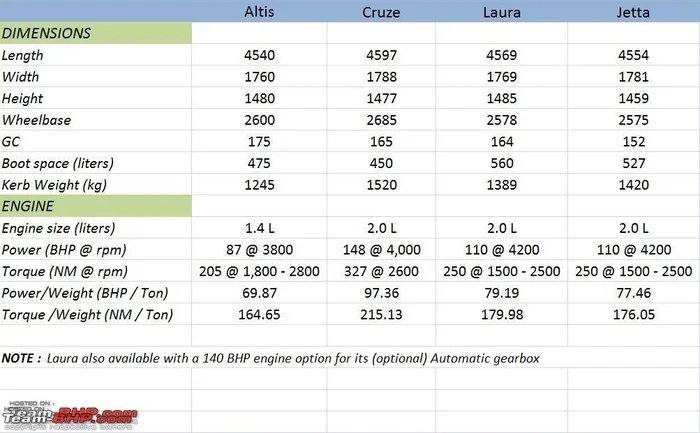
Visual guide about Toyota Corolla car weight
Image source: team-bhp.com
This distinction matters because your Corolla’s payload capacity is the gap between curb weight and GVWR. If your car weighs 2,900 pounds and the GVWR is 3,500 pounds, you have about 600 pounds of payload. That space must cover passengers, luggage, groceries, and anything else you toss in the trunk or back seat. It adds up faster than many people expect.
How Payload Affects Daily Use
Payload limits are not just for trucks. Passenger cars have them too, and they matter for safety and handling. When you overload a car, several things can happen:
- Suspension feels softer or bottom-heavy over bumps
- Braking distance can increase slightly under heavy load
- Cornering becomes less precise because weight shifts more dramatically
- Fuel economy drops because the engine works harder
Most daily driving stays well within limits. A few passengers and a full trunk are usually fine. Problems tend to appear during long road trips, moving days, or when people stack heavy items in the cabin. If you regularly carry lots of gear, keep an eye on the total and distribute weight evenly.
Quick Tips for Checking Your Car’s Weight Limits
You do not need to guess. Toyota puts the official numbers where you can find them quickly. Here are the best ways to confirm your specific Corolla’s weight and limits:
- Check the door jamb sticker: Open the driver door and look for the certification label. It lists curb weight, GVWR, and tire information.
- Read the owner’s manual: The manual explains payload, loading tips, and how to interpret the door label.
- Use a VIN decoder: Online tools can pull build details for your exact car, including trim and often weight-related specs.
- Weigh it at a scale: For the most precise number, drive to a truck stop or industrial scale and get a real curb weight reading.
These steps take only a few minutes and give you confidence when loading your car or comparing trims. If you want a deeper dive into Corolla ownership, you may also find it helpful to explore how much is a Toyota Corolla when budgeting for your next purchase.
How Weight Influences Fuel Economy and Handling
Weight is one of the biggest levers behind fuel economy. A lighter car needs less energy to get moving, less energy to stop, and less energy to climb hills. That is why efficiency-focused models often use lighter materials, smaller wheels, and streamlined parts. The Corolla’s reputation for strong gas mileage comes partly from this disciplined approach to mass.
Handling is another area where weight shows up. A lighter car generally changes direction more easily. It feels quicker in lane changes and more settled during sudden maneuvers. That does not mean heavier trims handle poorly. It simply means the car may feel a bit more relaxed or planted, depending on suspension tuning and weight distribution. Toyota balances these traits so the car remains comfortable and predictable.
Gas vs. Hybrid Weight Differences
The Corolla Hybrid adds an electric motor and battery, which increases weight compared with the gas-only version. At the same time, the hybrid system improves efficiency by recapturing energy during braking and assisting the engine during acceleration. The net result is a car that may weigh a little more but still delivers excellent mileage.
This is a good example of how weight is only one piece of the puzzle. Engineers also look at aerodynamics, powertrain tuning, tire rolling resistance, and transmission behavior. A hybrid Corolla can feel smooth and responsive in city traffic, where the electric assist shines. On the highway, the gas engine does more of the work, and the weight difference becomes less noticeable.
Practical Examples in Everyday Driving
Here are a few real-world situations where weight makes a noticeable difference:
- City commuting: Stop-and-go traffic rewards lighter cars because acceleration and braking happen constantly.
- Hill climbing: A lighter car often feels easier to drive uphill, especially with passengers and luggage.
- Parking and tight spaces: Lower mass can make the car feel more agile when turning into spots or maneuvering in lots.
- Fuel budgeting: Small weight savings across a fleet of cars add up to meaningful efficiency gains over time.
If you want to understand how efficiency and ownership costs fit together, it can help to look at how long do Toyota Corollas last, since reliability and efficiency often go hand in hand for this model.
Where to Find Exact Weight Specs for Your Corolla
If you need the most accurate number for your specific car, the best source is the vehicle itself. Toyota prints key weight data on the certification label, usually located on the driver side door jamb or the B-pillar. That label shows the base curb weight, GVWR, and tire specifications for your build. It is the quickest way to confirm what your car actually weighs.
The owner’s manual adds useful context. It explains how to read the label, how payload works, and what loading practices keep the car safe and balanced. If your manual is missing, most Toyota owner resources online let you download a digital copy using your model year and trim.
Using the VIN to Confirm Build Details
Your VIN is a unique code that tells the story of your car’s assembly. By entering it into a trusted decoder or speaking with a Toyota dealer, you can confirm the exact trim, engine, and option package. That information helps you match your car to the correct weight range and avoid relying on generic averages.
This step is especially useful if you own a used Corolla and are unsure which options were included. A car that looks like a base model may actually have added features that increase weight. Knowing the true build helps you understand fuel use, handling, and cargo capacity more accurately.
When to Use a Physical Scale
Sometimes you want a real-world measurement instead of a spec sheet number. Driving your Corolla onto a commercial scale gives you an exact curb weight reading. This can be helpful if you are comparing vehicles, tracking modifications, or simply curious about the actual number. Just make sure the car is loaded the way you normally drive it, with a full fuel tank and standard equipment.
Common Questions About Corolla Weight and Load Capacity
Weight questions often come up during car shopping, trip planning, and routine ownership. Below are some of the most common concerns, along with practical answers that help you make smart decisions.
Does a heavier Corolla trim mean worse fuel economy?
Not always. A heavier trim can use a bit more fuel, but the difference is often small in daily driving. Engine tuning, driving habits, tire choice, and road conditions usually matter just as much as the extra pounds. If you compare two trims with the same powertrain, the lighter one may have a slight efficiency edge.
How much cargo can a Toyota Corolla carry?
Cargo capacity depends on the model year and interior layout, but the trunk and back seat together offer a useful amount of space for groceries, luggage, and everyday items. The real limit is your payload capacity, which includes passengers and cargo combined. Staying within that limit keeps the car balanced and safe.
Do aftermarket parts change the car’s weight noticeably?
They can. Larger wheels, heavy audio upgrades, roof racks, and bulky accessories add mass over time. A few small changes may not matter much, but stacking several heavy mods can affect efficiency and handling. If you care about keeping the car light, choose lightweight accessories and keep the total in mind.
Is the Corolla lighter than many compact sedans?
In many cases, yes. The Corolla is designed with efficiency and everyday usability in mind, so it usually stays competitive on weight compared with similar compact sedans. That lighter profile supports solid fuel economy and easy maneuverability, which is part of why the model remains so popular.
Should I worry about weight if I mainly drive in the city?
City driving actually makes weight more relevant, not less. Frequent stops, starts, and tight turns mean the car is constantly accelerating and decelerating. A lighter setup can feel easier to manage in traffic and may use less fuel over time. Still, the Corolla is built for this kind of use, so most trims handle city life well.
How can I keep my Corolla loaded safely on trips?
Spread weight evenly, keep heavy items low and centered, and avoid stacking loose gear where it can shift. Check your payload limit before a long trip, especially if you have several passengers and lots of luggage. A balanced load improves comfort, braking, and control.
Expert Insights on Choosing the Right Corolla Trim
Choosing a trim is really about matching weight, features, and budget to your driving style. If your top priority is maximum efficiency and a light, nimble feel, a base or mid-level gas trim may be the best fit. If you want more style, comfort, or safety tech, a higher trim can be worth the small weight increase. If you drive a lot in stop-and-go traffic, the hybrid option offers strong efficiency even with the extra battery weight.
It also helps to think about long-term ownership. A lighter car can feel more agile today, but reliability, maintenance costs, and resale value matter just as much over time. The Corolla has a strong track record in all of those areas, which is why so many buyers keep coming back to it. When you understand how much does a Toyota Corolla weigh and how that weight interacts with your daily routine, it becomes easier to pick the right version for your needs.
For buyers comparing multiple Toyota models, it can be useful to look at related specs too. You might explore how much is a Toyota RAV4 if you want a smaller SUV instead, or read about how many miles does a Toyota Camry last if you are considering a larger sedan. Each model has its own weight profile and use case, so the best choice depends on what you value most.
Final Thoughts on Toyota Corolla Weight
So, how much does a Toyota Corolla weigh? Most modern Corollas fall in a tight range between about 2,800 and 3,100 pounds, with the exact number depending on trim, engine, hybrid status, and options. That relatively light build supports the model’s famous efficiency, easy handling, and everyday practicality. It also gives you enough payload for normal passenger and cargo use without making the car feel overloaded.
The smartest move is to check your specific car’s label or manual instead of relying on a generic average. Once you know your curb weight and GVWR, you can load your car with confidence, compare trims more accurately, and understand why your Corolla feels the way it does on the road. Whether you want a no-frills commuter or a more styled daily driver, the Corolla’s weight profile is one of the reasons it keeps fitting into so many lives so well.