

Toyota cars are made in over 20 countries worldwide, with massive manufacturing hubs in Japan, the United States, and China. This global network helps the brand deliver high-quality vehicles to customers everywhere. You will learn which factories build your favorite models and why location matters for reliability.
Have you ever looked at your car and wondered where are Toyota cars made? It is a common question. Many people want to know about the origin of their vehicle. They care about quality and engineering. Toyota is a huge brand. They build millions of cars every year. This means they need many factories.
Understanding the Toyota manufacturing locations helps you appreciate the car. It shows the global effort behind each model. Some parts come from one country. The final assembly happens in another. This global supply chain is complex. But it ensures you get a reliable ride. We will break down the major hubs. You will see how the pieces fit together.
In this guide, we explore the global automotive production network. We look at specific countries and plants. You will learn how to find the origin of your car. We also discuss why manufacturing location matters. Let us dive into the world of Toyota factories.
Key Takeaways
- Global Presence: Toyota operates manufacturing plants in more than 20 countries across Asia, North America, and Europe.
- Top Production Hubs: The largest volumes come from Japan, the USA, China, and Thailand.
- Model Specifics: Some models like the Toyota Camry are built locally for specific markets, such as the USA.
- Quality Control: Every factory follows strict Toyota Production System standards regardless of location.
- Engine vs. Assembly: Engines and transmissions might come from different plants than the final car assembly.
- Future Growth: Toyota continues to expand electric vehicle production in new global locations.
- Import Labels: You can often find where a specific car was made by checking the VIN or door jamb sticker.
📑 Table of Contents
Where Are Toyota Cars Made in Japan
Japan is the home of Toyota. It is the heart of the operation. Many people assume all Toyota cars come from Japan. This is not fully true today. But Japan remains a critical hub. The company started here. The main headquarters are in Toyota City.
Key Toyota Plants in Japan
Several major factories operate in Japan. These plants build models for domestic use. They also export cars to other nations. The Takaoka plant is very famous. It builds the Crown and Century models. These are luxury vehicles for Japanese buyers.
Another key site is the Tahara plant. This facility focuses on high-quality assembly. It often builds flagship models. The Tsutsumi plant is also important. It handles many popular sedans and SUVs. These factories use advanced robotics. They follow strict Japanese manufacturing standards.
What Models Come from Japan
Not every model is built in Japan anymore. The company shifted production to local markets. This reduces shipping costs. It also helps with trade tariffs. However, some models still originate here. Luxury cars often come from Japan. Specific hybrid models may also start here.
If you buy a new Toyota in Asia, it likely came from Japan. Many exports go to nearby countries. This includes Australia and the Middle East. The quality is consistently high. Workers receive extensive training. This ensures every vehicle meets brand standards.
Toyota Manufacturing in the United States
The United States is a massive market for Toyota. To serve this market, they built many factories here. This answers the question of where are Toyota cars made for American buyers. Most cars you see on US roads were built locally. This supports the local economy too.
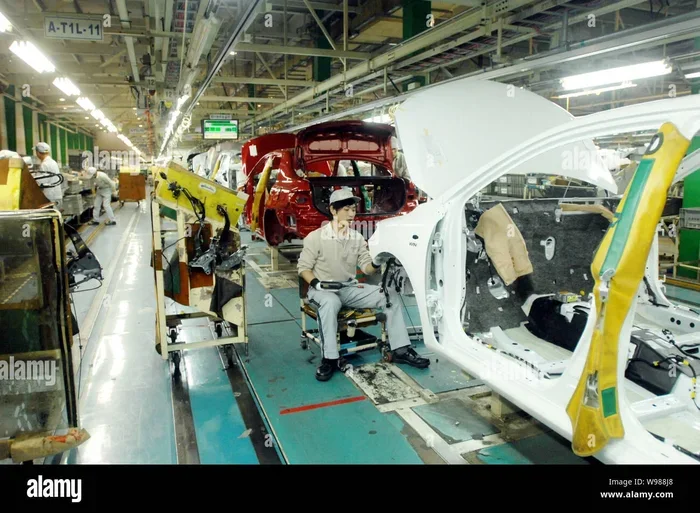
Visual guide about Toyota car factory assembly line
Image source: c8.alamy.com
Major US Assembly Plants
Toyota has several assembly plants across America. The Georgetown plant in Kentucky is very famous. It builds the Toyota Camry. This was the first US plant for Toyota. It started operations in the 1980s. Today, it produces hundreds of thousands of cars.
The San Antonio plant in Texas is another key site. It focuses on trucks and SUVs. You will find the Tacoma and Tundra here. These are popular work vehicles. The Blue Springs plant in Mississippi builds the Corolla. This is a key compact car for the region.
There are also engine plants in the US. The Huntsville plant in Alabama builds engines. These engines go into many different vehicles. This vertical integration helps control costs. It also improves quality control.
Why Build Cars in the USA
Building cars locally makes sense for many reasons. It reduces shipping time. It avoids import taxes. Customers prefer buying local products. It also creates jobs for communities. Toyota has invested billions in US infrastructure.
This strategy helps during supply chain issues. If shipping is delayed, local stock is available. This ensures dealers have cars to sell. It keeps the Toyota production volume high. Customers do not have to wait long for deliveries.
Toyota Production in Asia and Europe
Asia is a huge growth area for Toyota. China is a major market. They have many joint ventures there. These partnerships help build cars for Chinese buyers. Thailand is another important hub. It is often called the Detroit of Asia.
China and Thailand Factories
In China, Toyota works with local partners. They build models specifically for Chinese roads. The market there prefers different sizes. They also focus on hybrid technology. This matches local environmental goals. Thailand produces many Hilux trucks. These are exported to many other countries.
Europe has a different story. Toyota closed some plants there recently. They focus on specific markets now. The UK plant builds the Corolla Hatchback. This serves the European region. They also produce hybrid versions there. This shows how they adapt to local needs.
Global Supply Chain
Parts come from all over the world. A car might have an engine from one country. The seats might come from another. The electronics could be from a third place. This global automotive production network is efficient. It allows them to source the best parts.
However, this can cause delays. If one part is missing, the car cannot ship. Toyota manages this risk carefully. They keep large inventories. They also have backup suppliers. This keeps the automotive manufacturing flow smooth.
How to Find Where Your Toyota Was Made
You might want to know about your specific car. You do not need to call the company. There are easy ways to check. The vehicle identification number is the key. This number is unique to your car.
Checking the VIN
The VIN is on your dashboard. You can see it through the windshield. The first character often tells the country. A J usually means Japan. A T often means Toyota. A 2 or 4 can mean the USA. This is a simple code to read.
You can also check the door jamb sticker. Open the driver side door. Look for a safety compliance label. It lists the country of origin. It also lists the assembly plant. This is the most direct method.
Why Location Matters to Buyers
Some buyers prefer Japanese-made cars. They believe the quality is higher. Others prefer US-made cars for support. Both are built to high standards. The Toyota quality control is strict everywhere. The difference is minimal in practice.
Knowing the origin helps with parts ordering. Some parts are specific to regions. Mechanics need to know the source. It also helps with resale value. Some collectors prefer specific origins. It is good information to have.
The Future of Toyota Manufacturing
The car industry is changing fast. Electric vehicles are becoming popular. Toyota is adapting its factories. They are retooling plants for new tech. This requires significant investment.
Electric Vehicle Plans
Toyota plans to build more EVs. They need new battery production lines. Some existing plants will change. They might stop making gas engines there. This shift is happening globally. They want to lead in hybrid and EV tech.
New factories might open in new regions. They look for skilled workers. They also look for stable power grids. This ensures consistent production. The goal is sustainable manufacturing. This reduces the carbon footprint.
Sustainability Goals
Toyota wants to be carbon neutral. They are changing how they build cars. They use more renewable energy. They recycle more materials. This affects global manufacturing hubs. Every plant must meet these goals.
This is a big challenge. It requires new technology. But it is necessary for the future. Customers care about the environment. They want clean cars. Toyota is working to meet this demand.
Common Mistakes When Checking Origin
People often make errors when checking origins. They assume all Toyotas are from Japan. This is the biggest mistake. Many are built locally. Another mistake is ignoring the VIN.
Some people look at the logo only. The logo does not show the factory. You must check the specific vehicle. Do not rely on hearsay. Check the documentation yourself. This ensures you have the right info.
Expert Insights on Toyota Plants
Industry experts watch Toyota closely. They praise the efficiency. The Toyota Production System is famous. It minimizes waste. It maximizes quality. Other companies try to copy it.
Experts note the flexibility of the plants. They can switch models quickly. This helps during demand changes. If gas cars slow down, they make hybrids. This agility is a key strength. It keeps them competitive globally.
Key Takeaways on Toyota Manufacturing
To wrap up, Toyota is truly global. They build cars in many nations. This helps them serve customers better. It reduces costs and shipping times. The quality remains high everywhere.
You can find your car’s origin easily. Use the VIN or door sticker. Do not worry too much about the location. Trust the brand standards. They ensure safety and reliability. Whether it is from Japan or the US, it is a Toyota.
The future looks bright for production. They are moving toward electric tech. They are focusing on sustainability. This will change where cars are made. But the commitment to quality stays. You can trust your vehicle wherever it was built.
Frequently Asked Questions
Where are Toyota cars made in the world today?
Toyota cars are made in over 20 countries including Japan, the USA, China, and Thailand. The specific location depends on the model and the target market for sale.
Are all Toyota cars made in Japan?
No, not all Toyota cars are made in Japan. Many popular models like the Camry and Tacoma are manufactured in the United States and other local markets.
How can I tell where my Toyota was manufactured?
You can check the Vehicle Identification Number (VIN) on the dashboard or the compliance sticker on the driver side door jamb. These labels clearly state the country of origin and assembly plant.
Which country produces the most Toyota vehicles?
Japan remains the historical home, but the United States and China are among the largest production hubs by volume today. Thailand is also a major exporter for the Asian region.
Does the manufacturing location affect Toyota quality?
Toyota maintains strict quality control standards across all global factories. While some enthusiasts prefer Japanese-made models, US and other local plants meet the same high reliability standards.
Where are Toyota engines made?
Toyota engines are made in various specialized engine plants separate from car assembly lines. Major engine production facilities exist in the USA, Japan, and other key manufacturing regions.