
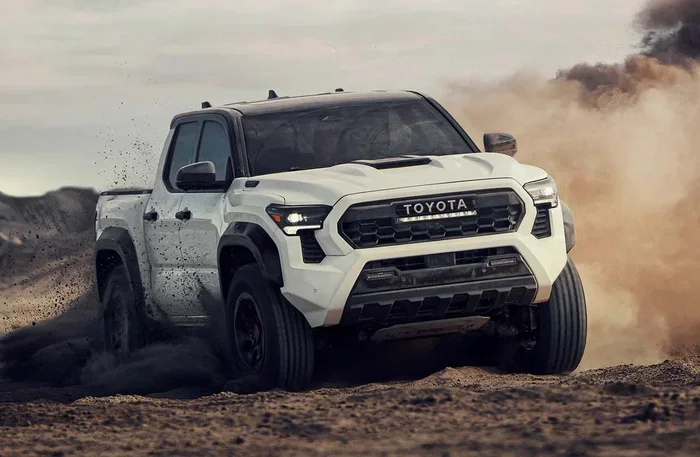
Not every Toyota Tacoma is a 4 wheel drive vehicle. The truth is that Toyota Tacomas are available in both 2 wheel drive and 4 wheel drive configurations. You must choose the right trim and drivetrain package at purchase. If you want extra traction for trails, snow, or mud, the 4 wheel drive system gives you a clear advantage. This guide breaks down the drivetrain options, how the transfer case works, and which setup fits your daily driving needs.
If you are shopping for a rugged midsize truck, you probably want to know exactly what you are getting under the hood. One of the most common questions we hear is whether every model comes with four-wheel drive. The short answer is no. Toyota Tacomas are sold in both 2 wheel drive and 4 wheel drive setups, and the best choice depends on where you drive and how you use the truck.
The Tacoma has earned a strong reputation for durability, resale value, and off-road capability. That reputation often makes people assume the truck is always a 4WD vehicle. In reality, Toyota offers different drivetrain configurations so buyers can match the truck to their budget and their needs. If you spend most of your time on paved roads, a 2WD model may make more sense. If you plan to tackle dirt trails, steep driveways, or slippery boat ramps, a 4 wheel drive Tacoma is a smart upgrade.
In this guide, we will walk through how the drivetrain works, which trims offer four-wheel drive, and what you gain or give up with each option. We will also answer common questions about towing, fuel economy, snow driving, and maintenance. By the end, you will know exactly how to choose the right Tacoma for your life.
Key Takeaways
- Drivetrain choice matters: Toyota Tacomas come in both 2WD and 4WD, so you must select the right option at the dealership.
- 4WD is optional, not standard: Most base trims start as rear-wheel drive, while 4 wheel drive is an added package on many trims.
- Part-time system design: The Toyota Tacoma 4WD system uses a part-time transfer case meant for low-traction surfaces, not full-time pavement use.
- Towing and hauling benefits: A 4 wheel drive Tacoma often provides better traction when launching a boat, towing a trailer, or climbing steep grades.
- Fuel economy trade-off: 2 wheel drive Tacomas usually deliver better gas mileage because they carry less drivetrain weight and friction.
- Off-road trims add value: TRD Off-Road and TRD Pro models include 4WD with locking rear differential and other trail-ready hardware.
- Daily driving is fine: You can absolutely drive a 4WD Tacoma on dry pavement for normal commutes, but you should avoid locking the center differential on high-traction roads.
📑 Table of Contents
- Are Toyota Tacomas 4 Wheel Drive By Default?
- How the Toyota Tacoma 4WD System Works
- Which Toyota Tacoma Trims Offer 4 Wheel Drive?
- 4WD vs 2WD: What You Gain and What You Give Up
- Daily Driving a 4 Wheel Drive Tacoma
- Maintenance and Long-Term Ownership Tips
- Quick Tips
- Common Mistakes
- Expert Insights
- Key Takeaways
- Conclusion
Are Toyota Tacomas 4 Wheel Drive By Default?
Many shoppers expect a truck built for rough terrain to come with four-wheel drive as standard equipment. That is not how the Tacoma lineup works. Toyota gives buyers a choice, and the base configuration usually starts as a rear-wheel drive truck. The Toyota Tacoma 4 wheel drive option is available on most trims, but you typically need to select it during the buying process.
This setup makes sense for a lot of buyers. A 2WD Tacoma is lighter, simpler, and often more affordable. It also tends to deliver better fuel economy for people who drive mostly on city streets and highways. On the other hand, if your daily routine includes steep hills, unpaved roads, or unpredictable weather, the extra traction of a 4WD Tacoma can make a real difference.
It helps to think about the Tacoma as a platform with multiple personalities. A work truck that hauls cargo on dry pavement does not need the same hardware as a weekend adventure vehicle. Toyota designed the lineup so you can pick the version that fits your routine. If you want to compare how this choice stacks up against another popular Toyota truck, you can read our breakdown of Are All Toyota 4Runners 4 Wheel Drive to see how Toyota handles drivetrain options across its truck and SUV families.
What the base drivetrain usually looks like
The standard drivetrain on many Tacoma trims is a rear-wheel drive layout. That means the engine sends power to the rear wheels only. This arrangement is efficient and straightforward. It works well for normal driving, light hauling, and most urban or suburban use. The trade-off is that you have less traction when the road or trail gets slippery.
When you add the four-wheel drive package, the truck gains a transfer case and front driveline. That extra hardware lets the system send power to all four wheels when needed. It is a major advantage in low-traction conditions, but it also adds weight and mechanical complexity. If you are trying to decide between the two, think about your typical routes, not just the worst-case scenario.
Who should choose 2WD
A 2WD Tacoma is a strong choice if your driving is mostly on paved roads. It is also a good fit if you want to keep costs down and do not mind a little less grip in deep snow or mud. Many fleet buyers and daily commuters prefer this setup because it is practical and efficient. If your job site is accessible by regular roads and you only need a truck for cargo, 2WD can be plenty capable.
Who should choose 4WD
A 4 wheel drive Tacoma makes more sense if you regularly encounter snow, gravel, mud, sand, or steep inclines. It is also a smart pick if you plan to tow in tricky conditions or if you simply want extra confidence when the weather turns bad. People who enjoy off-roading, camping, or exploring backroads often appreciate the added versatility. If you are still wondering how this compares with other Toyota models, our article on Are Toyota Highlanders 4 Wheel Drive shows how Toyota applies drivetrain choices to its SUVs as well.
How the Toyota Tacoma 4WD System Works
Understanding the Toyota Tacoma 4WD system is easier than it sounds. The key component is the transfer case, which sits between the transmission and the front and rear axles. In a 2WD model, power flows only to the rear axle. In a 4WD model, the transfer case can send power to the front axle as well. That is what gives the truck its extra traction.
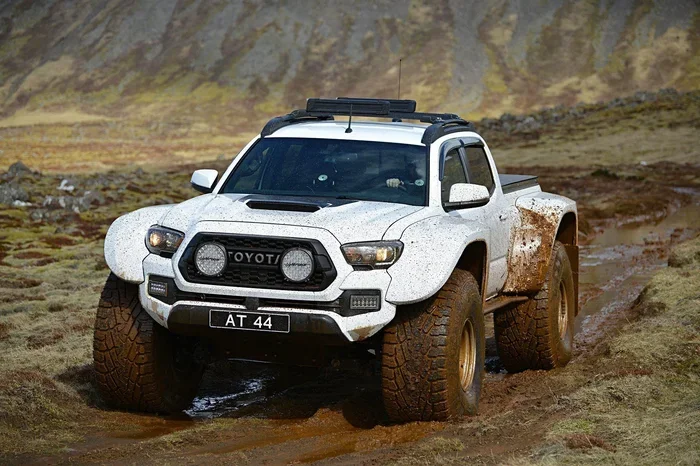
Visual guide about Toyota Tacoma 4WD off-road
Image source: i.pinimg.com
Most Tacomas use a part-time 4WD system. That means the front and rear axles normally operate independently, and the truck runs in rear-wheel drive during everyday driving. When you engage 4WD, the transfer case links the front and rear driveshafts together so both axles turn at the same speed. This setup is excellent for loose or slippery surfaces because it helps prevent wheel spin.
Part-time systems are not meant to be used on dry pavement for extended periods. When the tires have full grip, forcing both axles to spin at the same speed can cause binding in the drivetrain. That is why the system is designed for conditions where the tires have less traction. If you want to understand how this idea compares across Toyota’s lineup, check our explainer on Are All Toyota Tacomas 4 Wheel Drive for a closer look at the drivetrain choices.
High range and low range
Many 4WD Tacomas include a high range and a low range. High range is the normal 4WD mode for everyday slippery conditions. It is useful on snowy roads, wet gravel, and light off-road trails. Low range is a different story. It multiplies torque and slows the vehicle down without relying heavily on the brakes. That makes it ideal for steep descents, deep sand, rock crawling, and other demanding situations.
Low range is not something you need every day. Most drivers use high range only. But if you plan to tackle serious terrain, low range adds a lot of control. It is one of the reasons the Tacoma has such a strong following among outdoor enthusiasts and overland travelers.
Locking rear differential and other hardware
Some Tacoma trims and packages add a locking rear differential. This feature forces both rear wheels to turn together, even if one wheel loses traction. On a normal open differential, power can escape to the wheel with the least resistance. A locker prevents that waste of power. If one rear wheel is in the air or stuck in mud, the other wheel can still push the truck forward.
Other hardware often found on off-road trims includes upgraded suspension, all-terrain tires, skid plates, and higher ground clearance. These parts work together with the 4 wheel drive system to improve confidence on rough terrain. The drivetrain is only one piece of the puzzle, but it is a big one.
Which Toyota Tacoma Trims Offer 4 Wheel Drive?
Toyota typically offers four-wheel drive across several Tacoma trims, but the exact availability can vary by model year and market. In general, you can find 4WD on many of the popular configurations, including SR, SR5, TRD Sport, TRD Off-Road, and TRD Pro. The base trim may start as 2WD, and the 4WD Tacoma version is usually a selectable option.
The TRD Off-Road and TRD Pro trims are especially popular with buyers who want trail-ready equipment. These versions often include the part-time 4WD system, a locking rear differential, and other off-road aids. The TRD Sport trim is more focused on street performance and appearance, though it can still be available with four-wheel drive depending on the model year. If you want a more refined daily driver with optional 4WD, the SR5 remains a common choice.
Because trim names and packages shift over time, the safest approach is to confirm the drivetrain on the specific vehicle you are considering. A quick look at the window sticker or the vehicle specs will tell you whether the truck is 2WD or 4WD. If you are comparing the Tacoma with other Toyota vehicles, you may also find it useful to read Are All Toyota Tacomas 4Wd for a direct look at how the truck’s drivetrain options are presented.
Trim-level differences that matter
Not all 4WD Tacomas are built the same way. A basic 4WD model may have the core transfer case and front driveline, but fewer comfort or off-road features. A more equipped model may add electronic locking differentials, terrain management modes, underbody protection, and a more robust suspension. These differences affect price, ride quality, and trail capability.
If you mainly want 4WD for snow and occasional dirt roads, a simpler setup may be enough. If you plan to spend real time off pavement, the extra hardware can be worth the cost. It helps to define your use case before you shop. That way, you do not pay for features you will never use, and you do not miss features you actually need.
New versus used considerations
When buying used, verify the drivetrain carefully. A truck may look like a 4WD model because of its wheels or trim badges, but that does not guarantee the transfer case or front driveline are functional. Always check the VIN, the build sheet, and the physical components. A test drive in a safe low-traction area can also help confirm that the 4WD system engages properly.
Maintenance history matters too. A 4WD Tacoma that has been neglected may have worn transfer case components, leaking seals, or stubborn shift linkages. A well-maintained example is usually a better buy than a lower-mileage truck with unclear service records. If you want to understand how Toyota powertrains hold up over time, our guide on How Many Miles Do Toyota Rav 4 Last offers a helpful perspective on Toyota durability in general.
4WD vs 2WD: What You Gain and What You Give Up
Choosing between 4WD and 2WD is really a choice between capability and efficiency. A 4 wheel drive Tacoma gives you better traction in slippery conditions, more confidence on steep grades, and stronger performance when towing in rough terrain. A 2WD Tacoma usually costs less, weighs less, and can return better fuel economy. Neither choice is wrong. The right answer depends on your routine.
Here is a simple comparison to help you think through the decision.
Drivetrain Comparison at a Glance
2WD Tacoma: Lower upfront cost, lighter weight, better fuel economy for pavement driving, simpler mechanics, and less traction in snow or mud.
4WD Tacoma: Higher upfront cost, added weight, more mechanical parts, better traction in low-grip conditions, stronger towing confidence on loose surfaces, and added resale appeal for outdoor buyers.
If you live in a mild climate and drive mostly on clean roads, 2WD can feel like the sensible pick. If you deal with winter weather, steep driveways, boat ramps, or dirt trails, 4WD often pays for itself in confidence and versatility. The best choice is the one that matches your real-world use, not just the one that sounds toughest.
Fuel economy realities
A 4WD Tacoma usually uses a bit more fuel than a comparable 2WD model. The extra weight and drivetrain friction add up over time. The difference is not always dramatic, but it is noticeable if you track mileage carefully. If fuel costs are a big concern, a 2WD model or a hybrid-friendly Toyota SUV might be worth considering. For a broader look at Toyota’s all-wheel drive options, you can read Are All Toyota Rav4 All Wheel Drive to see how Toyota approaches traction in its compact SUVs.
Towing and hauling considerations
Both 2WD and 4WD Tacomas can tow and haul cargo, but the 4WD version often feels more secure when the ground is uneven or slippery. If you back a trailer down a wet ramp or pull a boat out of a muddy launch, the extra traction can help a lot. That said, towing still depends on proper load balance, tire condition, and the truck’s rated capacity. The drivetrain is only one part of safe towing.
If you plan to tow regularly, it is worth learning the truck’s limits and setting up the setup correctly. A good hitch, the right tire pressure, and balanced cargo make a bigger difference than many buyers expect. For a focused look at towing capability, our article on Will A Toyota Tacoma Pull A Boat explains how this truck handles common towing tasks.
Daily Driving a 4 Wheel Drive Tacoma
A lot of people worry that a 4WD Tacoma is awkward or unnecessary for normal driving. In practice, it is not. You can drive a four-wheel drive Tacoma on dry pavement every day without any problem, as long as you use the system correctly. The key is to stay in 2WD mode for regular road use and only engage 4WD when traction is reduced.
This is where the part-time design shines. When the road is dry, the truck behaves like a rear-wheel drive vehicle. That keeps the drivetrain relaxed and avoids unnecessary stress. When snow, ice, mud, or gravel appears, you can shift into 4WD and gain extra grip. It is a flexible setup that works well for people who need one truck for multiple roles.
If you want to understand the difference between full-time and part-time systems, it helps to compare Toyota’s SUV and truck strategies. For example, our explainer on Are Toyota Highlanders All Wheel Drive shows how some Toyota models use full-time all-wheel drive for pavement-focused traction, while the Tacoma uses a more off-road-oriented part-time approach.
Best habits for everyday use
Use 2WD on clear roads. Save 4WD for slick or loose surfaces. Engage the system before you need it, not after you are already stuck. Keep the tires in good shape, because tire traction matters just as much as the drivetrain. And do not forget that braking and cornering still depend on speed, load, and road conditions, not just the fact that the truck has four-wheel drive.
If you live where snow is common, a 4WD Tacoma can make winter commuting easier. It does not make the truck invincible, but it does improve launch traction and hill climbing. If you want to see how Toyota sedans compare in winter conditions, you can also read Are Toyota Corollas Good In The Snow for a different perspective on winter driving with Toyota vehicles.
When 4WD is not the answer
Four-wheel drive helps with forward traction, but it does not improve braking on ice. It also does not replace good tires, careful throttle control, or sensible driving. If your main concern is stopping distance in winter, tires and driver behavior matter more than the drivetrain. A 4 wheel drive Tacoma is a traction tool, not a magic safety guarantee.
Maintenance and Long-Term Ownership Tips
Owning a 4WD Tacoma means paying attention to a few extra components. The transfer case, front differential, and related seals all need service over time. Fluid changes, inspection for leaks, and proper engagement habits can help the system last longer. If the truck is used for hard off-road driving, it is smart to check components more often than the standard schedule suggests.
Common sense goes a long way. Avoid forcing the transfer case shift when the vehicle is moving at the wrong speed or under heavy load. Keep an eye on unusual noises, vibration, or fluid leaks. If the 4WD system starts binding on dry pavement, stop using it until the issue is understood. A little attention now can prevent a big repair later.
If you are curious about common Toyota dashboard warnings and what they mean, our article on Why Does My Toyota Say Not Ready To Drive can help you recognize when a warning deserves immediate attention. Staying alert to small signs is one of the best ways to protect a truck you rely on.
Simple ownership checklist
Check transfer case fluid at recommended intervals. Inspect front and rear driveline boots for cracks or leaks. Listen for abnormal whining or clunking when shifting into 4WD. Keep tires matched in size and tread depth so the system does not struggle with uneven rolling resistance. If you tow or off-road often, inspect the undercarriage and suspension components regularly.
A well-cared-for Tacoma can be a long-term companion. Many owners value these trucks for their toughness and straightforward mechanics. If you are comparing long-term reliability across Toyota models, it may help to read Are Toyota Camrys Reliable Cars to see how Toyota’s reputation for durability shows up in other segments.
Quick Tips
Match the drivetrain to your real use. If you mostly drive on pavement, 2WD may be enough. If you face snow, trails, or slippery launches, choose 4WD.
Do not lock the system on dry pavement. Use 4WD only when traction is reduced. That protects the transfer case and axles.
Check the specific truck, not just the trim name. Badges can be misleading. Confirm the drivetrain on the build sheet or vehicle specs.
Tires matter as much as the drivetrain. Good all-terrain or winter tires can make a bigger difference than you expect.
Use low range only when needed. It is a tool for tough terrain, not a daily driving mode.
Common Mistakes
Assuming every Tacoma is 4WD. Many are not. Always verify the drivetrain before you buy.
Driving in 4WD on dry roads for too long. That can cause drivetrain binding and unnecessary wear.
Ignoring tire condition. A 4WD truck with worn tires will still struggle in snow or mud.
Overpaying for features you will not use. If you never off-road, you may not need the most extreme off-road package.
Skipping transfer case service. Neglecting fluid changes can shorten the life of the 4WD components.
Expert Insights
The smartest buyers think in terms of use cases, not just badges. A 4 wheel drive Tacoma is a versatile tool, but it is not automatically the best choice for every buyer. If your world is mostly pavement, a 2WD model can save money and deliver excellent efficiency. If your world includes snow, gravel, mud, or steep access roads, 4WD adds real value.
It also helps to think about the whole vehicle, not just the transfer case. Tire selection, suspension, ground clearance, and cargo management all affect how the truck performs. A 4WD Tacoma with the wrong tires may underperform. A 2WD Tacoma with great tires and careful driving may be perfectly adequate for many buyers. The best setup is the one that fits your routine and your budget.
Finally, remember that resale value often favors 4WD Tacomas, especially in regions where traction matters. That does not mean you should buy 4WD solely for future resale. It does mean the option can make the truck more versatile for the next owner too. If you are weighing long-term value, that flexibility is worth considering.
Key Takeaways
Toyota Tacomas are not all 4 wheel drive. They are available in both 2WD and 4WD, and the right choice depends on your driving needs.
The 4WD system is part-time and designed for low-traction use. It shines in snow, mud, gravel, and off-road conditions.
4WD usually costs more and reduces fuel economy slightly. The trade-off is better traction and more confidence in tough conditions.
TRD Off-Road and TRD Pro are popular 4WD-focused trims. They often include extra hardware for trail use.
Daily driving a 4WD Tacoma is perfectly fine. Just keep it in 2WD on dry pavement and engage 4WD when needed.
Tires, maintenance, and driving habits matter just as much as the drivetrain. A capable truck still needs smart ownership.
Always confirm the drivetrain on the specific vehicle. Trim names and appearances do not guarantee the system you want.
Conclusion
So, are Toyota Tacomas 4 wheel drive? The answer is that many are, but not all. Toyota gives buyers the flexibility to choose a 2 wheel drive or 4 wheel drive Tacoma based on how they plan to use the truck. If you want a practical daily driver with lower cost and better fuel economy, 2WD can be a great fit. If you want extra traction for snow, trails, towing on loose surfaces, or steep driveways, a 4WD Tacoma is a strong choice.
The best decision comes from honesty about your routine. Think about the roads you drive, the weather you face, and the tasks you actually perform. Then choose the drivetrain that matches your life. With the right tires, proper maintenance, and sensible use, either configuration can serve you well for years. If you want the extra confidence that comes with four-wheel drive, the Tacoma makes it easy to get the capability you need without overcomplicating your daily drive.
Frequently Asked Questions
Are all Toyota Tacomas 4 wheel drive?
No, not all Toyota Tacomas are 4 wheel drive. Many Tacomas are sold as 2 wheel drive trucks, while 4WD is offered as an option on most trims. You usually need to select the 4WD package when buying the vehicle.
Is 4WD standard on every Toyota Tacoma trim?
No, 4WD is not standard on every trim. Some base trims start as rear-wheel drive, and the 4WD system is typically an available upgrade. The exact availability can vary by model year and region.
Can you drive a 4WD Tacoma on dry pavement?
Yes, you can drive a 4WD Tacoma on dry pavement, but you should normally stay in 2WD mode. The part-time 4WD system is meant for low-traction surfaces, so using it on dry roads for long periods can stress the drivetrain.
Does a 4 wheel drive Tacoma get worse gas mileage?
Usually yes, but the difference is often modest. A 4WD Tacoma carries extra weight and mechanical friction, which can reduce fuel economy compared with a 2WD model. Your tires, driving style, and load also affect mileage.
Which Toyota Tacoma trims are best for off-road use?
TRD Off-Road and TRD Pro are the most off-road-focused trims, and they often include 4WD with additional hardware like a locking rear differential. SR5 and other trims can also be equipped with 4WD, depending on the model year and package.
Do I need 4WD if I only drive in the city?
Probably not. If you mostly drive on cleared city streets and highways, a 2WD Tacoma is often enough. A 4WD Tacoma makes more sense if you regularly face snow, steep hills, mud, or unpaved roads.