
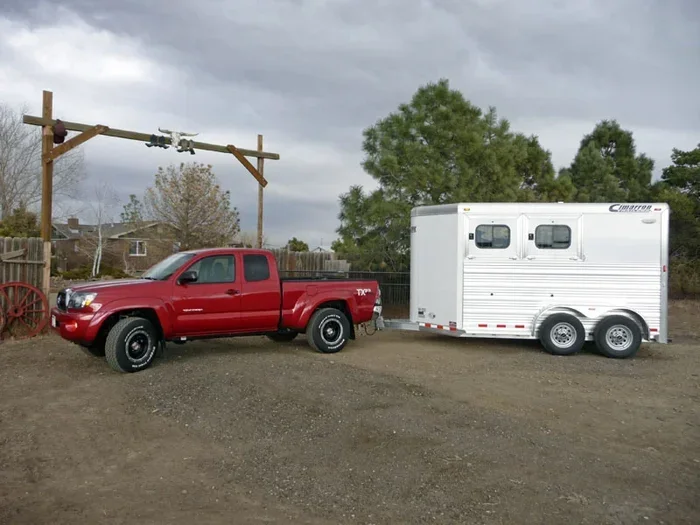
Yes, a Toyota Tacoma can pull a horse trailer, but weight limits matter most. You must know your truck’s towing capacity and the total weight of your loaded trailer. Always check the payload rating before howing livestock. This guide explains everything you need for safe towing.
So you love horses and you love your Toyota Tacoma. Naturally, you want to combine them. But can a Toyota Tacoma pull a horse trailer safely? The short answer is yes, but there are rules. You cannot just hook up any trailer to any truck. Safety depends on numbers. You need to know weights. You need to know limits.
Many people think towing is easy. They see a hitch and assume it works. That is not true. Towing changes how your truck drives. It affects braking and steering. It puts stress on your engine. If you ignore the limits, you risk damage. You also risk safety on the road. We will break down the facts here. You will learn what to check. You will learn how to stay safe.
This guide covers everything. We talk about engine sizes. We talk about weight ratings. We talk about hitches. We also talk about driving tips. By the end, you will feel confident. You will know if your specific truck can handle the job. Let’s dive into the details of towing with a Tacoma.
Key Takeaways
- Know Your Capacity: The Toyota Tacoma towing capacity ranges from 3,500 to 6,000 pounds depending on the engine.
- Calculate Total Weight: Always weigh your horse trailer fully loaded, not just empty.
- Check Payload Ratings: Your truck’s payload capacity is often the limiting factor for towing.
- Use Proper Equipment: Install a weight distribution hitch and brake controller for safety.
- Drive Defensively: Allow extra stopping distance and take corners slower when hauling livestock.
- Maintain Your Truck: Regular service ensures your engine and brakes handle the extra strain.
- Practice First: Test drive with a lighter load before hitting the highway with your horses.
📑 Table of Contents
Understanding Toyota Tacoma Towing Capacity
The first step is knowing your truck’s limit. Not every Tacoma is the same. The towing capacity changes based on the engine. It also changes based on the drivetrain. You need to check your specific model year.
Generally, the Tacoma offers two main engine options. The base engine is a four-cylinder. The optional engine is a V6. The V6 provides more power for hauling. Here is a general breakdown of what you might see.
- Base Engine (2.7L): Usually handles around 3,500 pounds.
- Optional Engine (5.0L V6): Can often handle up to 6,000 pounds.
- Four-Wheel Drive vs. Two-Wheel Drive: This can shift the numbers slightly.
You should look at your owner’s manual. It lists the exact Toyota Tacoma towing capacity for your vehicle. Do not guess. Guessing leads to problems. If you exceed the limit, your transmission could overheat. Your brakes might fail. It is not worth the risk.
Some people wonder about other Toyota vehicles for towing. For instance, you might ask can a Toyota Camry pull a trailer. The answer is usually no for heavy loads. The Tacoma is built for this work. It has a stronger frame. It has a more robust suspension. That is why it is a popular choice for horse owners.
Engine Options and Power
The engine is the heart of towing. You need torque. Torque is the twisting force that moves weight. The V6 engine in the Tacoma is legendary. It lasts a long time. It provides smooth power. This matters when you are going up hills.
If you have the four-cylinder model, be careful. It is reliable, but it has less power. You might struggle on steep grades. You might find yourself shifting gears often. This heats up the transmission. If you plan to tow often, the V6 is better.
You might also wonder about other trucks in the lineup. For example, will a Toyota Tacoma pull a boat is a common question. Boats are heavy too. The same rules apply. Whether it is a boat or horses, weight is weight. The truck does not know the difference. It only feels the load.
Calculating the Weight of Your Horse Trailer
Now you need to know the trailer weight. This is where people make mistakes. They look at the empty weight. That is not enough. You must calculate the loaded weight. Horses are heavy. Equipment is heavy. Water is heavy.
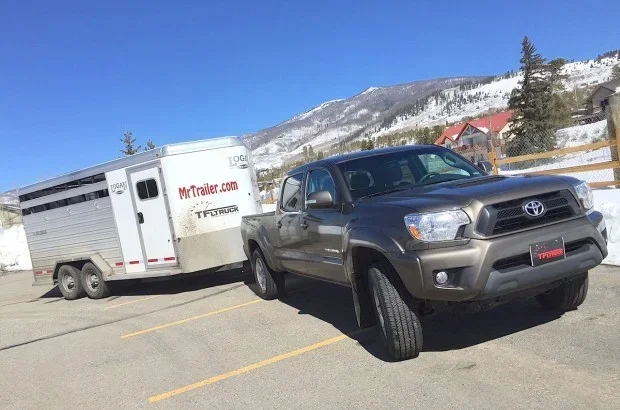
Visual guide about Toyota Tacoma towing horse trailer
Image source: tfltruck.com
A typical horse trailer fits two horses. Some fit more. A two-horse bumper pull trailer might weigh 3,000 pounds empty. But you add two horses. Each horse can weigh 1,000 pounds or more. You add tack. You add water buckets. You add hay.
Suddenly, that 3,000-pound trailer becomes 5,500 pounds. If your Tacoma is rated for 3,500 pounds, you are in trouble. You cannot tow that safely. You need a lighter trailer. Or you need a bigger truck.
Key Weight Terms to Know
There are specific terms you need to understand. These terms appear on your door jamb sticker. They appear on the trailer VIN plate.
- GVWR: Gross Vehicle Weight Rating. This is the max weight of the trailer itself.
- GAWR: Gross Axle Weight Rating. This is the max weight per axle.
- Payload: The weight your truck can carry in the cab and bed.
- Tongue Weight: The downward force the trailer puts on the hitch.
Understanding tongue weight is vital. If the tongue weight is too light, the trailer will sway. If it is too heavy, your front wheels lift. This makes steering hard. You want about 10 to 15 percent of the trailer weight on the tongue.
You might also compare your truck to other models. For example, how heavy is a Toyota Tacoma is a question that helps you understand the curb weight. Knowing the curb weight helps you calculate payload. It is all about math. Safety is in the numbers.
Payload Capacity vs. Towing Capacity
This is the most confusing part for many owners. Towing capacity is how much you can pull. Payload capacity is how much you can carry. Many people focus on towing. They ignore payload. This is a big mistake.
Your payload capacity includes you. It includes your passengers. It includes the hitch itself. It includes the weight pressing down from the trailer. If your payload is 1,500 pounds, and you weigh 200 pounds, you have 1,300 pounds left. If your tongue weight is 600 pounds, you use up more space.
If you exceed payload, your suspension bottoms out. Your steering becomes light. Your brakes wear out faster. You might see warning lights on your dash. Some owners report a c light blinking toyota issues when the electrical system is stressed by heavy loads. While not always towing related, electrical gremlins can happen when systems are overworked.
Why Payload Matters More
In many cases, payload limits you before towing does. You might have a truck rated to pull 6,000 pounds. But your payload might only be 1,600 pounds. If your trailer tongue weighs 800 pounds, and you have a passenger, you are close to the limit.
You need to weigh your truck at a scale. Put the hitch on the truck. Put the trailer on the scale. Measure the tongue weight. Do this before you load the horses. It saves you from surprises on the road.
Some owners look at other Toyota options for heavy hauling. They might ask can a Toyota Tundra tow a fifth wheel. The Tundra is bigger. It has more payload. If your horse trailer is too heavy for the Tacoma, the Tundra might be the answer. But for standard two-horse trailers, the Tacoma is usually fine.
Essential Towing Equipment for Safety
You cannot just use a rope. You need proper gear. The right equipment makes towing safer. It also makes it easier. Here is what you need to install or check.
First, you need a hitch. The Tacoma usually comes with a Class III or Class IV hitch receiver. Make sure it is rated for your trailer. Next, you need a ball. The ball size must match the trailer coupler. Common sizes are 2 inches or 2-5/16 inches.
You also need a brake controller. Horse trailers have brakes. Your truck needs to control them. If you do not have a controller, the trailer brakes will not work. This is dangerous. You need to stop faster with a heavy load.
Hitches and Weight Distribution
A weight distribution hitch is highly recommended. This type of hitch uses spring bars. These bars spread the weight across all axles. It levels the truck and trailer. It reduces sag in the rear. It improves steering control.
Without this, your headlights might point up. Your rear suspension might compress. This looks bad and drives poorly. For horse trailers, stability is key. Horses do not like swaying. A weight distribution hitch helps prevent sway.
You should also consider a sway control device. Some hitch systems include this. It keeps the trailer going straight. If you hit a bump, the trailer might try to swing. Sway control fights that motion. It adds peace of mind.
Some owners also worry about accessories. You might ask are truck caps toyota tacoma compatible with towing. Generally, yes, but you must check height. A cap adds weight. It also adds wind resistance. Make sure your hitch is accessible. Do not block the hitch with the cap structure.
Driving Tips for Towing a Horse Trailer
Once you are hooked up, you must drive differently. You cannot drive like you are alone in the truck. The dynamics change. You have more mass. You have more momentum.
Acceleration will be slower. You need to plan ahead. If you see a stop sign, start braking early. Do not wait until the last second. Your stopping distance doubles or triples. Give yourself room.
When going up hills, maintain speed. Do not let the truck lug. Shift to a lower gear if needed. This keeps the engine in its power band. It prevents overheating. On downhills, use engine braking. Do not ride the brakes. This fades the brake pads.
Managing Sway and Stability
If you feel the trailer sway, do not brake hard. Braking can make sway worse. Instead, ease off the gas. Steer straight. Some brake controllers have a sway mode. This applies the trailer brakes only. It pulls the trailer back straight.
Take corners wider. You need more space. The trailer wheels cut inside the turn. If you turn too sharp, you might mount a curb. This damages the trailer tires. It can hurt the horses too.
Watch your mirrors. You need to see the trailer wheels. You need to see the traffic behind you. Extended tow mirrors are helpful. They give you a wider view. Some Tacomas have blind spot monitoring. This helps too. You might wonder does toyota tacoma have remote start so you can warm up the truck before loading. While convenient, ensure your truck is secure when unattended during loading.
Maintenance and Long-Term Care
Towing puts extra stress on your vehicle. You need to maintain it well. Check your fluids often. Engine oil gets hotter. Transmission fluid works harder. Change them on time. Do not skip services.
Check your tires. Trailer tires age even if they look good. Check the pressure before every trip. Under-inflated tires blow out. Over-inflated tires wear fast. Your truck tires need checking too.
Brakes wear faster when towing. Listen for squealing. Feel for vibration. If the pedal feels soft, get it checked. You rely on these brakes for safety.
Battery and Electrical Systems
Trailer lights draw power from your truck. Over time, this drains the battery. If you tow often, check your battery health. You might need a stronger alternator. Some owners upgrade to ensure reliable power.
You might also notice warning lights. If you see a c light blinking toyota camry style warnings on your dash, investigate immediately. While this refers to a Camry, similar electrical issues can arise in Tacomas under load. Do not ignore dashboard alerts. They warn you of trouble.
Also, consider the longevity of your truck. People often ask how long does a toyota engine last. With proper care, these engines go 200,000 miles or more. Towing does not necessarily shorten this if you maintain it. Heat is the enemy. Keep your cooling system in top shape.
Finally, think about the future. If you plan to tow more later, buy the right truck now. You might ask can you order a toyota from the factory with specific towing packages. Yes, you can. Factory packages often include better cooling and wiring. This is better than adding parts later.
Final Thoughts on Towing with a Tacoma
So, can a Toyota Tacoma pull a horse trailer safely? Yes, it can. But you must respect the limits. Know your numbers. Weigh your trailer. Check your payload. Use the right hitch. Drive with care.
The Tacoma is a tough truck. It is reliable. It is capable. Many horse owners use them successfully. But it is not infinite. Do not push it beyond its rating. Your horses depend on you. Your family depends on you. Safety is the priority.
If you follow these tips, you will have great trips. Your horses will arrive calm. Your truck will stay healthy. Enjoy the open road with your equine friends.
Frequently Asked Questions
What is the maximum weight a Toyota Tacoma can tow?
The maximum towing capacity for a Toyota Tacoma typically ranges from 3,500 to 6,000 pounds depending on the engine and configuration. You must check your specific owner’s manual for the exact rating. Always stay within this limit for safety.
Can a Toyota Tacoma pull a two-horse trailer?
Yes, a Toyota Tacoma can usually pull a two-horse bumper pull trailer. However, you must calculate the total loaded weight including the horses and gear. Ensure the total weight does not exceed your truck’s specific towing capacity.
Do I need a weight distribution hitch for a horse trailer?
It is highly recommended to use a weight distribution hitch for horse trailers. This setup improves stability and reduces sag in the truck’s rear suspension. It helps keep the trailer level and prevents swaying during travel.
How do I calculate tongue weight for my trailer?
Tongue weight is typically 10 to 15 percent of the total trailer weight. You can measure it using a specialized scale or a bathroom scale under the tongue jack. Proper tongue weight is crucial for safe steering and braking.
Will towing a horse trailer damage my Toyota Tacoma?
Towing within the recommended limits will not damage your Tacoma if you maintain it properly. Overheating and excessive wear can occur if you exceed capacity or neglect maintenance. Regular checks of fluids and brakes are essential.
What safety checks should I do before towing?
Before towing, check your tire pressure on both the truck and trailer. Ensure all lights are working and the hitch is locked securely. Verify that your brake controller is calibrated and your safety chains are crossed.