
The Toyota Corolla is primarily a front-wheel-drive sedan, and most trims do not come with four-wheel drive. You can find all-wheel-drive versions in certain markets, but they are not standard across the board. If you need extra traction, you should compare the Corolla to other Toyota models that offer stronger off-road or all-weather systems. This guide breaks down exactly what you get, what you do not get, and how to choose the right setup for your daily driving needs.
If you are shopping for a reliable daily car, you probably want to know exactly what you are getting. One of the most common questions from buyers is does toyota corolla have four wheel drive. People ask this because they want better traction in snow, rain, or rough roads. Others simply want the safest choice for family driving. The answer is more interesting than a simple yes or no, because it depends on where you live, which model year you look at, and what kind of drive system you actually need.
The Toyota Corolla has a long reputation for being practical, efficient, and easy to own. It is not built as a rugged off-road vehicle. Instead, it focuses on smooth city driving, strong fuel economy, and low maintenance costs. That design choice affects the drivetrain. In most cases, the Corolla uses front-wheel drive. Some versions also offer an all-wheel-drive option, which can be a big help in slippery conditions. Still, true four-wheel drive is not part of the Corolla story.
In this guide, we will break down the drivetrain options clearly. We will look at front-wheel drive, all-wheel drive, and the differences between them. We will also talk about why Toyota made these choices, what they mean for your everyday driving, and how to decide whether the Corolla fits your needs. If you are comparing it to other Toyota models, you may also want to check related topics like what type of car is a toyota corolla or what size car is a toyota corolla. Those details can help you understand where the Corolla fits in the bigger Toyota lineup.
Key Takeaways
- Front-wheel drive is the standard: Most Toyota Corolla models use a front-wheel-drive layout for efficiency and everyday reliability.
- All-wheel drive exists in select markets: Some regions and newer model years offer an all-wheel-drive option, but it is not available everywhere.
- No traditional four-wheel drive: The Corolla does not come with a rugged four-wheel-drive system like a truck or SUV.
- AWD helps in bad weather: The available all-wheel-drive system mainly improves traction in rain, snow, and slippery conditions.
- Fuel economy stays strong: Front-wheel-drive models usually deliver better gas mileage than all-wheel-drive versions.
- Check your local inventory: Availability depends on country, trim level, and model year, so verify with a dealership.
- Consider your real needs: Most daily drivers do not need four-wheel drive, so choose based on climate, terrain, and driving habits.
📑 Table of Contents
- What Does the Toyota Corolla Standard Drivetrain Look Like
- Does the Toyota Corolla Offer All-Wheel Drive Options
- Four-Wheel Drive Versus All-Wheel Drive: What Is the Real Difference
- Why Most Buyers Do Not Need Four-Wheel Drive in a Corolla
- How to Choose the Right Corolla Drivetrain for Your Needs
- Common Mistakes to Avoid When Asking About Corolla Drivetrain
- Expert Insights on Toyota Corolla Traction and Daily Use
- Final Thoughts on Does Toyota Corolla Have Four Wheel Drive
What Does the Toyota Corolla Standard Drivetrain Look Like
The standard drivetrain for most Toyota Corolla models is front-wheel drive. This means the engine sends power to the front wheels only. Front-wheel drive is very common in compact sedans because it keeps the car efficient and roomy. It also helps keep the purchase price lower, which fits the Corolla’s budget-friendly image.
Front-wheel drive has some clear strengths. It usually gives better fuel economy than heavier four-wheel-drive systems. It also saves space inside the vehicle because there is no large rear drivetrain tunnel. That extra space can make the cabin feel more comfortable for passengers. For daily errands, commuting, and highway driving, front-wheel drive is often more than enough.
Of course, front-wheel drive also has limits. In deep snow or on very slippery hills, front-wheel-drive cars can struggle more than all-wheel-drive or four-wheel-drive vehicles. The weight of the engine sits over the front wheels, which helps with traction, but it still cannot match the extra grip of a system that sends power to all four wheels. If you live in a place with mild weather, this is usually not a major issue.
Many buyers ask does toyota corolla have four wheel drive because they want to avoid slipping around in bad weather. The good news is that the Corolla is still a stable, predictable car in normal rain and light winter conditions. Good tires and careful driving make a big difference. If your local climate is moderate, the front-wheel-drive Corolla can be a smart and simple choice.
Why Front-Wheel Drive Fits the Corolla So Well
The Corolla is designed around efficiency, comfort, and everyday usability. Front-wheel drive matches that goal very well. It keeps the mechanical layout simple. A simpler layout often means fewer parts to maintain over time. That can be appealing if you want a car that is easy to live with for many years.
This layout also helps the Corolla stay compact and easy to park. The drivetrain components are arranged in a way that supports a practical interior. For families, students, and city drivers, that matters a lot. You get a car that feels easy to maneuver and economical to run.
Another benefit is that front-wheel drive works well with the Corolla’s tuning. The car is not built for hard off-road use or heavy towing. It is built for smooth roads, traffic, and routine commuting. Because of that, front-wheel drive gives the best balance of cost, comfort, and performance for most owners.
Does the Toyota Corolla Offer All-Wheel Drive Options
This is where the answer gets a little more detailed. In some markets, Toyota has offered all-wheel drive on certain Corolla models. All-wheel drive is different from traditional four-wheel drive. It is usually lighter, more automatic in operation, and better suited to pavement-based driving. It can send power to the rear wheels when extra traction is needed.
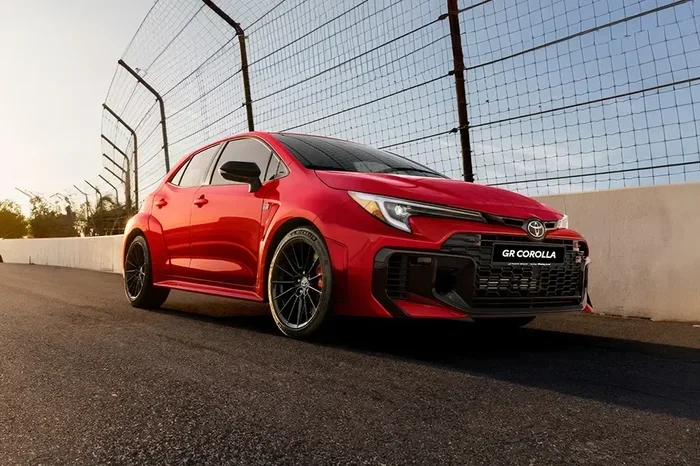
Visual guide about Toyota Corolla front angle
Image source: imgcdn.zigwheels.my
If you are wondering does toyota corolla have four wheel drive, it helps to know that many people use the phrase “four-wheel drive” loosely. Sometimes they really mean all-wheel drive. In everyday conversation, both terms get mixed together. But from a technical point of view, all-wheel drive and four-wheel drive are not always the same thing. The Corolla is more likely to be associated with all-wheel drive than with a hardcore four-wheel-drive setup.
The availability of all-wheel drive can vary by region and model year. In some places, it may be offered on select trims. In other places, it may not be available at all. That is why you should always check the specific vehicle you are considering. A local dealership, the window sticker, or the build sheet can tell you exactly what drivetrain the car has.
All-wheel drive can be useful if you deal with frequent rain, light snow, or slippery roads. It can improve confidence when accelerating from a stop. It can also help when the road surface changes suddenly, such as when you cross a wet bridge or drive through slush. For many daily drivers, that extra traction brings peace of mind.
How All-Wheel Drive Changes the Driving Experience
When a Corolla has all-wheel drive, the driving experience feels a little more planted. During normal dry driving, you may not notice much difference. The system usually stays mostly front-biased, which helps preserve fuel efficiency. When traction drops, the system can adjust power delivery to help keep the car moving steadily.
This can be especially helpful in places where weather changes often. If you drive on winding roads, coastal routes, or hills, all-wheel drive may give you more confidence. It does not turn the Corolla into a rally car or an off-road machine, but it does add a useful layer of traction for everyday conditions.
There is a tradeoff, though. All-wheel-drive models often cost a bit more. They can also be slightly less efficient because of the added hardware. If you mostly drive in warm, dry conditions, you may not need that extra system. On the other hand, if winter weather is a regular part of life where you live, the added traction can be worth it.
Four-Wheel Drive Versus All-Wheel Drive: What Is the Real Difference
People often use these terms as if they mean the same thing, but they do not. Four-wheel drive usually refers to a more rugged system with a transfer case and the ability to lock power between axles. It is common on trucks and serious SUVs. Four-wheel drive is built for deeper snow, mud, rocks, and off-road use.
All-wheel drive is generally more automatic and more refined for pavement use. It is designed to improve traction during normal driving, especially in wet or slippery conditions. It usually works without the driver needing to engage anything manually. That makes it a better match for a sedan like the Corolla.
So if your question is does toyota corolla have four wheel drive, the most accurate answer is that the Corolla is not designed as a four-wheel-drive vehicle in the traditional truck-like sense. It may offer all-wheel drive in some versions, which is a different kind of traction system. Understanding that difference can help you choose the right car for your needs.
Here is a simple comparison to make the difference clearer:
| Feature | Front-Wheel Drive | All-Wheel Drive | Four-Wheel Drive |
|---|---|---|---|
| Best use | Dry roads, city driving, commuting | Rain, light snow, slippery surfaces | Off-road, deep snow, rugged terrain |
| Fuel economy | Usually best | Slightly lower | Often lower |
| Complexity | Simple | Moderate | More complex |
| Common in Corolla | Yes, standard in most models | Available in some markets and trims | Not typical for this sedan |
This table shows why drivetrain choice matters. The Corolla is built around simplicity and efficiency. That is why front-wheel drive is the core setup, and all-wheel drive is the optional traction upgrade in certain cases. True four-wheel drive would change the character of the car completely, and that is not what the Corolla is meant to be.
Why Most Buyers Do Not Need Four-Wheel Drive in a Corolla
A lot of shoppers ask does toyota corolla have four wheel drive because they assume extra wheels under power automatically means better safety. That is not always true. Traction depends on many things, including tires, road surface, vehicle weight, and driving habits. A front-wheel-drive car with good winter tires can handle a lot of seasonal weather very well.
For most daily drivers, the Corolla’s standard setup is enough. If your routes are mostly paved, your winters are mild, and you are not climbing steep icy hills regularly, you probably do not need four-wheel drive. In that case, you can enjoy the Corolla’s efficiency and simplicity without paying for a system you will rarely use.
Even in colder climates, many drivers do just fine with a front-wheel-drive sedan if they respect the conditions. Slowing down, leaving extra distance, and using appropriate tires can make a huge difference. The car itself is only one part of the traction equation.
That said, some buyers truly do want more traction on demand. If you live in a mountain region, face heavy snowfall, or often drive on unplowed roads, you may want a vehicle with a more robust system. In that situation, it makes sense to look beyond the Corolla and consider other Toyota models that are built for tougher conditions. You can explore related questions like are toyota highlanders 4 wheel drive or what toyotas are all wheel drive to see which models fit your climate better.
When All-Wheel Drive Makes More Sense
All-wheel drive makes the most sense when you want a little extra confidence without moving to a larger SUV or truck. If you regularly encounter wet leaves, rain-slick highways, or occasional snow, the all-wheel-drive Corolla can be a nice middle ground. It keeps the car easy to drive while adding a useful traction safety net.
It can also be appealing if you simply value the idea of extra grip. Some drivers like feeling more secure during acceleration. Others want the flexibility to handle unexpected weather without changing vehicles. For those people, all-wheel drive is a practical upgrade, even if they do not need it every single day.
Just remember that all-wheel drive is not a magic fix. It helps you move off more smoothly, but it does not replace careful driving. Braking and cornering still depend heavily on tires, speed, and road conditions. If you expect all-wheel drive to make the Corolla invincible in storms, you will be disappointed. If you expect it to make normal bad-weather driving easier, it can absolutely do that.
How to Choose the Right Corolla Drivetrain for Your Needs
The best way to choose is to match the drivetrain to your real life, not to a fantasy use case. Start by looking at your climate. If you live somewhere with long, harsh winters, extra traction may matter more. If you live somewhere with mostly dry weather, front-wheel drive may be perfectly fine.
Next, think about your typical routes. Do you drive on highways, city streets, or steep rural roads? Do you commute in heavy rain or through areas that freeze often? The more you know about your daily driving, the easier it is to decide whether all-wheel drive is worth it.
You should also think about tires. A car with all-wheel drive and worn tires may not perform as well as a front-wheel-drive car with fresh, high-quality tires. Tire choice matters a lot. If traction is your main concern, good tires can be one of the smartest investments you make.
Budget is another big factor. Front-wheel-drive models are often less expensive to buy and may cost less to fuel over time. All-wheel-drive versions can be worth the extra cost if they match your needs, but you should be intentional about that choice. Do not pay for traction you will not use.
Practical Tips Before You Buy
Before you sign anything, check the exact model and trim. Confirm whether the vehicle has front-wheel drive or all-wheel drive. Read the window sticker carefully. If you are buying used, inspect the vehicle history and verify the drivetrain details instead of assuming.
It is also smart to test drive the car in conditions that resemble your daily driving. If possible, try it on wet roads or in the weather you normally face. That gives you a better feel for how the car behaves. A paper specification is useful, but real-world driving tells you more.
Another helpful step is to compare the Corolla with other compact options. You may find that another vehicle gives you the exact traction level you want. If you are curious about Toyota’s wider lineup, you might also look into topics such as what engine does a toyota camry have or are all toyota rav4 all wheel drive. Those comparisons can help you see how drive systems vary across different Toyota models.
Common Mistakes to Avoid When Asking About Corolla Drivetrain
One common mistake is assuming all wheel drive terms mean the same thing. Buyers sometimes hear “all-wheel drive,” “four-wheel drive,” and “4×4” and think the car is equally capable in every situation. That is not accurate. Each system has a different purpose, and the Corolla is not built like a dedicated off-road vehicle.
Another mistake is overestimating what traction systems can do. No drivetrain can replace safe driving. Speed, following distance, and tire condition still matter a great deal. If you drive too fast for the conditions, even a capable vehicle can get into trouble.
A third mistake is ignoring local availability. Since drivetrain options can vary by region and model year, it is easy to assume a feature exists when it does not. Always verify the specific car you are looking at. A quick check can save you from confusion later.
It also helps to avoid choosing a drivetrain based only on marketing language. A car can sound very capable in an advertisement, but your real needs may be much simpler. For many people, the Corolla’s standard setup is already a strong match. For others, all-wheel drive is the better fit. The key is honesty about how and where you drive.
Expert Insights on Toyota Corolla Traction and Daily Use
From a practical standpoint, the Corolla is a car that rewards sensible choices. It is not trying to be the most rugged vehicle on the market. It is trying to be dependable, efficient, and easy to use every day. That is why the drivetrain choices are focused on real-world commuting rather than extreme adventure.
If you want a vehicle that can handle rough trails, deep snow, or heavy towing, the Corolla is not the right tool. If you want a compact sedan that is affordable, comfortable, and easy to maintain, it makes a lot of sense. For many buyers, that trade-off is exactly what makes the Corolla so popular.
Toyota’s broader reputation for durability also matters here. People often ask why does toyota last so long because they want a car that stays reliable for years. The Corolla fits that expectation well. Its drivetrain is designed to be straightforward and durable, which supports long-term ownership.
If you are the kind of driver who values simplicity, the front-wheel-drive Corolla is easy to recommend. If you want a little more traction in bad weather, the all-wheel-drive option can be worth checking. Either way, the car is built to be practical first and flashy second. That is part of its charm.
Final Thoughts on Does Toyota Corolla Have Four Wheel Drive
So, does toyota corolla have four wheel drive? In the strict sense, no, the Corolla is not a traditional four-wheel-drive vehicle. It is mainly a front-wheel-drive sedan, with all-wheel drive available in some markets and trims. That distinction matters because it tells you what the car is best at. The Corolla is best at efficient, comfortable, everyday driving. It is not built for serious off-road use or heavy-duty traction tasks.
For most buyers, that is perfectly fine. If you live in a moderate climate and want a reliable compact car, the Corolla’s standard drivetrain can serve you well. If you face more challenging weather, an all-wheel-drive version may be a better match. Either way, the right choice depends on your local roads, your weather, your budget, and your expectations.
The smartest move is to match the car to your life instead of chasing a label. Traction is important, but so are fuel economy, comfort, reliability, and value. When you look at the whole picture, the Corolla remains a strong option for a wide range of drivers. It may not be a four-wheel-drive adventure vehicle, but it does what it is designed to do very well.
Frequently Asked Questions
Does the Toyota Corolla come with four-wheel drive?
Most Toyota Corolla models do not come with four-wheel drive. They are usually front-wheel drive, though some markets offer an all-wheel-drive option. Always check the specific trim and model year to confirm what is available where you live.
Is all-wheel drive the same as four-wheel drive on a Corolla?
No, all-wheel drive and four-wheel drive are not the same thing. All-wheel drive is generally more automatic and designed for pavement use, while four-wheel drive is usually more rugged and meant for tougher terrain. The Corolla is more closely associated with all-wheel drive than with a true four-wheel-drive system.
Does all-wheel drive make the Corolla much less fuel efficient?
All-wheel-drive models can be slightly less efficient than front-wheel-drive versions because of the extra hardware. The difference is often modest, but it can show up over time. If maximizing fuel economy is your top goal, front-wheel drive is usually the better choice.
Will a front-wheel-drive Corolla handle snow well?
A front-wheel-drive Corolla can handle light snow and wet winter roads reasonably well, especially with good tires. It is not as capable as a dedicated four-wheel-drive vehicle in deep snow or on steep icy hills. Careful driving and proper tires matter a lot in winter conditions.
How can I tell if a Corolla has all-wheel drive?
You can check the window sticker, the build information, or the vehicle specifications provided by the seller. On used cars, the VIN and model details can also help confirm the drivetrain. If you are unsure, a dealership or qualified mechanic can verify it for you.
Should I buy an all-wheel-drive Corolla if I live in a mild climate?
If your climate is mild and most of your driving is on dry roads, you may not need all-wheel drive. Front-wheel drive is often enough for everyday use and can save money upfront and at the fuel pump. Choose all-wheel drive mainly if you expect regular slippery conditions or want extra traction confidence.